Standalone elements and period pieces can bring flexibility and flair to the heart of a luxury home, writes Kate Youde
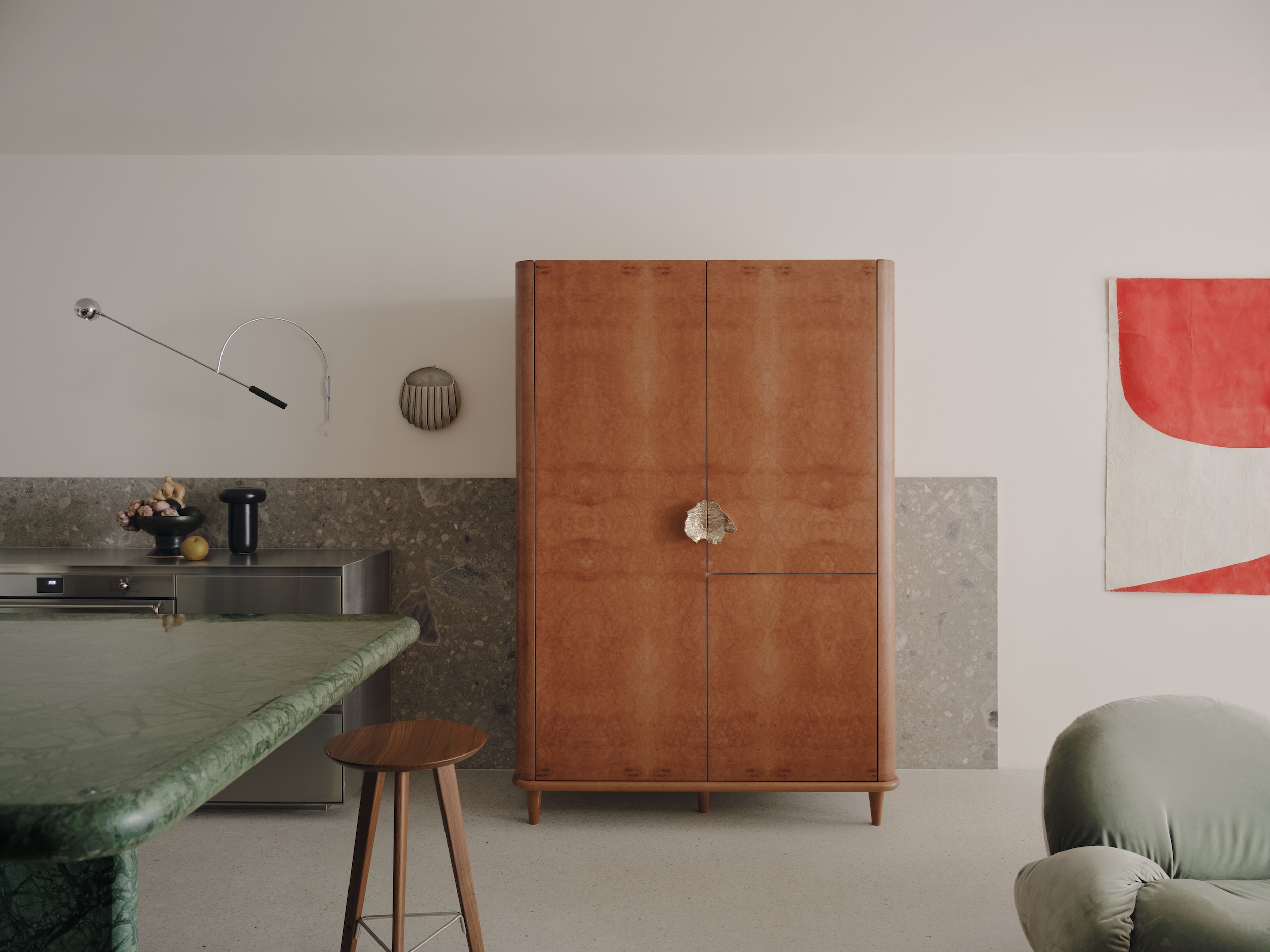
A contemporary Sydney kitchen designed by Pattern Studio featuring a Guatemala green marble island and cherry burl cabinet. Photograph: © Tom Ross
We have Austrian architect Margarete Schütte-Lihotzky to thank for the modern fitted kitchen. It was her design of the Frankfurt Kitchen for German flats in the 1920s, which prioritized domestic efficiency, that helped to popularize features like built-in cabinetry.
A century on, however, the unfitted kitchen is back in vogue. Rather than walls of matching fixed cabinets and integrated high-end appliances, this approach embraces freestanding pieces—although a mix of fitted and unfitted elements is common.
But why the move away from the sleek aesthetic of the built-in kitchen that has suffused luxury living in recent times? Lily Goodwin, co-director of Pattern Studio, identifies a desire for flexibility. Recent kitchens by her Australian design practice “lean toward a freer arrangement,” merging with other living spaces in the home.
“Fully fitted kitchens often prioritize efficiency and uniformity but can lack personality and adaptability,” she says. “The shift reflects a broader cultural move toward spaces that feel collected, lived-in and evolving, where elements can be added, changed or reinterpreted over time.”
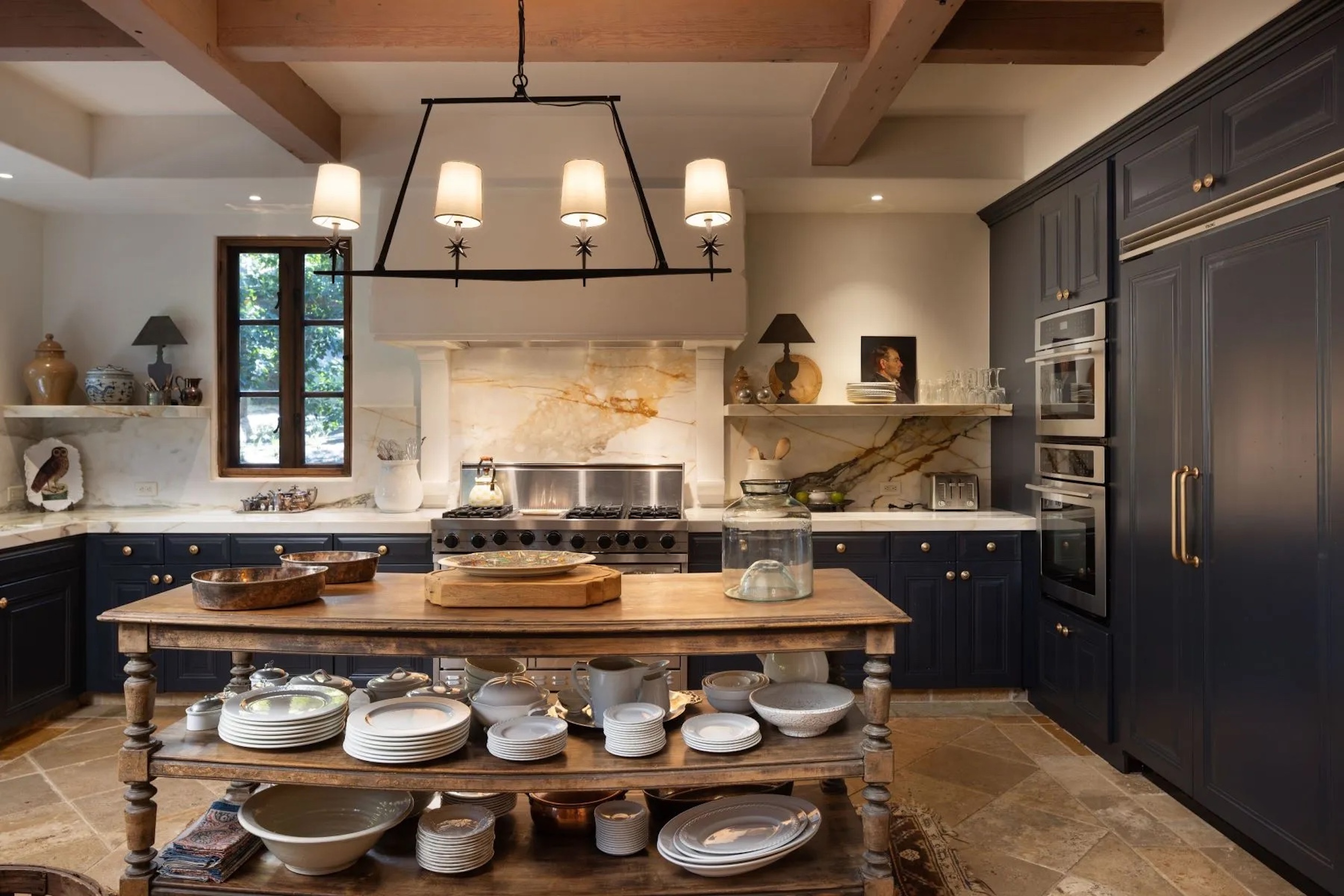
A mix of fitted and unfitted features is common, as in this Carmel property. Photograph: Sotheby’s International Realty – Carmel Brokerage
Pattern Studio combined different elements, rather than relying on a built-in system, when reshaping a house in the high-end Sydney suburb of Paddington for a father and his two adult children. The aim was to create a home that “could evolve with its occupants and support a shared, joyful way of living,” says Goodwin.
The kitchen, designed as part of the broader living space, is anchored by a large island made from green Guatemala marble. The island’s cabinetry has timber doors finished with a deep grain stain, while a freestanding custom cherry burl cabinet houses a refrigerator and a pantry.
Goodwin says a successful unfitted kitchen needs “a strong material language” to unify the various components—she recommends investing in materials that will “age well and carry character.” She also advises “a balance between concealment and expression.” As she explains: “It’s less about removing structure and more about redistributing it.”
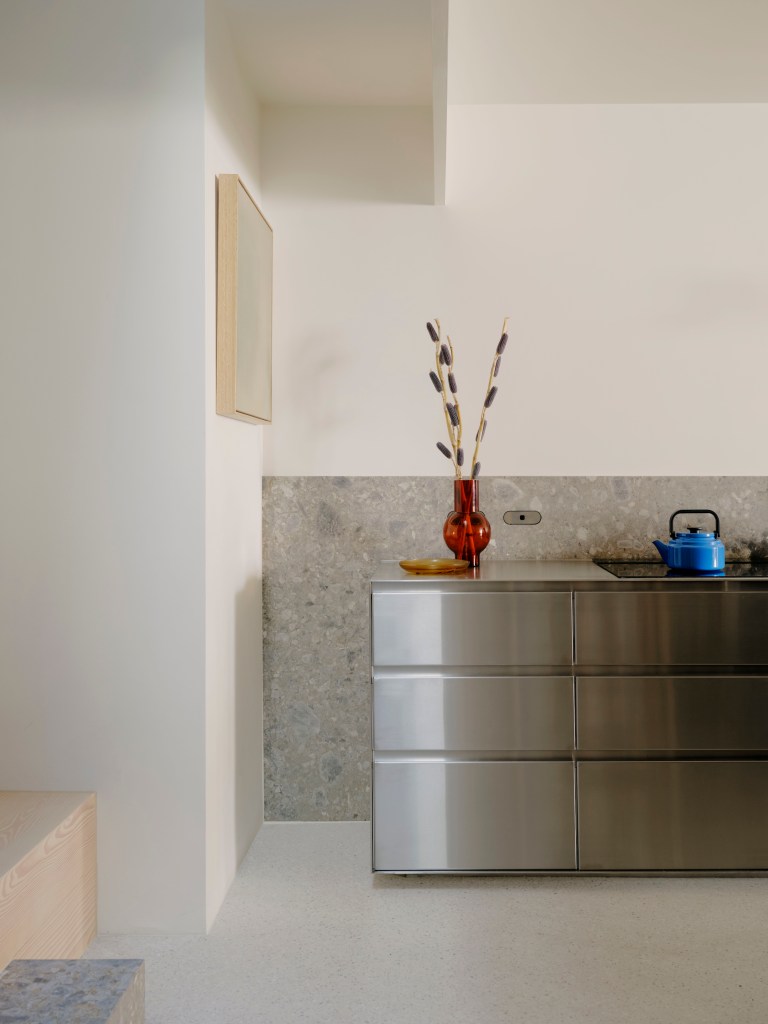
Wall-to-wall units are absent from Pattern Studio’s kitchen in a desirable Sydney neighborhood. Photograph: © Tom Ross
American designer Ken Fulk often incorporates “beautiful, interesting shelving that opens up the space” into his kitchen projects, fuelled by his innate dislike of upper cabinets. “You can see things, you can reach things,” says the AD100 regular, who has used this approach in his coastal home in Provincetown, Massachusetts.
The kitchen of a Californian beach house that Fulk designed through his eponymous design company features blue powder-coated steel and rope shelves. These hang in front of a wall clad in an intricate pattern of weathered driftwood collected from the shoreline. The floor, made from beach rocks and broken mosaic tiles, displays a wave design. Rather than a “constrained kitchen,” Fulk says the line is blurred between this space—featuring an island topped with leathered black basalt—and the rest of the house.
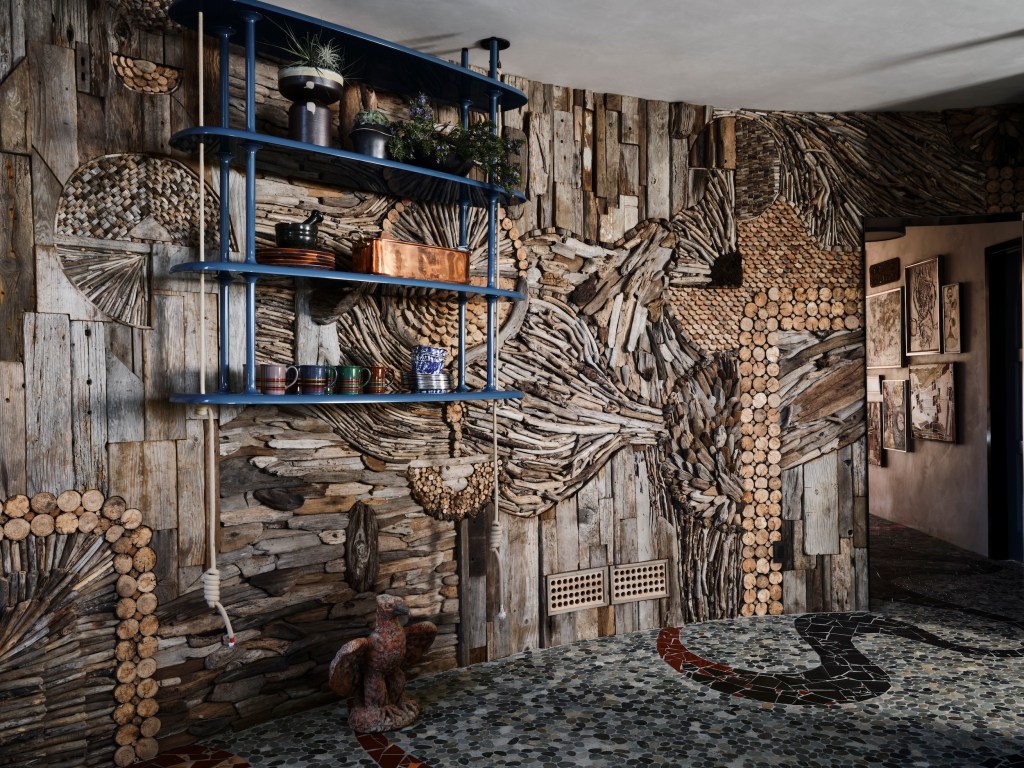
Bespoke blue shelving in a Ken Fulk-designed beach house, California. Photograph: © Douglas Friedman
He ascribes this recent shift in how kitchens are perceived and used to the increased time spent at home during the Covid pandemic and greater access to design inspiration through social media. He thinks people have started to question the previous notion of a kitchen being for a specific use with rules attached.
“Obviously it’s one of the more highly functioning spaces in a house but that doesn’t mean that it shouldn’t be personalized, interesting, even eccentric,” says Fulk. He likes to repurpose items and is currently customizing a draper’s table for the kitchen in another of his homes, a 19th-century ranch in Napa Valley, California.
After years of “sameness”—think shades of white, marble or granite countertops, fitted cabinets and a built-in island—Fulk says kitchens have “finally become more of a personal expression.”

The kitchen of Ken Fulk’s home in Provincetown, Massachusetts. Photograph: © Douglas Friedman
While older luxury homes with existing points of interest lend themselves to a less fitted kitchen, spaces with a modern feel such as an industrial New York loft can “benefit from the tension of having something with history, something that doesn’t feel so perfect” to add character, Fulk adds.
This desire for contrast among interior designers and homeowners has benefited Robert Young Antiques in London, which reports an increased interest in sourcing period pieces to customize modern kitchens in the past three years. Gallery Director Florence Grant says popular heritage items include wooden farmhouse tables, dressers, butcher’s blocks and stick back chairs.
Space dictates demand. While a London pied-à-terre is unlikely to accommodate an antique Welsh dresser, it could house a spice cupboard or a nest of drawers.

A Windsor Comb Back Chair from Robert Young Antiques, London. Photograph: © Robert Young Antiques
“I think [people] have realised that the older bits of furniture aren’t just for older atmospheres,” says Grant. “They look really sculptural in modern settings, so people are popping a Windsor chair in their kitchen and it ends up looking really cool and trendy.” She thinks the interest stems from people being “more relaxed about having the imperfections on show.”
The freestanding arrangement of an unfitted kitchen complements the way we live now, according to Goodwin, as it embraces the overlap between cooking, socializing, relaxing and work. She believes this more bespoke trend is leading towards kitchens “that feel increasingly indistinguishable from living spaces” elsewhere in the home.
“We’re likely to see a continued blending of furniture, architecture and joinery, where kitchens become softer, more adaptive and more reflective of individual lifestyles—spaces that can evolve over time rather than remain fixed,” she says.
Embrace al-fresco living: here’s how to design the perfect outdoor kitchen