
As South Korea exports K-Pop and “Squid Game” to the world, many of its residents lean towards a quieter, more harmonious design sensibility, writes Soo Kim
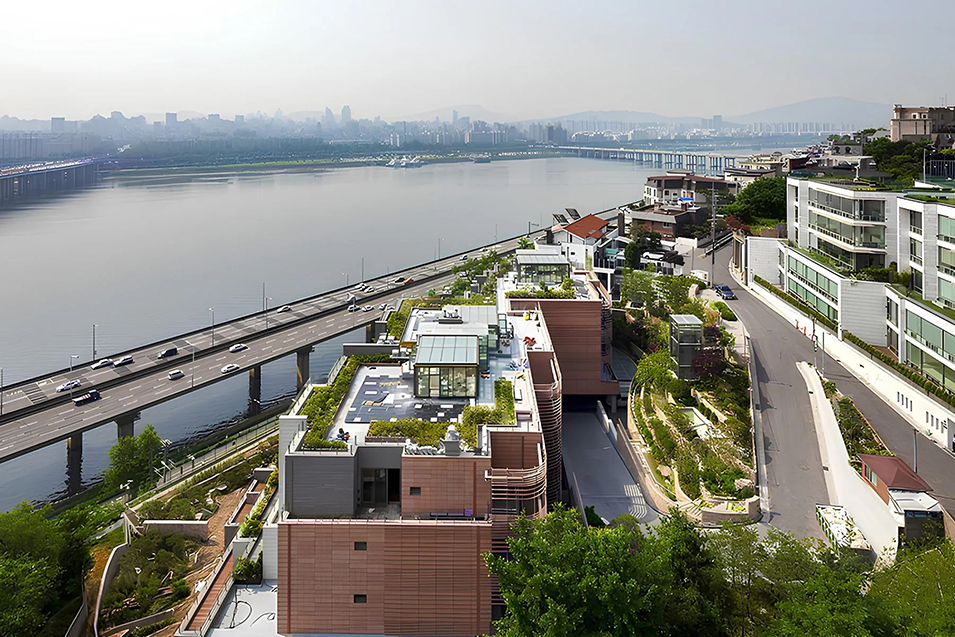 Hannam-dong, Seoul | Korea Sotheby’s International Realty
From “Squid Game” fever to the global K-pop craze, South Korea’s international currency has grown exponentially in recent years, with the country attracting a new wave of popularity and visitors. Its bustling capital, Seoul, has drawn particular interest for its eclectic cultural offerings and unique design scene, as showcased in its luxury districts.
“Seoul has emerged as a compelling presence in the global luxury real estate landscape,” says architect Sim Hee-Jun, co-founder of Seoul-based design firm ArchiWorkshop. “While the city has long offered traditional premium neighborhoods, a new generation of high-end residences is shifting the definition of luxury beyond aesthetics or exclusivity.” Among the city neighborhoods with the highest concentration of luxury properties are Cheongdam-dong and Hannam-dong.
Cheongdam-dong, and the nearby ward of Apgujeong-dong, is an area “where residential and commercial realms blend seamlessly,” according to Sim. Located within Gangnam—the district south of the Han River that bisects the capital—Cheongdam-dong is home to celebrities and the wealthy “chaebol” families whose electronics, energy and telecommunication firms have driven South Korea’s economic growth.
It is also rich with high-end fashion boutiques and galleries, so it’s no wonder art is a fixture of its high-end homes. The luxury residence PH129, with its double-height walls and elegant finishes, embodies this emphasis on sculptural aesthetics, says Korea Sotheby’s International Realty.
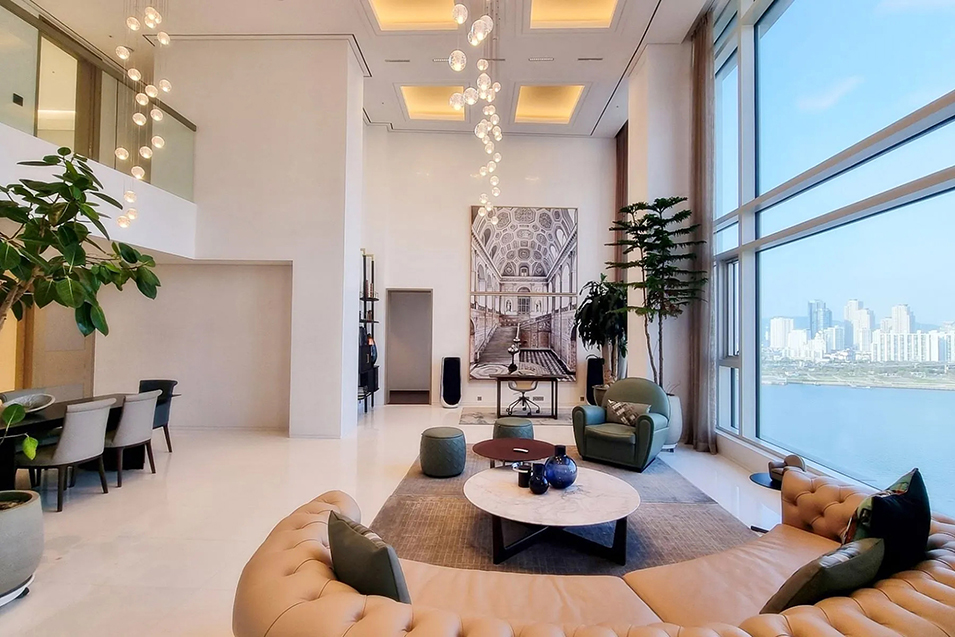 Cheongdam-dong, Seoul | Korea Sotheby’s International Realty
Long favored by diplomats and embassies, Hannam-dong is home to exclusive residential clusters such as the UN Village and the high-end apartment complex Hannam The Hill. Residents enjoy a beautiful outlook thanks to the neighborhood’s sloping terrain above the Han River. An apartment in the elevated La Terrasse Hannam, located in the UN Village, offers townhouse-style private gardens, natural light and privacy, and uninterrupted riverside views.
Seoul’s luxury design values have been shaped by traditional Korean sensibilities, says Sim, as typified by “the quiet curves” of the Korean ceramic moon jar and “the spatial poetics” of the “hanok,” the traditional Korean house, “with its voids, asymmetry and harmony with nature.”
K-pop’s bold aesthetics may have been exported to the world, but Hoon. Lee, founding director of the interior design firm Studiohoon, says many locals still favor traditional Korean beauty, leaning toward “warm wood and calm white tones” in the home. This sensibility likely stems from the Korean phrase, “white-clad folk,” a self-identifier from a time when most of the population wore the color for its symbolic association with cleanliness and heaven.
According to Lee, many of his company’s design clients prefer “the harmony and balance between materials and shapes that are not excessive and restrained.”
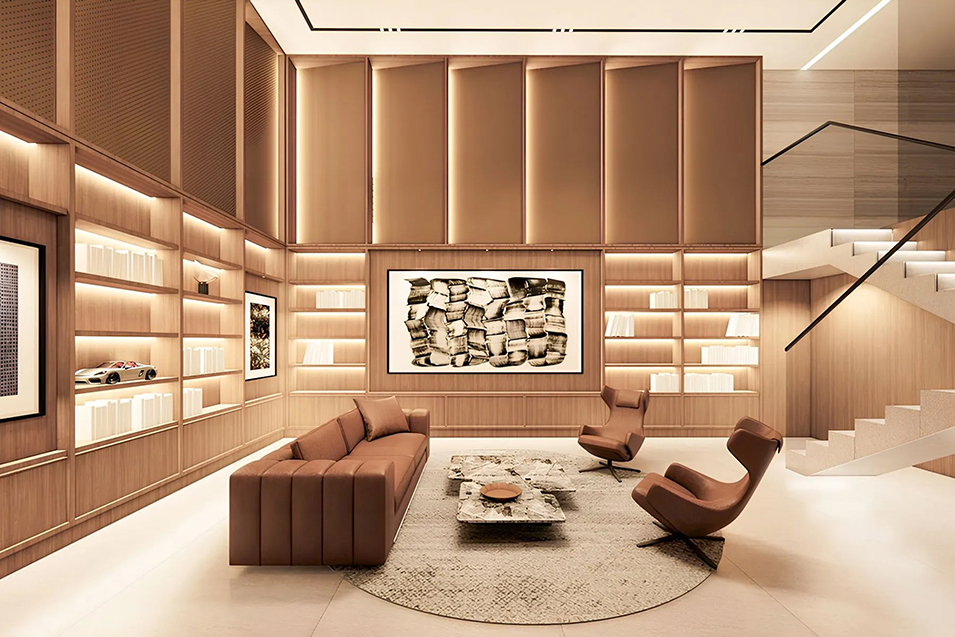 Samseong-dong, Seoul | Korea Sotheby’s International Realty
Wellness and the harmonious blend of interior and exterior spaces are among the key design trends seen in neighborhoods such as Samseong-dong, in Gangnam. This upscale area is home to L’Arbre 27, a private enclave of residences set on a hillside. According to Korea Sotheby’s International Realty, the complex was informed by the principles of neuroarchitecture, which aims to create spaces centered around emotion, happiness and well-being.
Hwon Yoon, from the Seoul-based D-Werker Architects, says much of Korean apartment culture focuses on combining convenience with “luxurious interior materials similar to those in resorts.”
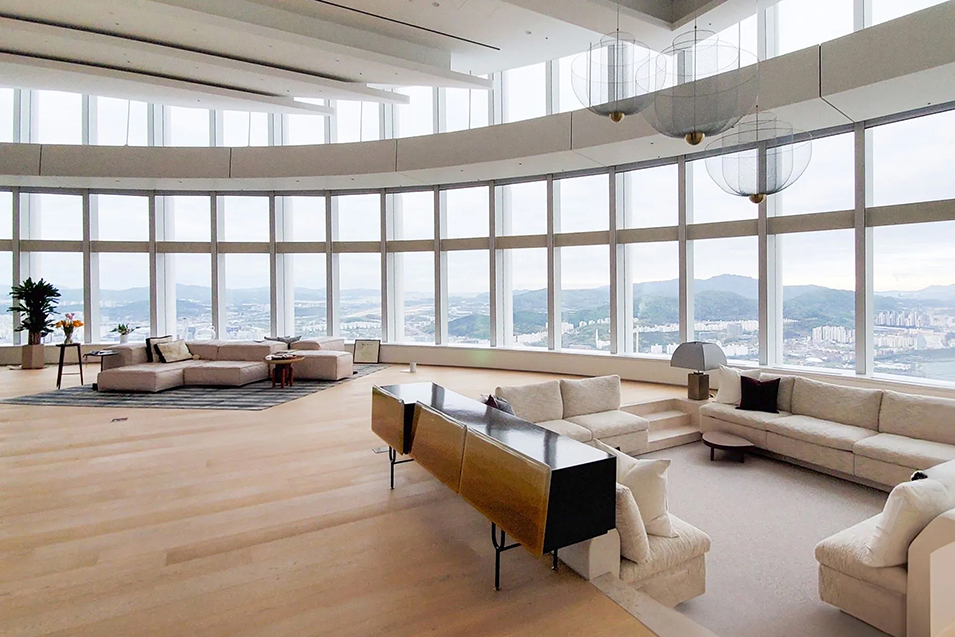 Sincheon-dong, Seoul | Korea Sotheby’s International Realty
The Signiel Seoul Penthouse in Sincheon-dong, a neighborhood in the Songpa district, offers exactly this hotel-style aesthetic and lifestyle, sitting at the top of Lotte World Tower, the tallest building in South Korea and the sixth tallest in the world. Home to a mix of celebrities, political figures and business executives, the building includes a private swimming pool and spa, full concierge service, and breathtaking views of Seoul from its panoramic windows and terraces.
However, the neighborhood experiencing the most dynamic transformation is Seongsu-dong, a former industrial area often dubbed the “Brooklyn of Seoul.” The area is being reimagined as a cultural and design-driven luxury district by a new generation of creatives, says Sim. With its converted warehouses, concept stores and hybrid residential buildings, “Seongsu-dong is a living laboratory for how design and urban identity can evolve together,” he notes.
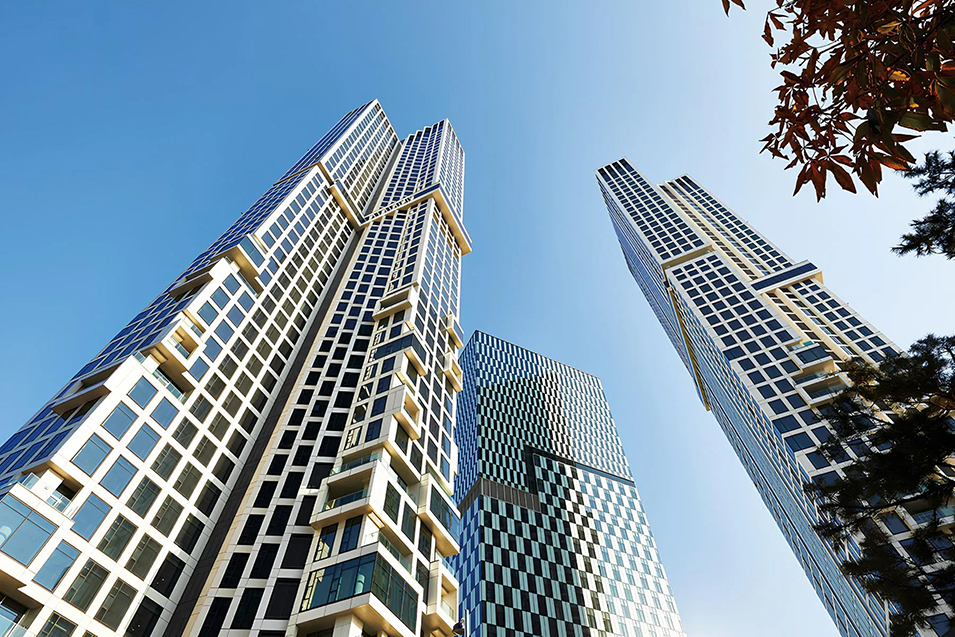 Seongsu-dong, Seoul | Korea Sotheby’s International Realty
The elegant and earthquake-resistant towers of the hybrid Acro Seoul Forest development are one of the area’s most noticeable additions. Inside their gridded structures, apartments are fully customisable, combining warehouse-style living with a suite of luxury amenities including an on-site gym, café, sauna and golfing facilities, plus integrated smart technology and full forest views.
Architect Leehong Kim, whose firm operates in Seoul and New York, says that Seongsu-dong is slated to see a new influx of wealthy residents, with further high-end residential areas planned around its Sampyo site and the riverside. Luxury design in Seoul is no longer simply about square footage or status, as Sim says, but rather is “deeply intertwined with architectural authorship, cultural narrative and a thoughtful way of living.”
Check out our spotlight on Hong Kong, another city of exciting design contrasts