Once fit for pharaohs, the opulent designs of ancient Egypt still find their way into high-end interiors today, writes Kate Youde

Yasmina Makram’s interiors for the Nile Jewel apartment in Cairo, Egypt. Photograph: Sara Gaafar
When Egyptian-Lebanese designer Omar ‘Chakil’ El Wakil moved to Egypt from France in 2019 it was not his intention to “resuscitate ancient Egypt,” but to create contemporary furniture that showcased local crafts and materials. However, he has since fully embraced ancient Egyptian references in his work, after being convinced by French gallerist Victor Gastou.
Earlier this year, the designer—under the name Omar Chakil—launched a striking collection of 17 pieces in collaboration with Galerie Gastou at PAD Paris design fair. United by the theme of transcendence, these works in Egyptian alabaster reinterpret ancient Egyptian animal deities.
“One of the reasons why I decided to go more in that direction is because I see how much it resonates with people,” says El Wakil, who was raised in France. The alabaster itself also drew him in. “The transparency of the stone is one of the reasons why ancient Egyptians used to create all these artifacts, thinking that it would take them into the afterlife,” he says. “And as a matter of fact I have a feeling that it did, because we still remember them many thousands of years later.”
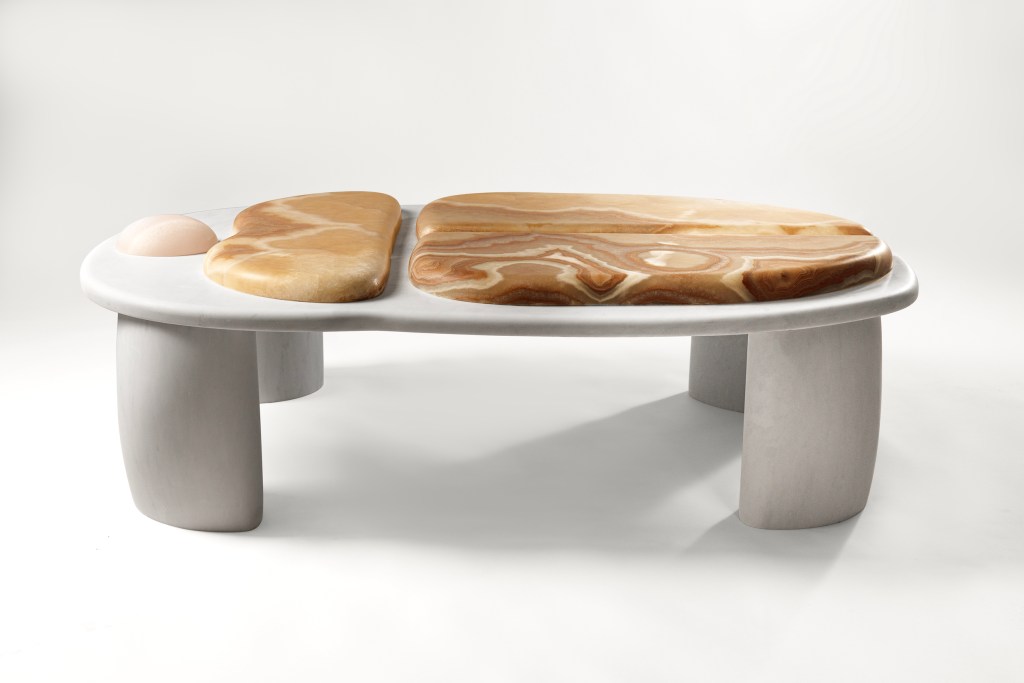
Omar Chakil’s scarab beetle-inspired Resurrection coffee table. Photograph: Billy Doss/Galerie Gastou
Our enduring fascination with ancient Egypt is evident in the wealth of current exhibitions about the civilization around the world. The Metropolitan Museum of Art in New York is exploring ancient Egyptian deities in “Divine Egypt,” until January 2026, while Hong Kong Palace Museum will show 250 loans from Egypt’s museums in “Ancient Egypt Unveiled,” opening November 20. In “Made in Ancient Egypt, at the Fitzwilliam Museum in Cambridge, UK, until April 2026, the focus is on the craftspeople behind some staggering artifacts produced between about 3100-30 BCE.
At Sir John Soane’s Museum in London, “Egypt: Influencing British Design 1775-2025” highlights the impact of the ancient culture on architecture and interior design in particular. On the back of Napoleon’s Egyptian military campaign (1798-1801), designers and architects were able to see Egyptian objects for the first time, explains Erin McKellar, the museum’s assistant curator of exhibitions. This led decorative elements, including winged sun discs, obelisks, sphinxes, cavetto cornices and the pylon forms seen at temple entrances, to find their way into European homes.
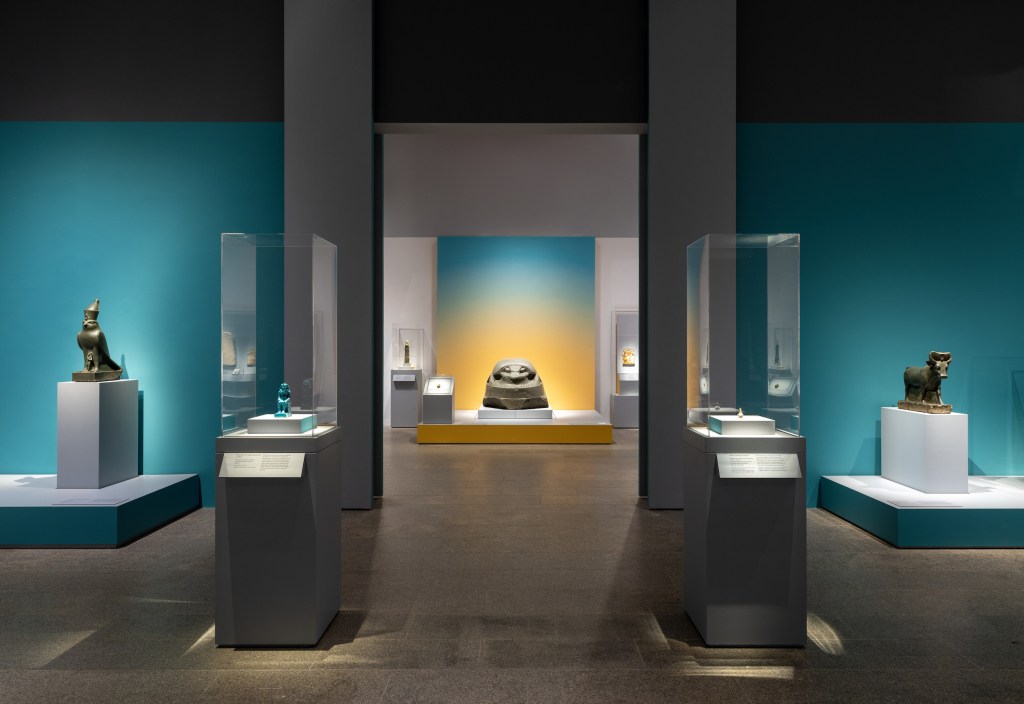
Installation view of “Divine Egypt” at The Metropolitan Museum of Art. Photograph: Anna-Marie Kellen. Courtesy of The Met
“The Egyptian style began being used from a relatively early date in the home to cultivate an intellectual atmosphere,” explains McKellar. The Soane exhibition includes a Wedgwood teapot from 1810 with a Nile crocodile on the lid, and a desk set, dated 1798, with an inkwell in the form of a canopic jar—the vessel that held the internal organs of a body during the mummification process.
British interest in ancient Egypt flourished throughout the 19th century, McKellar says, boosted by the Great Exhibition of 1851 and the erection of Cleopatra’s Needle in 1878, both in London. But it was the 1922 discovery of Tutankhamun’s tomb in Egypt’s Valley of the Kings that sparked a second global wave of Egyptomania.
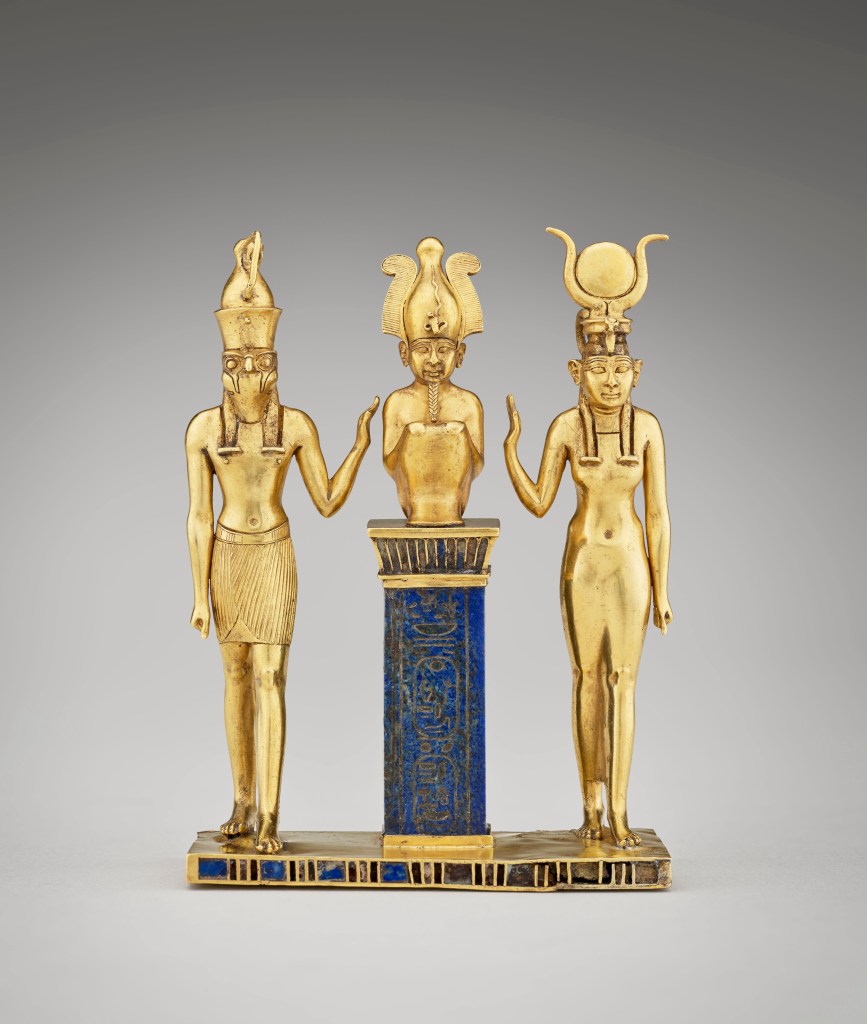
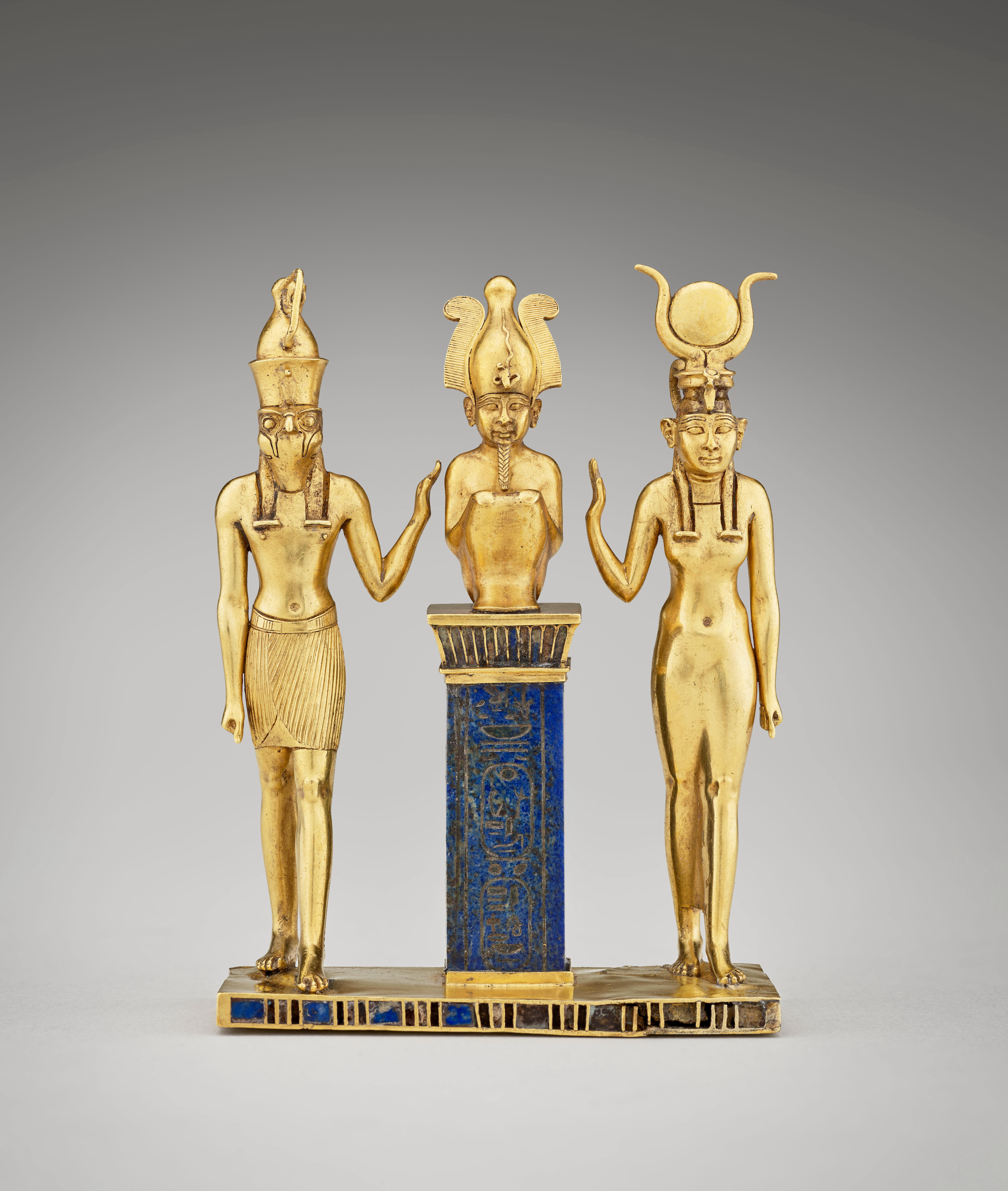
Triad of Osorkon IIca. 874‒850 BCE, Musée du Louvre, Paris (E 6204) Photograph: Mathieu Rabeau © Musée du Louvre, Dist. RMN-Grand Palais / ArtResource, NY
The subsequent art deco design period drew heavily on ancient Egyptian influences. The Singer Sphinx sewing machine, made popular in the 1920s and 1930s, and a khayamiya—a textile appliqué used for tents—both feature in the Soane show. “We know these were marketed widely,” says McKellar of the khayamiya. “They would have been used in all sorts of forms, from fabric hangings to cushion covers, essentially to bring that little bit of Egypt into the home.”In contemporary interiors, the ancient civilization is typically represented through this art deco lens, says Alex Kravetz, principal and creative director at Alex Kravetz Design in London. “They’re very subtle [connections],” he says. “Not too Egyptian because the danger is to take the interior a little bit too far and I don’t think anybody wants to be in that style, strictly speaking, today.”
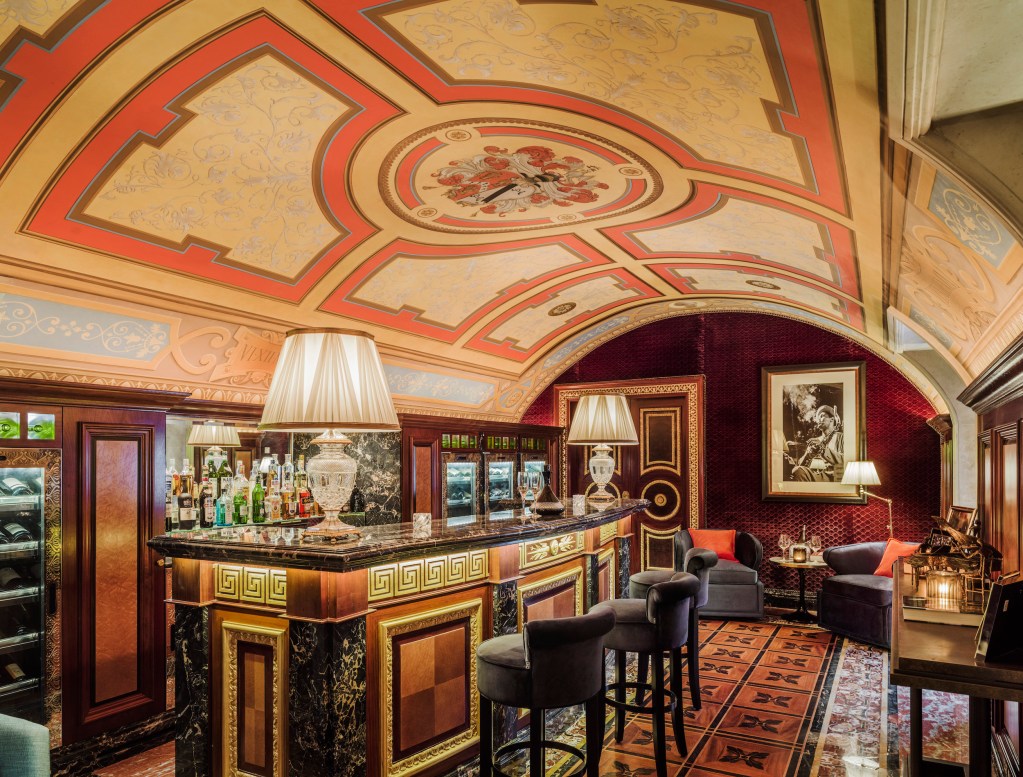
Egyptian revival motifs in the bar at Denham Place, Buckinghamshire, UK. Photograph: Alex Kravetz Design
The bar Kravetz’s studio designed for Denham Place, a restored Grade I-listed country estate in Buckinghamshire, UK, includes a console inspired by the Egyptian revival style present in early 19th-century decor. The table is supported by a gilt sphinx, says Kravetz, while the apron has “pseudo-hieroglyphic” panels and “lotus/papyrus-style” repeating borders. There are cavetto-type mouldings and a black marble base with gilding that echoes temple stone and gold.
Cairo-based studio Yasmina Makram also draws subtly on Egypt’s history for its luxury interiors and includes a “small nod to ancient Egypt,” says founder and creative director Yasmina Makram Ebeid. The entrance to the Nile Jewel apartment the studio completed in the Egyptian capital in 2024 draws on the “opulence” of Egypt in the 1950s and 1960s, she says. It also features black-and-white marble flooring inspired by the lotus flower, a prominent symbol in ancient Egypt.
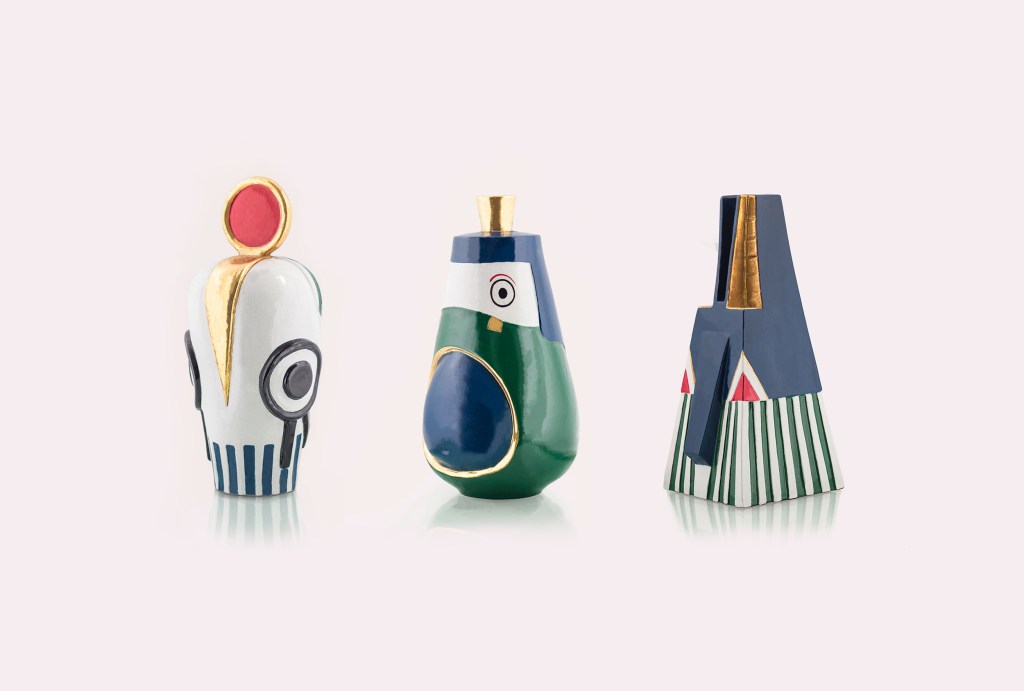
Ceramic statues from Yasmina Makram’s Hotep series. Photograph:Yasmina Makram
Meanwhile, the studio’s homeware designs include the pharaonic temple-inspired Nû chair, which Makram Ebeid says draws on proportions and forms of furniture in Cairo’s museums, and the Hotep series of ceramic statues inspired by canopic jars and ancient Egyptian gods.
Makram Ebeid thinks designers continue to use ancient Egypt as a reference point because the civilization and its makers “were so ahead of their day” in terms of architecture, lighting and materials. As she notes, it remains a mystery to this day how the pyramids were built. “When you look at the forms of what they’ve left behind, it’s so contemporary,” she adds.
Live Like Downton Abbey: An Ode to English Country House Style