
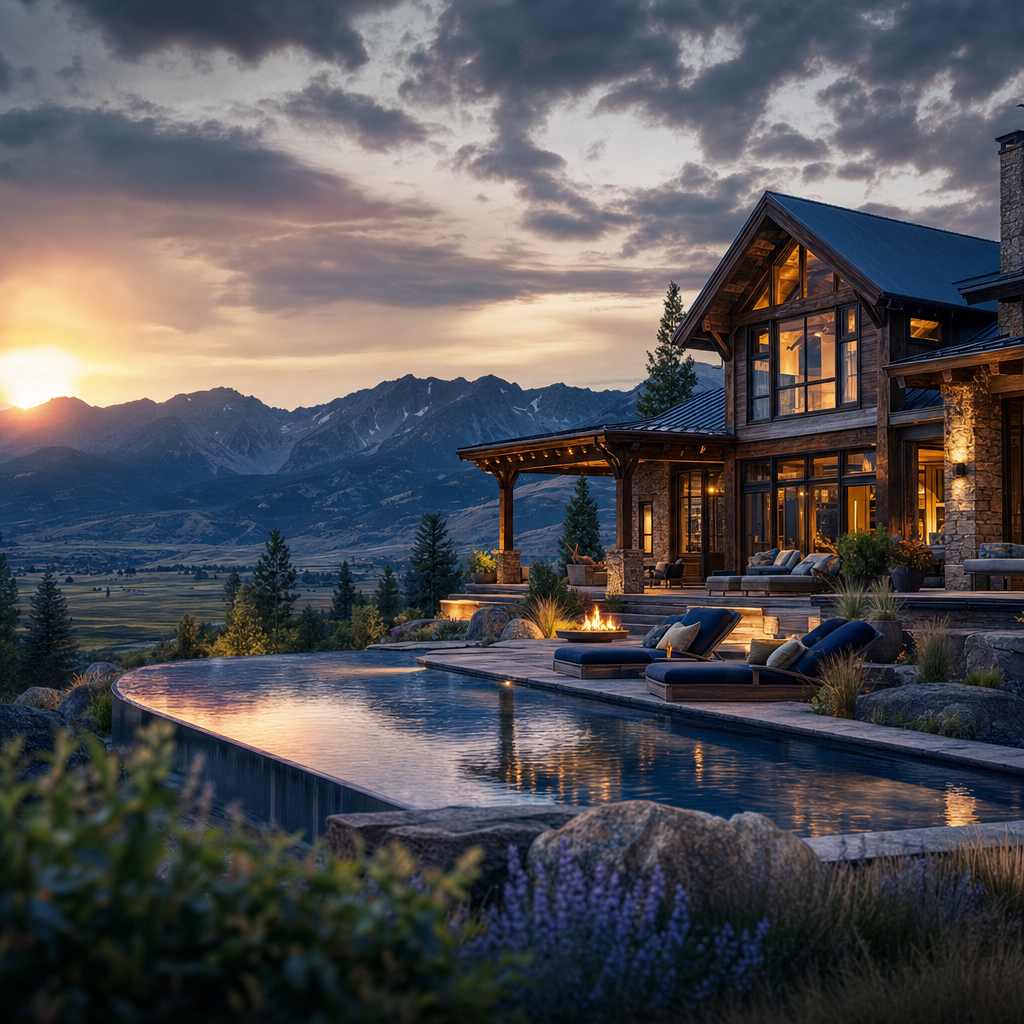
TL;DR: – Montana luxury homes for sale start at $750K in Missoula and climb past $72M for trophy properties – but the threshold varies sharply by region in ways listing aggregators never explain.
- A $3M Montana home generates roughly $17,100/year in property taxes vs. ~$33,000 on a comparable California property, making cost-of-ownership a genuine differentiator.
- This guide is for high-net-worth buyers, out-of-state relocators, and local sellers who need region-specific data, not blended statewide averages.
Most buyers searching for Montana luxury homes for sale assume the market works like any other western resort destination. It does not. Montana has five distinct luxury sub-markets with different price thresholds, different buyer profiles, and different legal landmines – and the listing aggregators blend all of them into a single undifferentiated feed.
This guide breaks the state apart the way a serious buyer needs it broken apart. Pricing is drawn from current MLS data and verified market reports. Legal considerations reference Montana state agency guidance directly. Note that the methodology here relies on regional market reports, state government sources, and verified transaction data – not fabricated client anecdotes.
What Counts as a Luxury Home in Montana?
Luxury is not a fixed price point in Montana – it is a relative threshold that shifts dramatically depending on which part of the state you are evaluating. A $900,000 property in Whitefish is a standard residential purchase. That same budget in Hamilton buys a genuine estate.
| Region | Luxury Entry Price | Defining Factors |
|---|---|---|
| Whitefish / Flathead Valley | $1.5M+ | Resort proximity, lake access, ski-in potential |
| Big Sky / Southwest Montana | $2M+ | Resort adjacency, private club access |
| Bitterroot Valley / Hamilton | $800K+ | Acreage, river frontage, ranch character |
| Missoula | $750K+ | View corridors, acreage, custom finishes |
| Bozeman | $1M+ | University town premium, tech-sector demand |
According to Glacier Sotheby's International Realty's Flathead Valley market report, properties in the Whitefish and Flathead Valley corridor consistently show luxury entry points at $1.5 million and above, driven by proximity to Whitefish Mountain Resort and Flathead Lake access. For Western Montana luxury real estate broadly, the threshold analysis requires evaluating each sub-market independently.
Price alone does not define luxury here. A 40-acre parcel with a modest cabin and direct river access may command more than a 4,000-square-foot home on a standard lot. Acreage, water features, and view quality all factor into the luxury designation in ways that square footage alone cannot capture.
Key Takeaway: Montana's luxury threshold ranges from $750K (Missoula) to $2M+ (Big Sky). Evaluating any property requires knowing which sub-market's standards apply – not a statewide average.
Montana's Top Luxury Real Estate Markets in 2026
Montana luxury real estate is not one market – it is five distinct markets that happen to share a state border. Understanding which one fits your priorities is the first real decision you will make.
Whitefish and the Flathead Valley
Whitefish is Montana's most recognizable luxury address, and the pricing reflects it. The Glacier Sotheby's International Realty Flathead Lake waterfront analysis documents waterfront homes on Flathead Lake trading at premiums of 30 to 65 percent above comparable non-waterfront properties in the Polson, Bigfork, and Lakeside corridors. To put that in concrete terms: a $2.8M Flathead Lake home compares to a $1.7M non-waterfront property with similar square footage and finishes – a roughly 65% premium for the water.
Flathead Lake homes for sale represent some of the most competitive inventory in the state, with limited shoreline and high out-of-state demand keeping prices elevated. Ski-in/ski-out access at Whitefish Mountain Resort adds a further 20–35% premium over comparable mountain properties without that access, according to the same Glacier Sotheby's market data.
Bitterroot Valley and Hamilton Area
The Bitterroot Valley offers a different luxury proposition: land, water, and privacy at a lower entry price than Whitefish. Irrigated valley floor land commands $3,000–$8,000 per acre, while dry hillside and foothill parcels without water access typically range from $500 to $2,000 per acre, according to LandBrokerMLS agricultural land value data.
A 1,200-acre recreational ranch in the Bitterroot Valley with river or stream frontage and quality improvements typically lists between $4M and $7M in current market conditions. Bitterroot Valley real estate at the ranch estate level is a fundamentally different purchase than a resort home – the due diligence process, financing structure, and ongoing management requirements all differ substantially.
Missoula and Western Montana
Missoula's luxury segment is more urban and less resort-driven than Whitefish or Big Sky. The market splits between high-end downtown condos in the $600K–$1.5M range and estate properties with meaningful acreage starting at $900K–$1.2M in the surrounding hills and valleys. Missoula attracts a professional and retiree buyer profile rather than the ski-and-recreation buyer dominant in other Montana luxury markets.
Big Sky and Southwest Montana
Big Sky commands some of the highest price-per-square-foot rates in the state. Current active listings from Sotheby's International Realty's Montana portfolio include properties ranging from $9.9M to $18.4M, with a 4,754-square-foot home at One&Only Private Home listed at $18,400,000. Private club communities in the Big Sky area carry HOA and community association fees that can range from $30,000 to $50,000 annually or more, separate from property purchase prices.
Key Takeaway: Whitefish leads on resort and waterfront premiums; Bitterroot leads on acreage value; Big Sky leads on price-per-square-foot. Match your market to your lifestyle priorities before comparing listings.
What Types of Luxury Properties Are Available in Montana?
Montana luxury properties fall into four distinct categories, each with different pricing logic, due diligence requirements, and buyer profiles.
Luxury Ranch Estates
Montana ranch homes for sale in the luxury segment span 500 to 5,000+ acres. Recreational ranches with quality fishing access and significant improvements routinely trade between $2M and $25M, according to ranch transaction data. The working-versus-recreational distinction matters: working ranches are valued partly on agricultural income potential, while recreational ranches carry premiums for wildlife habitat, fishing access, and hunting quality.
Lakefront Homes
Flathead Lake is the premier address, but smaller lakes throughout Western Montana also carry meaningful waterfront premiums. Dock rights, shoreline type, and view quality all affect the premium range. Buyers should verify dock permitting status independently – not all waterfront properties have legally permitted dock structures.
Ski-In/Ski-Out Properties
Luxury cabins for sale in Whitefish Montana with true ski-in/ski-out access represent a thin but premium inventory category. The 20–35% premium over comparable non-ski-access properties is well-documented, but "ski access" is not a standardized term – verify the specific access route and any seasonal limitations before attributing that premium.
Mountain and Valley View Estates
This is the highest-volume luxury category by unit count. Properties with significant acreage, custom construction, and panoramic views across the Bitterroot, Flathead, or Gallatin valleys make up the bulk of the $750K–$3M luxury inventory. These properties typically rely on private wells and septic systems, which require separate professional inspections as a standard part of due diligence, per Montana DEQ guidance.
Key Takeaway: Ranch estates, lakefront homes, ski-access properties, and view estates each follow different pricing logic. Identify your category before comparing prices across types.
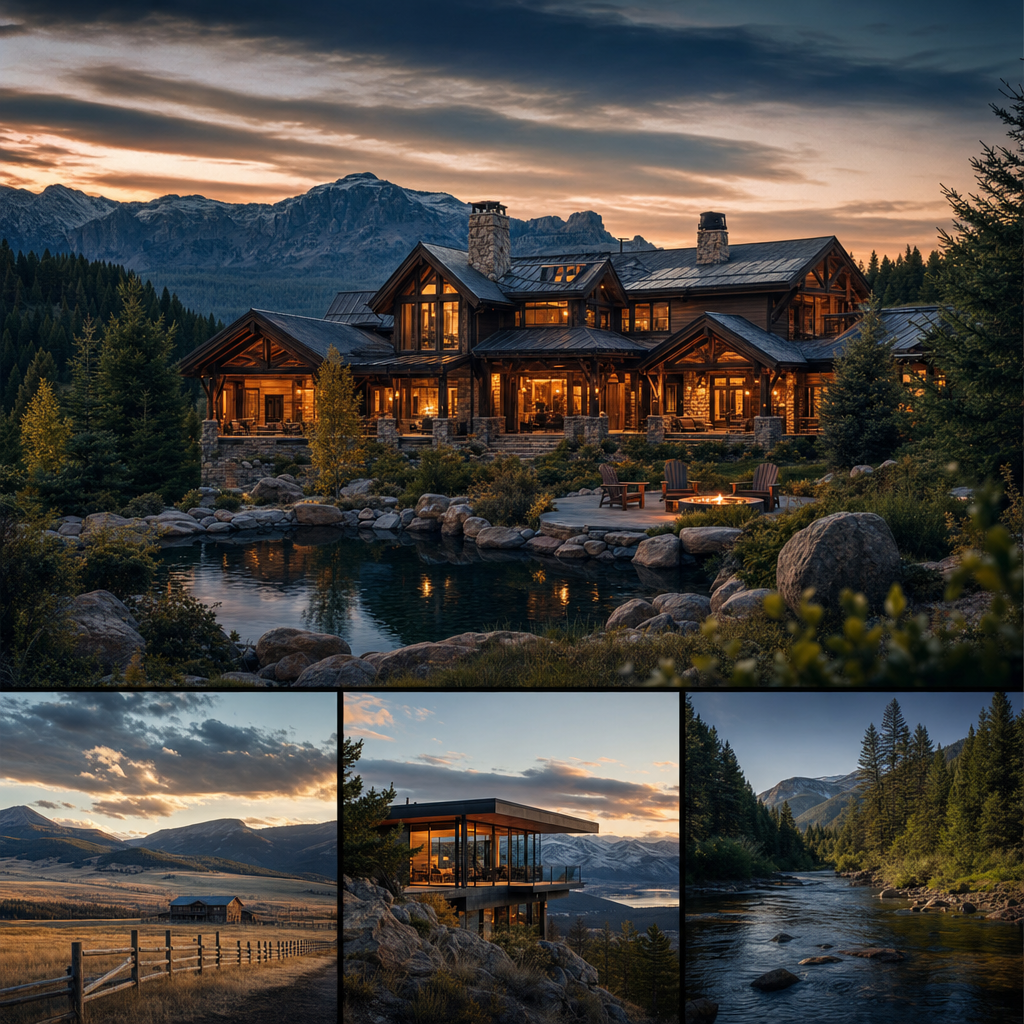
How Much Do Montana Luxury Homes Cost in 2026?
Montana luxury home pricing spans a wider range than most buyers expect. Here is the current price band structure:
| Price Band | Typical Property Type | Median Days on Market |
|---|---|---|
| Entry luxury: $750K–$1.5M | View estates, smaller ranches, Missoula/Hamilton area homes | 45–75 days |
| Mid-tier: $1.5M–$5M | Flathead Valley homes, Bitterroot ranch estates, Whitefish mountain properties | 60–120 days |
| Ultra-luxury: $5M+ | Lakefront trophy properties, Big Sky private club homes, large ranch estates | 150+ days |
Current active inventory from Sotheby's International Realty's Montana listings shows properties ranging from $9.9M to $32M in the Whitefish and Big Sky corridors, confirming the upper end of the market remains active.
According to Bozeman luxury market tracking data, the Bozeman luxury median price in Q1 2026 was $1,383,000, down approximately 4.7% from Q4 2025's $1,470,000 – consistent with the broader stabilization pattern across Montana's top markets after the 2020–2022 pandemic surge.
The property tax advantage is real and calculable. According to Montana's 2026 property tax schedule, the state applies a tiered residential rate: 0.76% on the first $378,000 of market value, scaling up to 1.90% on portions over $1,512,000 for primary residences. For a $3M primary residence, the effective blended rate works out to approximately $17,100–$19,000 per year – compared to roughly $33,000 on a comparable California property at a 1.1% effective rate. That is a $14,000–$16,000 annual difference in carrying costs.
Note that Montana's 2026 tax rules apply the flat 1.90% rate to second homes, short-term rentals, and vacant residential lots – so buyers purchasing investment or vacation properties will not benefit from the lower primary-residence tiers.
Key Takeaway: A $3M Montana primary residence generates roughly $17,100–$19,000/year in property taxes. Second homes and STR properties face a flat 1.90% rate. Verify your intended use before projecting carrying costs.
How to Buy a Luxury Home in Montana: Step-by-Step
Buying Montana luxury property involves several state-specific issues that standard residential purchase processes do not address. Work through these steps in order.
Step 1: Define your region priority. Ski access, water frontage, ranch land, and town proximity are not interchangeable. As DiscoverBigSky.com notes, "two homes at the same price can deliver completely different experiences" – and in Big Sky specifically, "neighborhoods matter more than most buyers expect." Decide which lifestyle driver is primary before evaluating specific listings.
Step 2: Understand Montana water rights. This is the single most important Montana-specific legal issue for ranch and rural buyers. According to the Montana Department of Natural Resources and Conservation, Montana operates under the prior appropriation doctrine – water rights are property rights separate from land title and must be independently researched, transferred, and recorded with the DNRC. Water rights do not automatically transfer with real property. A formal transfer document must be filed with the DNRC at closing, and buyers should commission a water rights abstract before making an offer on any property with irrigation, stock water, or stream access claims.
Step 3: Work with a local luxury specialist. The Montana Board of Realty Regulation requires licensees to disclose agency relationships including dual agency. For $1M+ transactions, dedicated buyer representation is strongly advisable – a listing agent representing both sides has structural conflicts of interest in high-stakes negotiations. Local specialists with direct sub-market experience – such as the team at Glacier Sotheby's International Realty – bring transaction-level knowledge of local pricing, access issues, and negotiation norms that national platforms cannot replicate. Hamilton Montana luxury homes, for example, involve ranch-specific due diligence that requires familiarity with Bitterroot Valley water rights and agricultural easements.
Step 4: Prepare proof of funds early. According to NAR luxury market data, cash transactions account for an estimated 40–55% of $1M+ luxury sales in resort markets. Even if you are financing, sellers of Montana luxury properties expect proof of funds or pre-approval letters before accepting showings on high-value listings. Jumbo loan financing is available but requires additional underwriting time.
Step 5: Complete Montana-specific due diligence. Your checklist should include:
- Well water quality testing and flow rate verification
- Septic system inspection (Montana DEQ Circular DEQ-4 governs standards)
- Access easement review – especially for remote properties with shared or seasonal roads
- Wildfire risk zone verification at the parcel level
- Conservation easement title search
- Water rights abstract (for any property with water claims)
- HOA financial disclosure review for resort community properties
Key Takeaway: Montana's water rights system, wildfire insurance market, and rural infrastructure requirements create due diligence steps that standard residential checklists miss entirely. Budget time and professional fees for each.
What Should You Know Before Buying Montana Luxury Property?
Several material considerations affect Montana luxury ownership that listing pages never mention.
Wildfire insurance availability has contracted significantly. According to the Insurance Information Institute, the pattern of insurer withdrawal from wildfire-prone western states that began in California has expanded to include Montana. High-risk counties including Ravalli (Bitterroot Valley) and Flathead have seen major carriers reduce or exit coverage. Verify insurance availability and cost before making an offer – not after. For waterfront homes for sale in Western Montana near forested areas, this is a pre-offer research step, not a closing-week task.
Seasonal access limitations are real. Remote luxury properties in the Swan Valley, upper Bitterroot drainage, and parts of the Missouri Breaks may require high-clearance vehicles, 4WD, or in extreme cases, aircraft access in winter months. Access easements over private land are a separate legal issue from physical road conditions – both require evaluation.
Short-term rental restrictions are expanding. According to the Bozeman Daily Chronicle, Gallatin County and Big Sky-area jurisdictions have enacted or are actively reviewing short-term rental registration requirements and density caps. STR rules vary by jurisdiction – Flathead County, Lake County, and Whitefish city each have distinct regulations. Verify at the parcel and zoning level before purchasing with STR income assumptions.
Cell and internet service gaps exist in rural luxury areas. Many properties marketed as "remote" or "private" have limited or no cellular coverage and rely on satellite internet. Starlink has improved connectivity significantly, but service quality varies by terrain and tree cover. Test connectivity on-site before closing.
Conservation easements bind future owners. According to USDA NRCS guidance, conservation easements permanently restrict certain uses of land – including subdivision and development – and run with the land regardless of ownership changes. Montana has millions of acres under easement. A title search must specifically identify any easement encumbrances before purchase.
Key Takeaway: Wildfire insurance availability, seasonal access, STR restrictions, and conservation easements are material ownership factors that listing pages omit. Each requires independent verification before closing.
Working With a Local Expert in Montana's Luxury Market
Navigating Montana's luxury market – with its water rights complexity, wildfire insurance challenges, and sub-market pricing variations – requires more than a national search platform. Glacier Sotheby's International Realty operates with direct access to regional MLS data across Western Montana's key luxury corridors, including the Flathead Valley, Bitterroot Valley, and surrounding areas.
What distinguishes a qualified local luxury specialist in this market:
- Direct knowledge of sub-market pricing thresholds (not blended statewide averages)
- Familiarity with Montana water rights transfer procedures and DNRC requirements
- Established relationships with local title companies experienced in ranch and rural transactions
- Current knowledge of wildfire insurance availability by county and zone
- Access to off-market inventory that never reaches national listing aggregators
For buyers relocating from California, Washington, or other high-cost states – who according to Montana Association of Realtors data account for an estimated 50–65% of luxury transactions in peak markets – local representation is not optional. It is the difference between a smooth closing and a transaction that unravels over a water rights abstract or an uninsurable wildfire risk zone.
Frequently Asked Questions About Montana Luxury Homes
What is the minimum price for a luxury home in Montana?
Direct Answer: The minimum luxury price threshold in Montana ranges from approximately $750,000 in Missoula to $1.5M+ in Whitefish and $2M+ in Big Sky, depending on the sub-market.
Price alone does not define luxury in Montana – acreage, water access, and view quality all factor into the designation. A $900,000 property in Whitefish is a standard residential purchase; the same budget in Hamilton can represent a genuine estate with meaningful acreage.
Which Montana city or town has the most expensive luxury real estate?
Direct Answer: Big Sky and the Whitefish/Flathead Valley corridor compete for the highest price points, with Big Sky private club properties and Flathead Lake waterfront estates reaching $18M–$32M+.
Current active listings from Sotheby's International Realty's Montana portfolio include a Whitefish property listed at $32,000,000 on 14 acres and a Big Sky private home at $18,400,000. Bozeman's luxury median in Q1 2026 was $1,383,000, making it a more accessible entry point than either resort market.
How does buying a Montana luxury ranch differ from buying a standard home?
Direct Answer: Ranch purchases require separate due diligence on water rights, access easements, conservation easements, agricultural infrastructure, and well and septic systems – none of which apply to standard residential transactions.
Water rights are legally separate from land title under Montana's prior appropriation doctrine, per Montana DNRC guidance. A water rights abstract must be commissioned before closing. Conservation easements, if present, permanently restrict development and bind all future owners.
Are Montana luxury home prices rising or falling in 2026?
Direct Answer: Montana luxury prices are in a stabilization phase – modestly below 2022 peaks but still significantly above 2019 baselines, with Bozeman showing a 4.7% quarter-over-quarter decline in Q1 2026.
According to Bozeman luxury market data, the Q1 2026 luxury median was $1,383,000, down from $1,470,000 in Q4 2025. The broader pattern across Montana's top markets shows price stabilization after the 2020–2022 pandemic surge, not a sharp correction.
Can out-of-state buyers purchase Montana luxury property without visiting in person?
Direct Answer: Technically yes, but it is inadvisable for properties above $1M given the Montana-specific due diligence requirements around water rights, access, wildfire risk, and insurance availability.
Remote purchases are possible with strong local representation, but well water testing, septic inspection, access road evaluation, and wildfire zone verification all benefit from on-site assessment. DiscoverBigSky.com notes that "even cash buyers benefit from early financial preparation" and that clarity on property specifics matters as much as price.
What are the biggest hidden costs of owning a luxury home in Montana?
Direct Answer: Wildfire insurance premiums (where available), well and septic maintenance, seasonal road maintenance, and HOA fees in resort communities are the most commonly underestimated ongoing costs.
According to Montana's 2026 property tax schedule, second homes and STR properties face a flat 1.90% tax rate – not the lower primary-residence tiers. Resort community HOA fees can reach $30,000–$50,000+ annually. Septic system replacement on larger luxury parcels can cost $15,000–$50,000+.
How long does it typically take to close on a Montana luxury property?
Direct Answer: Standard luxury transactions close in 30–60 days, but ranch purchases with water rights transfers, conservation easement reviews, and rural due diligence commonly require 60–90 days or longer.
Cash transactions close faster than financed purchases, and cash buyers represent an estimated 40–55% of $1M+ luxury sales in Montana resort markets. Complex ranch transactions involving DNRC water rights filings and agricultural easement reviews should budget 90 days minimum.
Ready to Explore Montana Luxury Homes for Sale?
Montana's luxury market rewards buyers who do their homework before they start browsing listings. The regional price thresholds, water rights requirements, wildfire insurance landscape, and property tax structure all vary in ways that national search platforms cannot communicate.
If you are ready to move from research to active search, working with a locally grounded specialist is the most efficient path forward. Glacier Sotheby's International Realty provides regional market expertise across Western Montana's key luxury corridors – from Flathead Lake waterfront properties to Bitterroot Valley ranch estates. Start with a clear picture of your region priority, your property type, and your due diligence requirements. The right Montana property is out there – finding it efficiently requires knowing which market you are actually in.