
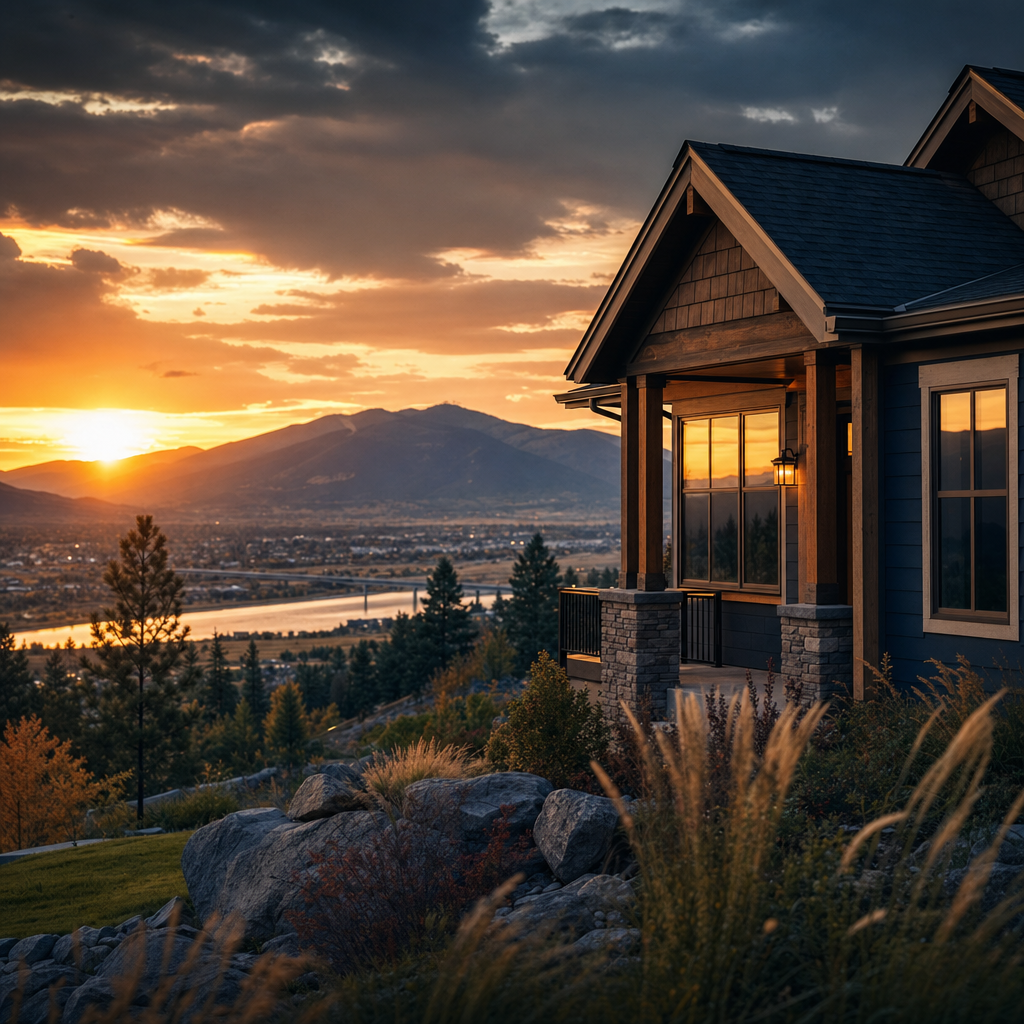
TL;DR: – Missoula’s median home sale price sits near $550,000, with inventory finally approaching five months of supply – the most balanced conditions since before the pandemic. Single-family homes average $584,000; condos average $343,000 – giving buyers meaningful options across price points. This guide is for out-of-state relocators, local move-up buyers, and first-time purchasers who want neighborhood-level data that listing aggregators do not provide.
Most buyers searching Missoula Montana homes for sale assume the market is still as frenzied as it was in 2022. That assumption is outdated – and it may be costing you negotiating leverage.
The Missoula housing market has shifted. Inventory has climbed. Days on market have stretched. The data tells a more nuanced story than any single listing portal can capture.
This guide draws on the Five Valleys Housing Report – the Missoula Organization of Realtors’ annual analysis produced since 2005 – alongside current MLS data, local market reporting, and City of Missoula neighborhood profiles to give you a complete picture. Note: Review-platform methodology disclosures (G2, Capterra) are not applicable to real estate market analysis; the sources cited here are primary market data and official municipal records.
What Is the Missoula Housing Market Like Right Now?
Missoula’s housing market is stabilizing after years of extreme seller advantage. Inventory has risen to roughly five months of supply – a level not seen since before the pandemic, according to Missoula Current’s reporting on the Five Valleys Housing Report.
That matters. A balanced market is generally defined at six months of supply. Missoula is close.
Key figures from the most recent data:
- Median sale price (2025): $550,000 across all unit types – a 2.2% decrease from 2024’s $562,400
- Total closed sales (2025): 1,029 units – up 4.6% year-over-year, the second consecutive annual increase
- Inventory: Approximately five months of supply as of early 2026
The Five Valleys Housing Report has tracked Missoula housing data since 2005, making it the most authoritative longitudinal source for this market. The 2026 report was presented in February at the Missoula Public Library.
For deeper context on broader market forces, the Missoula Montana real estate market guide covers long-term appreciation trends and investment considerations.
Key Takeaway: Missoula’s median home price is $550,000 with five months of inventory – the most buyer-friendly conditions in years. This is not the 2022 market. Negotiating room exists, particularly above $600,000.
Missoula Neighborhood Price Breakdown (2026)
The cheapest neighborhoods in Missoula trade near $310,000–$375,000; the most expensive approach $600,000 or more. That spread defines your search before you view a single listing.
The City of Missoula recognizes 20 distinct neighborhoods within city limits, each with its own character, density, and price profile.
| Neighborhood | Approx. Median Price | Price/Sq Ft | Avg. Days on Market |
|---|---|---|---|
| Rattlesnake | ~$575,000 | ~$310 | 35–50 days |
| South Hills | ~$560,000 | ~$295 | 40–55 days |
| University District | ~$490,000 | ~$280 | 30–45 days |
| Orchard Homes | ~$420,000 | ~$240 | 45–60 days |
| Lolo / Reserve St. Corridor | ~$395,000 | ~$225 | 50–65 days |
| East Missoula | ~$340,000 | ~$200 | 55–70 days |
Note: Neighborhood-level figures are directional estimates derived from MLS data patterns. Verify current pricing with a licensed agent before making offers.
Most Affordable Neighborhoods in Missoula
East Missoula and the Lolo/Reserve Street corridor offer the lowest entry points – generally $310,000 to $420,000 for single-family homes.
The trade-offs are real. East Missoula sits across the Clark Fork River from downtown, adding 10–15 minutes to most commutes. The Reserve Street corridor offers convenience to big-box retail but lacks the walkability of central neighborhoods.
Orchard Homes, on Missoula’s west side, represents a middle ground: more affordable than Rattlesnake or South Hills, with reasonable access to downtown and the university.
For buyers with tighter budgets, Bitterroot Valley real estate – particularly the Stevensville and Florence corridors – offers additional options within 30–45 minutes of Missoula.
Higher-End and Luxury Areas
Rattlesnake and South Hills command premium pricing for specific reasons. Rattlesnake provides direct trail access to the 61,000-acre Rattlesnake National Recreation Area – a genuine lifestyle differentiator that sustains demand. South Hills offers panoramic valley views and larger lot sizes.
Price per square foot in these neighborhoods runs $280–$320, compared to $195–$240 in East Missoula. Lot sizes in upper Rattlesnake and South Hills frequently exceed half an acre.
For buyers considering estate-scale properties, luxury homes for sale in Missoula Montana includes properties ranging from $1,000,000 to $3,500,000, including acreage parcels above the valley floor. Active listings have included a 20-acre estate on Horseback Ridge overlooking the entire Missoula Valley and a 62-acre riverfront development at Freestone with Clark Fork access.
Key Takeaway: East Missoula starts near $340,000; Rattlesnake approaches $575,000. The $235,000 spread between these neighborhoods is the single most important variable in your Missoula home search.
What Types of Homes Are Available in Missoula?
Missoula’s listing inventory spans four primary property types, each with distinct price ranges and availability timelines.
According to Missoula Current’s coverage of the Five Valleys Housing Report, the 2025 breakdown by unit type shows:
- Single-family homes: Median $584,000 – the dominant inventory category
- Townhouses: Median $497,000 – growing segment, particularly in newer west-side developments
- Condos: Median $343,000 – most accessible price point for first-time buyers
- Manufactured homes on owned land: Median $356,000 – viable option in outlying areas
New construction is active in several Missoula-area subdivisions. The City of Missoula’s building permit activity confirms ongoing residential development, though new construction typically carries a 6–12 month timeline from contract to occupancy and often commands a 10–15% premium over comparable resale inventory.
For buyers interested in acreage and ranch-style properties, Western Montana luxury real estate covers larger parcels in the broader region, including properties with agricultural components and recreational access.
Current active listing inventory shows approximately 500–730 homes for sale in the Missoula area at any given time, depending on the platform and geographic boundaries used.
Key Takeaway: Condos at $343,000 median represent Missoula’s most accessible entry point. Single-family homes at $584,000 median are the primary market. New construction adds options but requires patience and a premium.
How Much Does It Really Cost to Buy a Home in Missoula?
The listing price is the starting point. The actual cost to close is substantially higher. Most buyers underestimate upfront costs by $15,000–$25,000.
Sample calculation: $450,000 purchase price
| Cost Component | Amount |
|---|---|
| Down payment (20%) | $90,000 |
| Closing costs (3%) | $13,500 |
| First-year property tax (~0.83%) | $3,735 |
| Total upfront cash needed | $107,235 |
Montana’s effective property tax rate is among the lowest in the western United States – approximately 0.74–0.83% – which partially offsets Missoula’s elevated purchase prices relative to national averages.
Sample monthly payment estimates (30-year fixed at 6.81%):
| Purchase Price | Down (20%) | Loan Amount | Est. Monthly PITI |
|---|---|---|---|
| $300,000 | $60,000 | $240,000 | ~$1,760 |
| $450,000 | $90,000 | $360,000 | ~$2,640 |
| $600,000 | $120,000 | $480,000 | ~$3,520 |
PITI = principal, interest, taxes, insurance. Estimates based on current rate environment; rates change weekly.
Closing costs in Montana run 2–4% of purchase price. Montana is a title state – attorneys are not required for residential closings, which keeps transaction costs lower than attorney-state markets.
HOA fees vary significantly by neighborhood type. Newer planned developments and condo complexes typically carry monthly HOA fees of $150–$400. Established single-family neighborhoods in Rattlesnake, South Hills, and the University District generally have no HOA.
One cost that listing portals universally omit: flood and wildfire insurance. Properties along the Clark Fork River corridor may fall in FEMA Special Flood Hazard Areas, adding $1,500–$4,000 annually. Homes in timbered WUI corridors – upper Rattlesnake, Miller Creek, South Hills – face tightening homeowner insurance availability and elevated premiums.
Key Takeaway: Budget $107,000+ in upfront cash to purchase a $450,000 Missoula home at 20% down. Factor flood and wildfire insurance costs before finalizing your budget – these can add $2,000–$4,000 annually in affected areas.
Is Now a Good Time to Buy in Missoula?
The direct answer: conditions in 2026 are more favorable for buyers than at any point since 2020. That does not mean the market is cheap.
Three reasons supporting buying now:
- Inventory is the highest in a decade. Local market analysis shows over 300 residential properties for sale in Missoula County – the highest inventory in ten years. More supply means more negotiating leverage.
- Prices have softened. The Five Valleys Housing Report data shows a 2.2% median price decrease in 2025. Modest, but directionally meaningful after years of appreciation.
- Renting is not a neutral alternative. Average Missoula two-bedroom apartment rent runs approximately $1,487/month. A $300,000 home purchase at 6.81% with 20% down carries a monthly PITI of roughly $1,760 – a $273/month premium for building equity rather than paying a landlord.
Two reasons for caution:
- The rate environment remains elevated. Rates near 6.8–7.0% significantly reduce purchasing power. A buyer who could afford an $800,000 home at interest rate lows several years ago can now only qualify for $400,000–$450,000 at current rates.
- Affordability remains strained. The Five Valleys Housing Report affordability index for buyers with 5% down scored 65 in 2025 – below 100 indicates difficulty affording the median-priced home. At 20% down, the index rises to 82, still below the affordability threshold.
For buyers considering alternatives, Bitterroot Valley real estate in communities like Hamilton and Stevensville offers lower entry prices within commuting distance of Missoula.
Key Takeaway: 2026 offers the most balanced Missoula buying conditions in years. Inventory is up, prices have softened slightly, and motivated sellers exist. The rate environment remains the primary headwind.
Step-by-Step: How to Buy a Home in Missoula
Step 1: Get pre-approved (not just pre-qualified)
Pre-approval requires full income, asset, and credit verification. In Missoula’s market, sellers treat pre-qualification letters as insufficient. Budget 3–5 business days for full pre-approval.
Step 2: Select a local agent
Choose an agent with verifiable Missoula transaction history. The professional real estate advisors at Glacier Sotheby’s International Realty operate in this market with access to current MLS data and neighborhood-level pricing intelligence that out-of-state buyers particularly need.
Step 3: Define your search by neighborhood and property type
Use the neighborhood price table above to shortlist areas by budget. Missoula’s 20 recognized neighborhoods have distinct character – visit in person before committing.
Step 4: Make a competitive offer
Standard Montana earnest money runs 1–3% of purchase price. In the current market, offering at or slightly below list price is reasonable for properties with 45+ days on market. Under-$400,000 properties still move faster and may require full-price or above offers.
Step 5: Complete inspections
Montana’s standard inspection contingency period is typically 10 days. Do not waive inspection. Missoula’s older housing stock – particularly University District homes built pre-1970 – frequently surfaces deferred maintenance, radon, and asbestos concerns.
Step 6: Close
Montana closings are handled by title companies, not attorneys. Timeline from accepted offer to close: typically 30–45 days for conventional financing. Cash offers can close in 10–14 days.
Missoula-specific checklist:
- Verify flood zone status at address level (FEMA MSC)
- Check WUI wildfire risk designation for timbered properties
- Confirm school attendance zone via Missoula County Public Schools
- Review HOA documents if applicable (request within inspection period)
- Confirm well/septic status for properties outside city limits
Key Takeaway: The Missoula buying process runs 30–45 days from accepted offer to close. The inspection period is your primary due-diligence window – use all 10 days and do not waive it.
Working With a Local Expert
Navigating Missoula’s neighborhood-level pricing differences, flood zone considerations, and shifting inventory requires current, local knowledge – not just access to a listing portal.
Glacier Sotheby’s International Realty provides buyers and sellers with market analysis grounded in current MLS data and familiarity with Missoula’s distinct neighborhoods. For out-of-state buyers in particular, having representation that understands the difference between a Rattlesnake listing at $575,000 and an East Missoula listing at $340,000 – and what drives that gap – is material to making a sound purchase decision.
Their coverage extends across Western Montana, which is relevant for buyers comparing Missoula to Bitterroot Valley or Flathead Valley alternatives.
Frequently Asked Questions About Missoula Homes for Sale
What is the average home price in Missoula Montana in 2026?
Direct Answer: The median home sale price in Missoula was $550,000 across all unit types in 2025, down 2.2% from $562,400 in 2024, according to the Five Valleys Housing Report.
Single-family homes specifically averaged $584,000. Condos averaged $343,000. Active listing prices on aggregator platforms skew higher because they include unsold inventory at elevated ask prices.
Is Missoula Montana a good place to buy a home?
Direct Answer: Missoula offers a strong quality-of-life case – university town, outdoor recreation, healthcare employment base – but affordability remains strained, with the Five Valleys Housing Report affordability index scoring 65 for buyers with 5% down.
The market is more balanced than it has been since 2020. Buyers with 20% down and stable income are in a reasonable position. First-time buyers face the steepest challenge.
What are the cheapest neighborhoods in Missoula to buy a home?
Direct Answer: East Missoula and the Lolo/Reserve Street corridor offer the lowest median prices, generally $310,000–$420,000 for single-family homes.
Orchard Homes on the west side provides a mid-range alternative near $420,000 with better access to downtown than East Missoula. Trade-offs include longer commutes and fewer walkable amenities compared to central neighborhoods.
How does Missoula compare to other Montana real estate markets?
Direct Answer: Missoula sits between Bozeman (higher) and Kalispell (lower) in the Montana price spectrum. Bozeman’s median reached approximately $668,000 in early 2026; Kalispell’s was approximately $425,000, according to Montana Association of Realtors data.
For buyers priced out of Missoula, Hamilton Montana homes for sale in the Bitterroot Valley offer lower entry points within 45–60 minutes of Missoula. For buyers seeking premium properties across the region, Montana luxury homes for sale covers estate and acreage listings statewide.
How long does it take to close on a home in Missoula?
Direct Answer: From accepted offer to closing, conventional financing transactions in Missoula typically take 30–45 days. Cash purchases can close in 10–14 days.
The 10-day inspection contingency period is the primary buyer-protection window. Title companies handle Montana closings; no attorney is required, which keeps the process relatively streamlined compared to attorney-state markets.
Are there luxury homes for sale in Missoula Montana?
Direct Answer: Yes. Active Missoula listings include properties ranging from $1,000,000 to $3,500,000, including acreage estates, riverfront parcels, and custom homes above the valley floor.
Notable examples from current inventory include a 20-acre estate on Horseback Ridge and a 62-acre riverfront development at Freestone with Clark Fork River access. For the full range of premium inventory, Montana luxury homes for sale provides broader regional coverage.
What are property taxes like for Missoula homeowners?
Direct Answer: Montana’s effective property tax rate is approximately 0.74–0.83%, among the lowest in the western United States, according to the Tax Foundation’s 2025 property tax analysis.
On a $450,000 Missoula home, that translates to approximately $3,330–$3,735 in annual property taxes. Montana calculates residential taxable value at 1.35% of market value multiplied by the applicable mill levy, per the Montana Department of Revenue.
Ready to Get Started?
For personalized guidance, visit Glacier Sotheby’s International Realty to learn how we can help.
Conclusion
Missoula’s housing market in 2026 is the most navigable it has been in years. Inventory is up. Prices have softened modestly. Motivated sellers exist across all price tiers.
The neighborhood price spread – from $340,000 in East Missoula to $575,000+ in Rattlesnake – means your budget determines your search geography before you view a single listing. Use that framework.
Total upfront costs on a $450,000 purchase run approximately $107,000 at 20% down. Factor flood and wildfire insurance for timbered or riverside properties. Use the full 10-day inspection period.
For buyers ready to move from research to action, Glacier Sotheby’s International Realty is a practical starting point for current MLS access and local market guidance across Western Montana.