
TL;DR
Entry-level base village condos range $500K–$800K with HOA fees of $400–$900/month; a 2BR ski-in condo carries roughly $5,200/month in total carry costs (mortgage + HOA + utilities).The mountain sits 7 miles from downtown Whitefish – close enough for schools, hospital access, and groceries, but far enough that shoulder seasons (April–May, October–November) feel genuinely quiet with limited on-mountain services.
Best fit: remote workers, active retirees, enthusiasts prioritizing ski access, and second-home buyers with 4+ weeks annual use. Poor fit: daily commuters, tight-budget buyers, and those needing year-round walkable amenities on the mountain itself.
What Does Year-Round Living at Whitefish Mountain Resort Actually Look Like?
Year-round mountain living at Whitefish Mountain Resort is viable but requires honest expectations about what “year-round” means. The resort operates a genuine winter ski season (late November through mid-April) and a legitimate summer season (late June through early September), but the shoulder seasons – spring mud and fall quiet – are sparse on amenities and visitor traffic.
The mountain community splits into two distinct populations: base village residents who live steps from ski lifts in condos and townhomes, and lower Big Mountain Road residents in single-family homes with larger lots but longer walks to lifts. The summit reaches 6,817 feet, and the base sits at 4,464 feet, creating a 2,353-foot vertical drop that supports both winter skiing and summer activities.
Whitefish Mountain Resort covers 3,020 skiable acres and drops 2,353 vertical feet, with trail difficulty breaking down as 15% beginner, 35% intermediate, 40% advanced, and 10% expert.
Key Takeaway: Whitefish Mountain Resort supports genuine four-season living with 300 inches of snow annually and summer operations, but shoulder seasons are quiet. Base village residents enjoy ski-in/ski-out access; mountain road residents gain space and privacy at the cost of a short drive to lifts.
The Four Seasons: What Each One Is Really Like on the Mountain
Winter: The Main Event
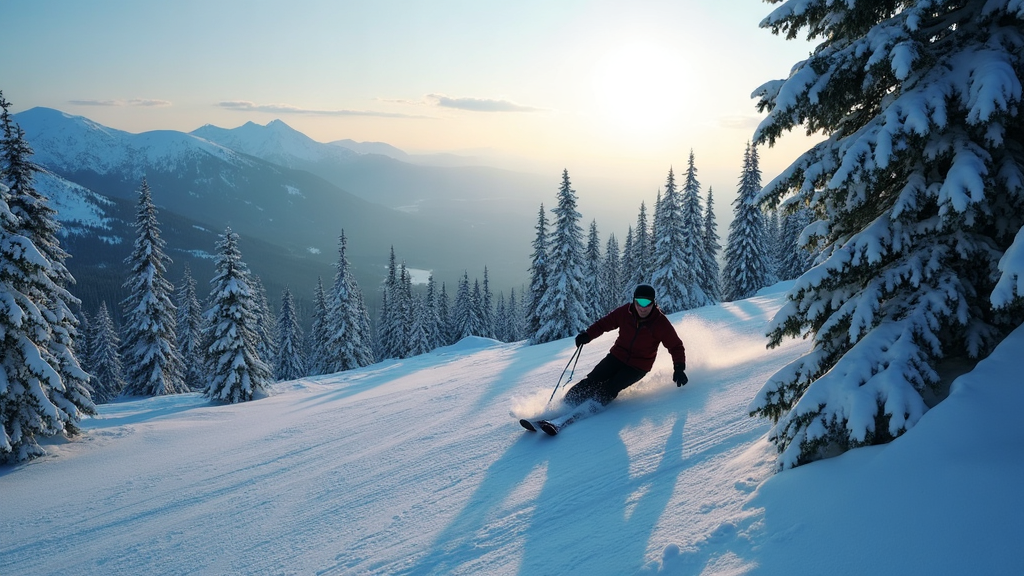
Winter is why people move to Whitefish Mountain Resort. The resort’s ski season typically runs late November through mid-April, and the mountain averages approximately 300 inches of snowfall per season. Whitefish averages 73 inches of snow annually, nearly triple the U.S. average of 28 inches.
Adult daily lift tickets are priced from $89 to $119 depending on purchase timing, while early-bird season passes start at $579 for adults. If you ski 30+ days per season, the pass pays for itself in under 10 lift-ticket days. The math is simple: $579 ÷ $100/day average = 5.8 days to break even.
Winter temperatures on the mountain average 20–35°F during the day, dropping to 0–15°F at night. The base village fills with visitors, restaurants operate at full capacity, and the mountain feels alive. Ski-in/ski-out residents can literally step out their door onto the slopes. The trade-off: winter is crowded, parking is tight, and road conditions on Big Mountain Road require winter tires and caution.
In the 2022-23 winter season, Whitefish Mountain Resort broke its previous visitation record, with more than 500,000 skiers and snowboarders hitting the slopes, making Whitefish a legitimate destination resort, not a local hill.
Summer: More Than a Ski Hill Off-Season
Summer operations transform the mountain into a hiking and biking destination. Summer activities include the gondola, zip line, hiking, and lift-accessed mountain biking, running approximately late June through Labor Day.
Mountain biking is the main summer draw, with lift-accessed trails ranging from beginner flow trails to technical descents. The gondola runs daily, offering non-bikers or hikers a summit experience. Zip-line tours, disc golf, and guided nature walks round out the calendar.
Summer is also when short-term rental income peaks. Short-term rental average daily rates in Whitefish surged 26.6% to $672 in July 2026. A 2BR ski-in condo can gross $45K–$65K annually if managed as a vacation rental.
Spring and Fall: The Shoulder Seasons
Spring (April–May) is mud season. Spring on the mountain means mud, minimal services, and a quiet that can feel stark after the energy of ski season. Most base village restaurants reduce hours or close entirely between ski season end and summer ops launch. Big Mountain Road becomes a washboard of potholes and unpaved sections. Hiking is possible but muddy. The village feels abandoned.
Fall (October–November) is the quietest period. Larch foliage peaks in mid-October, drawing a brief wave of leaf-peepers. By November, the mountain is waiting for snow. Hunting season brings backcountry activity but not resort amenities. Restaurants operate reduced hours. The village is genuinely peaceful – which appeals to some residents and depresses others.
Both shoulder seasons offer lower real estate prices and rental rates, making them attractive for budget-conscious buyers. But they’re also when you’ll feel the isolation most acutely.
Key Takeaway: Winter dominates (Nov–Apr) with 300 inches of snow and 500K+ annual visitors. Summer (Jun–Sep) offers gondola, biking, and hiking. Spring and fall are quiet, muddy/cold, with limited services – ideal for solitude seekers, challenging for those needing year-round amenities.
What Does It Cost to Live at Whitefish Mountain Resort?
Real Estate Pricing
Entry-level base village condos now trade between $500,000 and $800,000+ depending on size and ski-in access. Ski-in/ski-out units command a premium – expect $100K–$300K more for direct slope access.
Luxury slopeside residences (e.g., Powder Peak development) list in the $2.5M–$4.9M range. Single-family homes on Big Mountain Road start around $800K and climb to $3M+ for premium properties with acreage and views.
Real estate prices have jumped as much as 82 percent since early 2020; in some instances they have more than doubled. This appreciation reflects remote work migration and resort demand, not local wage growth.
HOA Fees and Monthly Carry Costs
Base village HOA fees range $400–$900/month depending on the complex. These cover snow removal, common area maintenance, and sometimes utilities. Verify the specific complex’s reserve fund status – underfunded reserves can trigger special assessments.
Here’s a transparent calculation for a typical 2BR base village condo:
- Purchase price: $650,000
- Down payment (20%): $130,000
- Mortgage (7% interest, 30-year): $3,640/month
- HOA fees: $650/month
- Property taxes (Montana): ~$180/month
- Utilities (winter heating): ~$250/month
- Total monthly carry: ~$4,720
This assumes no rental income. If you rent the unit 150 nights/year at $200/night average, gross revenue is $30,000. Subtract 45–50% for expenses (cleaning, management, vacancy, repairs), and you net $15K–$16.5K annually, or $1,250–$1,375/month – reducing your net carry cost to ~$3,450/month.
Rental Income Reality
A 2BR ski-in condo at $200–$250/night (conservative off-peak average) grosses $30K–$45K annually if booked 150–180 nights. Peak season (December–March, July–August) commands higher nightly rates.
However, Flathead County adopted short-term rental regulations requiring property owners to obtain a license and meet health and safety standards for properties rented for fewer than 30 consecutive days. Verify your specific property’s HOA rental restrictions – some complexes prohibit or limit STR activity.
Daily Cost of Living
The base village has the Village Market grocery/provisions store, accessible year-round, but inventory is limited and prices are 15–25% higher than downtown Whitefish. Full grocery shopping requires a 7-mile drive to downtown.
Whitefish’s cost of living runs approximately 16% higher than the national average. Dining on the mountain is expensive – expect $18–$35 per entree at base village restaurants. Downtown Whitefish offers more variety and competitive pricing.
Key Takeaway: Entry-level base village condo: $650K purchase + $650/month HOA + $250/month utilities = $5,200/month total carry (at 20% down, 7% rate). Rental income potential: $30K–$45K gross annually, netting $15K–$16.5K after expenses. Verify HOA rental restrictions before purchasing with rental intent.
Property Types and Neighborhoods on the Mountain
The mountain community divides into three distinct zones, each with different trade-offs.
Base Village: Ski-in/ski-out condos and townhomes within walking distance of lifts and restaurants. Highest density, most walkable, most expensive. HOA fees are highest here ($600–$900/month) because infrastructure is dense. Best for: those prioritizing ski access, retirees who want to walk to amenities, short-term rental investors.
Lower Big Mountain Road Corridor: Single-family homes on 1–5 acre lots, 5–15 minute drive to lifts. More privacy, larger homes, lower HOA fees ($300–$500/month if any). Some properties have ski-in access; most require a short drive. Best for: those wanting space, buyers prioritizing land, those comfortable with a short commute.
Surrounding Mountain Residential Areas (Ponderosa): Larger lots (2–10+ acres), further from lifts (15–25 minute drive), lowest HOA fees ($0–$300/month). Most rural, most quiet, most affordable. Best for: remote workers, retirees seeking solitude, buyers wanting acreage.
Downtown Whitefish Context: 7 miles / ~12–20 minutes from the mountain base. Whitefish has just under 8,000 year-round residents, with schools, North Valley Hospital, grocery stores, and a walkable downtown core. Many mountain residents commute to downtown for work, school, and services.
| Zone | Distance to Lifts | Typical Price Range | HOA Fees | Best For |
|---|---|---|---|---|
| Base Village | Walk (0–5 min) | $500K–$1.2M | $600–$900/mo | Ski-in/ski-out, walkability |
| Big Mountain Road | 5–15 min drive | $700K–$2M | $300–$500/mo | Space, privacy, ski access |
| Surrounding Areas | 15–25 min drive | $600K–$1.5M | $0–$300/mo | Land, solitude, affordability |
| Downtown Whitefish | 7 miles / 12–20 min | $600K–$1.8M | $0–$200/mo | Schools, services, walkability |
Key Takeaway: Base village offers ski-in/ski-out walkability at $600–$900/month HOA. Big Mountain Road balances space and access. Surrounding areas maximize land and quiet. Downtown Whitefish provides schools and services 7 miles away.
Is Living at Whitefish Mountain Resort Right for You?
Best Fit
Remote workers with reliable internet: If you work from home and can handle inconsistent connectivity (Starlink is the backup), the mountain offers unbeatable outdoor access and low distractions. Summer and fall are ideal for focus; winter brings social energy.
Active retirees: The resort offers about 2,995 acres of terrain, 7+ lifts, and 295 inches of average snowfall. Skiing, hiking, and mountain biking are accessible from your door. Glacier Park International Airport is about a 30-minute drive away, making travel manageable.
Second-home buyers with 4+ weeks annual use: If you visit 4+ weeks per year, the property pays for itself through rental income and personal use. The investment thesis is strong if you can absorb the carry costs.
Poor Fit
Daily commuters: Big Mountain Road is not a commute road. Winter conditions, mud season, and distance make daily trips to Kalispell or Missoula impractical.
Tight-budget buyers: Entry-level pricing ($500K+) and HOA fees ($400–$900/month) require solid financial footing. Shoulder season vacancy can hurt rental income.
Urban amenity seekers: The base village has limited year-round dining, shopping, and nightlife. Downtown Whitefish is 7 miles away. If you need walkable restaurants and culture, downtown living is better.
Connectivity Reality
Internet on the mountain is improving but inconsistent. Resort lodge Wi-Fi is available; individual residences rely on cable (where available) or Starlink satellite. Cellular coverage is spotty. Test connectivity at the specific property before purchasing for remote work.
Key Takeaway: Best fit: remote workers, active retirees, second-home investors. Poor fit: daily commuters, budget-conscious buyers, urban amenity seekers. Verify internet connectivity at the specific property before committing.
Finding the Right Mountain Home: A Local Perspective
When evaluating properties at Whitefish Mountain Resort, working with a local real estate partner who understands the nuances of mountain living is essential. The difference between a base village condo and a Big Mountain Road home isn’t just price – it’s lifestyle, access, and long-term value.
Glacier Sotheby’s International Realty specializes in Whitefish Mountain Resort and surrounding properties, offering insight into seasonal market dynamics, HOA structures, rental income potential, and neighborhood-specific trade-offs. Their team understands which properties hold value through shoulder seasons, which complexes have strong rental histories, and how to evaluate connectivity and commute logistics before you commit.
Whether you’re a remote worker evaluating base village condos, a couple comparing Big Mountain Road homes, or an investor analyzing rental income potential, local expertise matters. The difference between a property that works and one that doesn’t often comes down to details – HOA reserve fund health, specific complex rental policies, winter road access, and proximity to schools or services – that only on-the-ground knowledge reveals.
Frequently Asked Questions About Year-Round Mountain Living at Whitefish
How much does it cost to buy a home at Whitefish Mountain Resort?
Direct Answer: Entry-level base village condos range $500K–$800K; Big Mountain Road single-family homes start around $700K–$1M; luxury slopeside properties exceed $2.5M.
Entry-level base village condos now trade between $500,000 and $800,000+ depending on size and ski-in access. Ski-in/ski-out units command a $100K–$300K premium. Real estate prices have jumped as much as 82 percent since early 2020, reflecting remote work migration and resort demand.
Can you live at Whitefish Mountain Resort year-round or is it just a ski destination?
Direct Answer: Yes, genuine year-round living is viable. Winter (Nov–Apr) dominates with skiing; summer (Jun–Sep) offers gondola, biking, and hiking. Shoulder seasons are quiet with limited services.
The resort operates a genuine winter ski season (late November through mid-April) and a legitimate summer season (late June through early September). Spring and fall are sparse on amenities, making them ideal for solitude seekers but challenging for those needing year-round walkable services.
What is the rental income potential for a condo at Whitefish Mountain Resort?
Direct Answer: A 2BR ski-in condo grosses $30K–$45K annually at conservative rates; after 45–50% expenses, net income is $15K–$16.5K before mortgage.
Peak season (December–March, July–August) commands higher nightly rates. However, Flathead County adopted short-term rental regulations requiring property owners to obtain a license, and many HOA complexes restrict or prohibit STR activity. Verify rental policies before purchasing with investment intent.
What amenities are available on the mountain in summer?
Direct Answer: Gondola scenic rides, zip-line, lift-accessed mountain biking, hiking trails, and disc golf operate late June through early September.
Summer activities include the gondola, zip line, hiking, and lift-accessed mountain biking. Mountain biking is the primary summer draw, with trails ranging from beginner flow to technical descents.
How far is Whitefish Mountain Resort from downtown Whitefish and Glacier National Park?
Direct Answer: Downtown Whitefish is 7 miles / 12–20 minutes by car. Glacier National Park’s west entrance is approximately 40–50 minutes south.
Whitefish Mountain Resort is about 6 miles from Whitefish, with winter road conditions extending drive times to 20+ minutes. Glacier Park International Airport is about a 30-minute drive away. West Glacier entry point is about 45 minutes east of Whitefish Mountain Resort, making Glacier National Park a practical day trip for mountain residents.
What are the HOA fees like at Whitefish Mountain Resort properties?
Direct Answer: Base village HOA fees range $400–$900/month depending on complex. Big Mountain Road properties range $300–$500/month. Surrounding areas may have no HOA or minimal fees ($0–$300/month).
HOA fees cover snow removal, common area maintenance, and sometimes utilities. Verify the specific complex’s reserve fund status before purchasing – underfunded reserves can trigger special assessments. Request 3 years of HOA meeting minutes and financial statements to assess long-term stability.
How does Whitefish Mountain Resort compare to other ski resort towns like Big Sky or Jackson Hole?
Direct Answer: Whitefish offers comparable terrain at significantly lower entry prices. Big Sky base village condos start $1M+; Jackson Hole starts $700K–$1.2M+. Whitefish base village starts $500K–$800K.
Whitefish Mountain Resort offers comparable terrain variety to mid-tier western ski destinations at a significantly lower price point than Jackson Hole or Big Sky, though it lacks the same luxury amenity ecosystem. Whitefish is also less crowded and more accessible for those prioritizing value over prestige.
Ready to Get Started?
For personalized guidance, visit Glacier Sotheby’s International Realty to learn how we can help.
Conclusion
Year-round mountain living at Whitefish Mountain Resort is achievable and genuinely appealing for the right buyer. The mountain delivers on its promise: 300 inches of annual snowfall for winter skiing, summer operations with gondola, biking, and hiking, and proximity to downtown Whitefish for schools and services.
The honest trade-offs are real. Shoulder seasons are quiet. Base village HOA fees are substantial. Connectivity is inconsistent. The mountain is not a year-round walkable community – it’s a seasonal resort with a genuine off-season.
But if you’re a remote worker seeking outdoor access, an active retiree prioritizing skiing and hiking, or a second-home investor with 4+ weeks annual use, the math works. Entry-level pricing ($500K–$800K) is lower than comparable ski resort markets. Rental income potential ($15K–$16.5K net annually) offsets carry costs. The lifestyle – skiing before work, hiking at lunch, mountain biking in summer – is genuinely accessible.
Start by clarifying your use case: primary residence, second home, or investment? Then evaluate specific properties against your connectivity, commute, and amenity needs. Glacier Sotheby’s International Realty can help you navigate the nuances of base village versus Big Mountain Road living, HOA structures, and rental income potential.
The mountain is waiting. Make sure it’s the right fit before you move.