
TL;DR: Missoula is a vibrant university town of 75,000 with exceptional outdoor access, but housing costs have climbed to $450,000–$500,000 median while local wages lag behind. Summer wildfire smoke and winter inversions are real seasonal challenges. It's an excellent fit for remote workers, outdoor enthusiasts, and families who value community – but not for those seeking affordability or job diversity.
What Is Missoula, Montana Really Like?
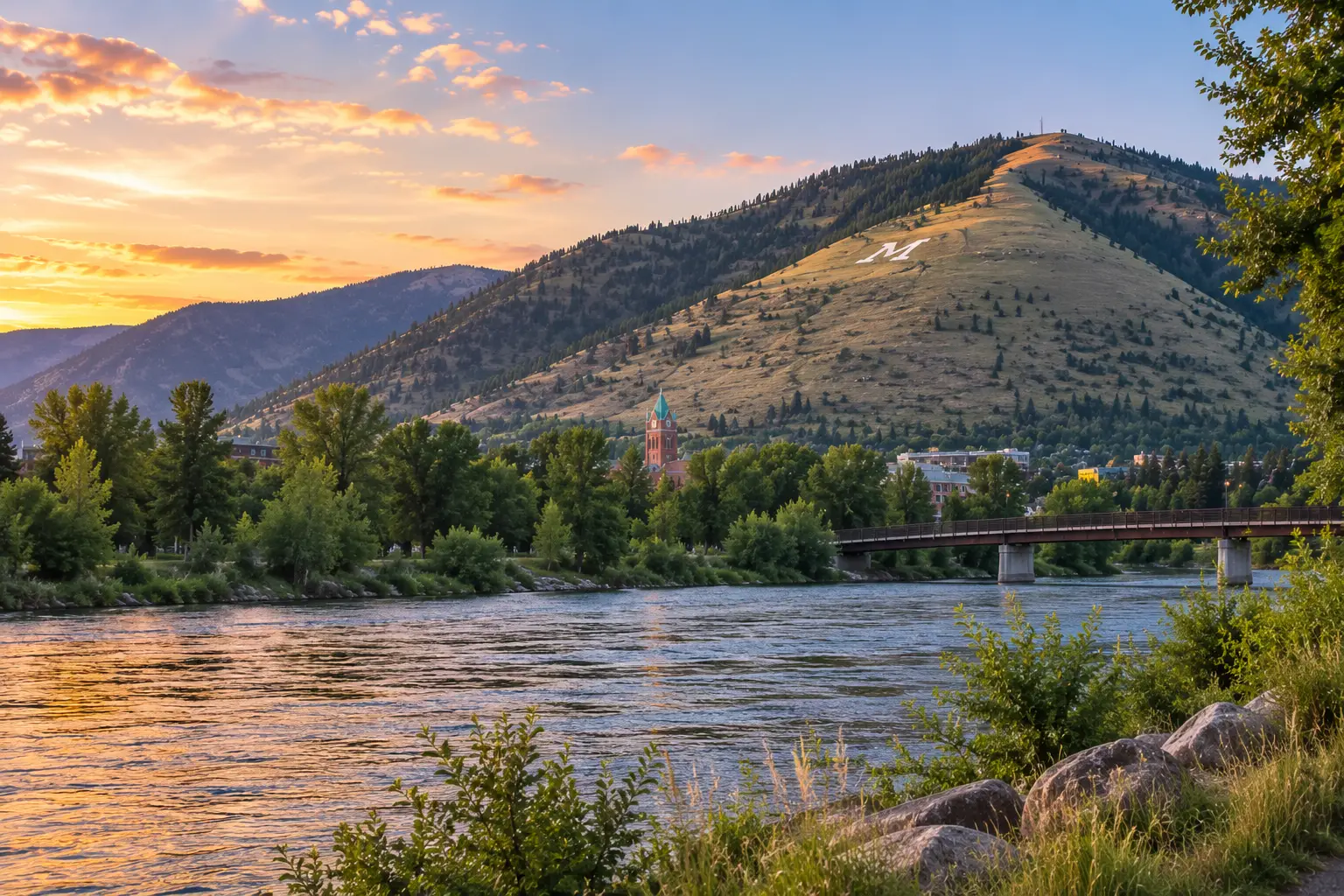
Missoula sits in a mountain valley where the Clark Fork River winds through downtown, surrounded by wilderness that starts at the edge of neighborhoods. With a population around 75,000, it's Montana's second-largest city, but it doesn't feel like one. The University of Montana anchors the local culture – students, faculty, and the university's economic footprint shape everything from housing demand to the arts scene to local politics.
What makes Missoula distinct from other Montana cities is its blend of outdoor intensity and intellectual life. You'll find serious hikers and climbers, but also writers, artists, and academics. The town leans progressive in a conservative state, hosts a thriving farmers market and food culture, and has a reputation for being quirky and welcoming. The Rattlesnake Wilderness sits directly north of town; Montana Snowbowl is 12 miles away; the Clark Fork River runs through downtown. Learn more about Western Montana real estate market outlook for 2026.
Here's the honest take: Missoula thrives for remote workers, outdoor enthusiasts, families seeking a tight-knit community, and people who value walkability and culture over sprawl. It struggles for those seeking affordable housing, those needing specialized job markets (tech, finance, healthcare outside hospital systems), or anyone sensitive to air quality during smoke season. If you're relocating here, you're choosing lifestyle and access over cost savings.
How Much Does It Cost to Live in Missoula?
This is the question that stops most people in their tracks.
Housing: Missoula's median home sale price reached approximately $472,000 in 2024, up from $390,000 in 2021. That's above the national median of roughly $420,000 but significantly below Bozeman's $660,000+. A 1-bedroom apartment in the city averages $1,214 per month, though neighborhood variation is substantial – Rattlesnake (near trails and the university) runs $1,400–$1,900 for a 1BR, while Northside averages $1,100–$1,500. Studio apartments start around $900; 2-bedroom rentals run $1,500–$1,800.
Utilities and Transportation: Montana has no state sales tax, which saves money on purchases. However, heating costs spike in winter. Natural gas bills can reach $250–$350 per month in January and February when temperature inversions trap cold air in the valley. Electricity averages $127 per month statewide but varies with heating load. Groceries run 5–10% above the national average due to limited regional competition and transportation costs to mountain markets.
Sample Monthly Budget (Single Adult):
- Rent (1BR, mid-range): $1,200
- Utilities (electric, gas, water): $180
- Groceries: $350
- Transportation (car, insurance, gas): $200
- Phone/Internet: $100
- Miscellaneous: $150
- Total: ~$2,180/month
Sample Monthly Budget (Family of Four):
- Rent (2BR, mid-range): $1,600
- Utilities: $220
- Groceries: $700
- Transportation: $350
- Phone/Internet: $120
- Childcare (if needed): $1,200–$1,800
- Miscellaneous: $300
- Total: ~$4,490–$5,090/month (before childcare, higher with it)
The tension is real: median household income in Missoula sits around $54,000–$58,000, while housing costs have climbed 35% since 2018. This gap is why remote work has become the economic lifeline for many new arrivals – people earning out-of-state salaries while living here. Local wages simply don't support the current housing market for most professions.
Missoula Neighborhoods: Which Area Fits Your Life?
Each neighborhood in Missoula has a distinct character. Here's what you need to know:
Downtown / Hip Strip (Core Missoula)
The heart of the city – walkable, vibrant, close to restaurants and galleries. Rents are highest here ($1,400–$1,800 for a 1BR). Best for young professionals, students, and people who want to walk to everything. Limited parking, street noise, but unbeatable access to culture and nightlife.
Rattlesnake (North Missoula)
Named for the Rattlesnake National Recreation Area that borders it, this neighborhood is the outdoor enthusiast's dream. Direct trail access, proximity to hiking and skiing, university proximity. Home prices run $500,000–$650,000; rents $1,400–$1,900. Best for families with kids and outdoor-focused professionals. Expect longer commutes to south Missoula.
South Hills (Southwest Missoula)
Quieter, more residential, family-oriented. Newer construction and established neighborhoods mixed together. Median home prices $450,000–$550,000. Good schools (Sentinel High School zone), less traffic, but fewer walkable amenities. Best for families seeking suburban feel with mountain views.
Northside (North Reserve Street Corridor)
More affordable than Rattlesnake or downtown, still close to university and trails. Rents $1,100–$1,500 for a 1BR. Mix of older homes and newer development. Best for budget-conscious renters and first-time buyers. Some blocks are walkable; others require a car.
Orchard Homes / Target Range (East Missoula)
Growing area with newer construction, family homes, and lower prices than central Missoula. Median home prices $420,000–$500,000. Good for families seeking space and newer homes. Longer commute to downtown; car-dependent.
Lolo / Frenchtown (South of Missoula)
Small towns 10–15 miles south, quieter and more rural. Median home prices $380,000–$480,000. Best for families seeking small-town feel with Missoula access. Trade-off: 20–30 minute commute to downtown.
Current Western Montana real estate trends show inventory remains tight across all neighborhoods, with competition from out-of-state buyers continuing to push prices upward.
What Jobs and Industries Are Growing in Missoula?
Employment is where the reality check hits hardest.
Top Employers:
- University of Montana (~3,500 employees)
- Providence St. Patrick Hospital (~1,600 employees)
- Community Medical Center (~1,200 employees)
- Missoula County Government
- Missoula Public Schools
Growing Sectors:
Healthcare is the fastest-growing employment segment. Education remains stable. Tech and remote work have exploded post-2020, though these are jobs held by people working for out-of-state companies, not local employers. The outdoor recreation industry (guides, instructors, retail) provides seasonal and modest full-time work. Government and nonprofit sectors offer stable positions but modest salaries.
The Income Reality:
Missoula's median household income is approximately $54,000–$58,000. For context, a household needs roughly $80,000–$100,000 to comfortably afford a $475,000 home (using standard lending ratios). This gap explains why remote work has become essential – people earning $100,000+ from California tech companies or East Coast firms can afford Missoula's housing. Local wage earners often cannot.
Remote Work as Economic Engine:
Between 2020 and 2023, Missoula's population grew 6.2%, with survey data indicating a significant share of new arrivals were remote workers from out-of-state. This has reshaped the city's economy and housing market. If you're considering a move here, remote income is a major advantage.
Seasonal and Gig Work:
Missoula has a robust seasonal economy. Summer brings tourism-related work (guides, hospitality, outdoor retail). Winter is slower. Gig work (freelance writing, consulting, trades) is common and often necessary to bridge income gaps.
What Is the Weather and Outdoor Life Like in Missoula?
This is where Missoula shines – and where it challenges.
Four-Season Breakdown:
Summer (June–August): Highs average 85–95°F, with low humidity and long daylight. Ideal for hiking, river floating, and camping. The Clark Fork River is navigable for kayaking and paddleboarding from late May through early September. However, July through September brings wildfire smoke. Missoula recorded 34 days with unhealthy air quality (AQI >100) during summer 2023 alone. Smoke can reduce visibility to a quarter-mile and trigger respiratory issues. This is not a minor inconvenience – it's a real seasonal health factor.
Fall (September–November): Crisp mornings, warm afternoons, stunning foliage. September still carries smoke risk. By October, air clears. Temperatures drop from 70s to 40s. Excellent hiking season.
Winter (December–February): Highs average 33°F; lows around 17°F. Montana Snowbowl receives 300+ inches of snow annually and sits 12 miles from downtown. However, Missoula's valley location creates temperature inversions – cold air gets trapped, temperatures can drop below 0°F, and air quality deteriorates. Winter PM2.5 (fine particulate matter) exceeds EPA safe thresholds for 20–35 days per winter season, primarily from wood smoke and vehicle emissions trapped in the inversion. The city runs a wood-burning curtailment program on bad air days.
Spring (March–May): Unpredictable. Snow can linger into April; warm days can arrive in March. River runoff peaks in May, making water recreation dangerous early in the season.
Outdoor Activities by Season:
- Skiing: Montana Snowbowl (December–March)
- Hiking: Rattlesnake Wilderness, Five Mile Creek, Pattee Canyon (April–October)
- River recreation: Clark Fork floating, kayaking (May–September)
- Mountain biking: Extensive trail system (May–October)
- Fishing: Clark Fork River, local lakes (year-round, seasonal restrictions)
The outdoor access is genuinely exceptional. Wilderness starts at the edge of neighborhoods. But the air quality reality – both summer smoke and winter inversions – is something locals manage, not something to ignore.
What Are the Honest Pros and Cons of Living in Missoula?
Pros:
- Unmatched outdoor access: trails, skiing, river recreation within minutes
- University-town culture: arts, food, intellectual life, events
- No state sales tax (Montana advantage)
- Tight-knit, welcoming community
- Walkable downtown and neighborhoods
- Strong arts and music scene
- Excellent schools (relative to rural Montana)
- Growing remote work infrastructure
Cons:
- Rising housing costs with stagnant local wages
- Limited job market for specialized fields
- Wildfire smoke (30+ unhealthy air days in summer 2023)
- Winter inversions and air quality issues
- Growing traffic and congestion
- Limited racial and ethnic diversity (84.7% white)
- Healthcare provider shortage (HPSA designation)
- Property crime above national average
- Seasonal economy creates employment gaps
Who Missoula Is a Great Fit For:
Remote workers with stable out-of-state income. Outdoor enthusiasts willing to accept air quality trade-offs. Families seeking community and schools. Retirees with fixed income from pensions or investments. People who value culture and walkability over affordability.
Who May Want to Look Elsewhere:
Job seekers in specialized fields (tech, finance, specialized healthcare). People on tight budgets. Those with respiratory sensitivities to smoke or air pollution. Anyone seeking racial or ethnic diversity. People who need a large job market or career advancement within a local economy.
Frequently Asked Questions About Living in Missoula
Is Missoula Montana expensive to live in?
Direct Answer: Yes, Missoula is above the national average for housing costs but below Bozeman. Median home prices around $472,000 exceed the U.S. median of $420,000, while rents average $1,214 for a 1-bedroom apartment.
The affordability crisis stems from a mismatch: housing costs have climbed 35% since 2018, while median household income (~$54,000) has grown only 12%. Remote workers earning out-of-state salaries can afford Missoula comfortably. Local wage earners often cannot. Utilities, groceries, and transportation add another $600–$800 monthly for a single adult. Montana's lack of sales tax provides some offset, but property taxes and income tax (up to 6.75%) apply.
How does Missoula compare to Bozeman, Montana?
Direct Answer: Missoula is significantly more affordable than Bozeman but less expensive than coastal mountain towns. Bozeman's median home price exceeds $660,000 – nearly $190,000 more than Missoula.
Bozeman has stronger job growth in tech and outdoor industries, a more affluent demographic, and higher cost of living across all categories. Missoula offers more walkability, stronger arts and university culture, and lower housing costs. Bozeman's winters are slightly milder; Missoula's air quality challenges are more severe. Both are outdoor-focused communities with limited affordability for local wage earners. Choose Missoula for culture and relative affordability; choose Bozeman for job market and winter conditions.
Is Missoula a good place to raise a family?
Direct Answer: Yes, for families with stable income and outdoor values. Schools are solid, community is tight-knit, and outdoor access is exceptional.
Missoula County Public Schools operates two main high schools (Hellgate and Sentinel) with IB and AP programs. Neighborhoods like South Hills and Rattlesnake are family-oriented with good schools and parks. The community is safe relative to crime statistics (violent crime near national median, though property crime runs high). However, wildfire smoke in summer and air quality inversions in winter are real health considerations for families with respiratory sensitivities. Childcare is expensive and limited. Housing costs require dual income or remote work for most families.
What are the biggest drawbacks of living in Missoula?
Direct Answer: Air quality (summer smoke and winter inversions), housing affordability, limited job market, and growing traffic are the primary challenges.
Missoula recorded 34 days of unhealthy air quality in summer 2023; winter inversions create 20–35 days of poor air annually. Housing costs have outpaced local wages by a significant margin – median home prices are $472,000 while median household income is $54,000. Job opportunities outside healthcare, education, and government are limited; most professional growth requires remote work or relocation. Traffic on Reserve Street and downtown has increased noticeably. The community is also less diverse than most metro areas (84.7% white), which may matter to some families.
How hard is it to find a job in Missoula?
Direct Answer: Difficult if you need a local employer in a specialized field; manageable if you're open to healthcare, education, government, or remote work.
Top employers (University of Montana, Providence St. Patrick Hospital, Community Medical Center, county government) hire regularly but offer modest salaries relative to housing costs. Tech, finance, law, and specialized trades have limited local opportunities. Seasonal work is abundant in summer (tourism, outdoor recreation) but sparse in winter. Remote work has become the primary employment strategy for professionals – people work for out-of-state companies while living in Missoula. If you're relocating for a specific job, verify the local market first. If you have remote income, employment is not a barrier.
Is Missoula safe to live in?
Direct Answer: Missoula's violent crime rate is near the national median, but property crime runs significantly above average.
According to Montana Board of Crime Control data, Missoula's property crime rate is approximately 42 per 1,000 residents versus the national average of 19 per 1,000. Motor vehicle theft and larceny concentrate in downtown and the Reserve Street commercial corridor. Violent crime is closer to national averages. Neighborhoods vary – Rattlesnake and South Hills are generally quieter; downtown and North Reserve have higher property crime. Like any city, safety depends on neighborhood selection and standard urban precautions. The city is not dangerous, but property crime is a documented concern.
Finding Your Place in Missoula
If you've read this far and Missoula still appeals to you, the next step is understanding the real estate market and what neighborhoods align with your life. Housing decisions here are consequential – prices are high, inventory is tight, and competition from out-of-state buyers is real.
This is where working with someone who knows Missoula's neighborhoods intimately makes a difference. Glacier Sotheby's International Realty specializes in Western Montana properties and understands the nuances of each Missoula area – which neighborhoods have the best schools, where remote workers cluster, which areas offer the best outdoor access, and how to navigate a competitive market. Whether you're buying, selling, or just exploring what's realistic in your budget, a local expert can save you time and help you avoid costly mistakes.
If you're serious about relocating to Missoula, start by connecting with someone who lives here and knows the market deeply. Glacier Sotheby's International Realty can walk you through neighborhoods, current pricing, and what to expect in the buying or renting process.
Next Steps
Ready to explore Missoula neighborhoods and current listings? Contact our Missoula team at Glacier Sotheby's International Realty to discuss your relocation plans, neighborhood fit, and budget. We can provide current market data, neighborhood tours, and honest guidance on what's realistic in today's market.
Still researching? Review the 2026 Western Montana housing market data to understand broader trends affecting Missoula, Whitefish, Bigfork, and surrounding areas.
Missoula is a remarkable place – but it's not for everyone. If the outdoor access, community, and lifestyle outweigh the cost and air quality trade-offs, you've found your home.
Ready to Get Started?
For personalized guidance, visit Glacier Sotheby's International Realty to learn how we can help.