
There are rare collectables—and then there are dinosaurs and rocks from Mars, writes Katie Armstrong
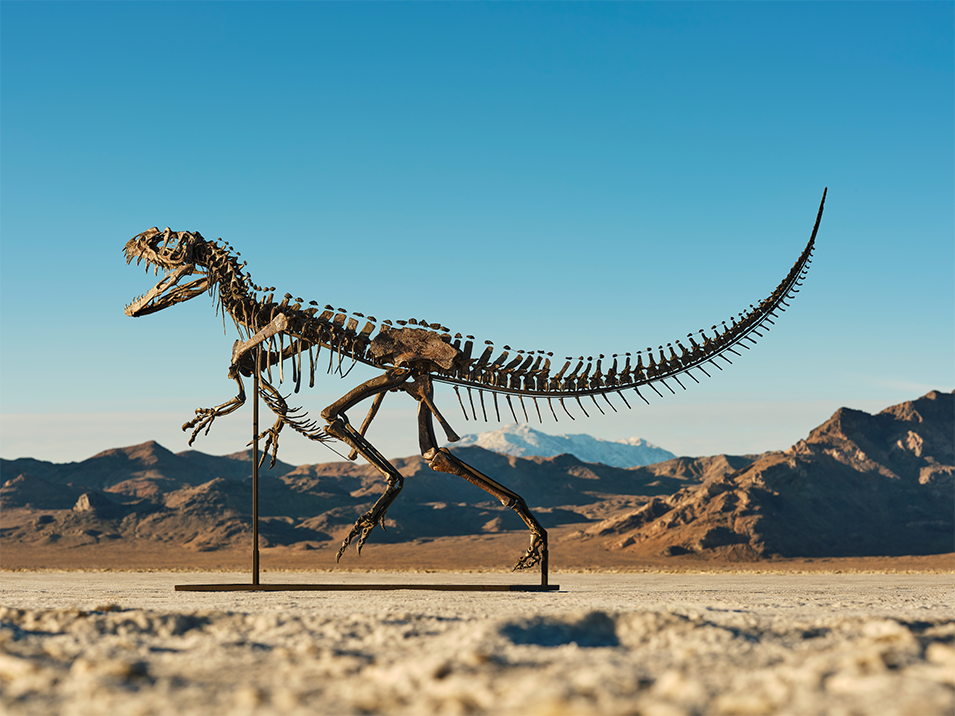 A mounted juvenile Ceratosaurus skeleton, one of only four in the world, to be offered in Geek Week 2025. Photograph: Courtesy of Sotheby’s
Ancient and classical sculpture will always be collectable, but some of the most intriguing sculptural objects that come to auction at Sotheby’s are many thousands or millions of years older, from awe-inspiring fossils and dinosaurs to crystals, minerals and meteorites.
A highlight of Sotheby’s New York’s now annual Geek Week, which also encompasses Space Exploration and History of Science & Technology, July’s Natural History sale is an opportunity to acquire rare and beautiful items central to the formation of life itself.
In 1997, Sotheby’s made history with the first ever sale of a dinosaur at auction. “Sue,” the most complete T-Rex fossil ever to have been discovered, sold for an astonishing US$8.3 million, and now lives in the Field Museum in Chicago, Illinois. Since then, the auction house has held several landmark sales within the category, setting a new record for the most valuable fossil sold at auction when the Stegosaurus “Apex” achieved US$44.6 million in 2024.
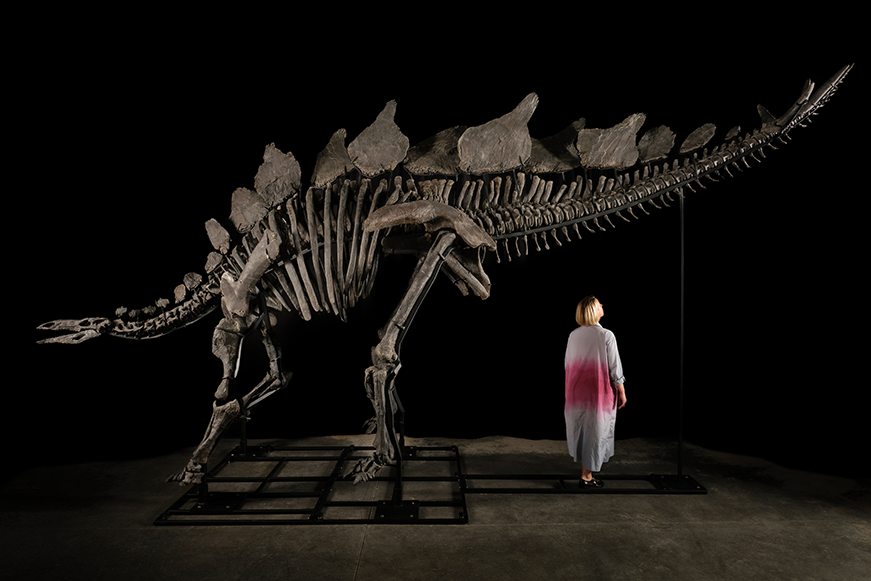 “Apex” The Stegosaurus, sold in July 2024 for the world-record price of US$44.6 million. Photograph: Courtesy of Sotheby’s
Today, natural history is a booming market with wide-ranging appeal. “You don’t have to have a special cultural understanding,” says Cassandra Hatton, vice chairman and global head of science & natural history at Sotheby’s New York, who led last year’s “Apex” sale. “Everyone understands what dinosaurs are, whether you’re 5 or 95.”
Hatton has been responsible for several other market-making sales in the category, including the first Gorgosaurus fossil to come to auction for just under US$6.1 million, the sale of “Maximus” the T. rex skull for the same price, and a Triceratops skull for US$661,500.
 A very large gogotte sandstone formation. Photograph: Courtesy of Sotheby’s
The collector base is global, she says, with buyers around the world eager to add natural history specimens to their collections—and at different price points. For many, the motivation is twofold. “Objects are both scientifically and historically important, but they are also really beautiful; they are something that you can live with,” says Hatton.
Natural formations such as gogottes—rare sandstone concretions found almost exclusively in Fontainebleau in northern France—are perennially popular. Back in the 15th century, King Louis XIV was so seduced by them, he ordered numerous specimens to be excavated to decorate the Gardens of Versailles. They were also an inspiration to the Surrealist movement, as well as later artists like Louise Bourgeois and Henry Moore.
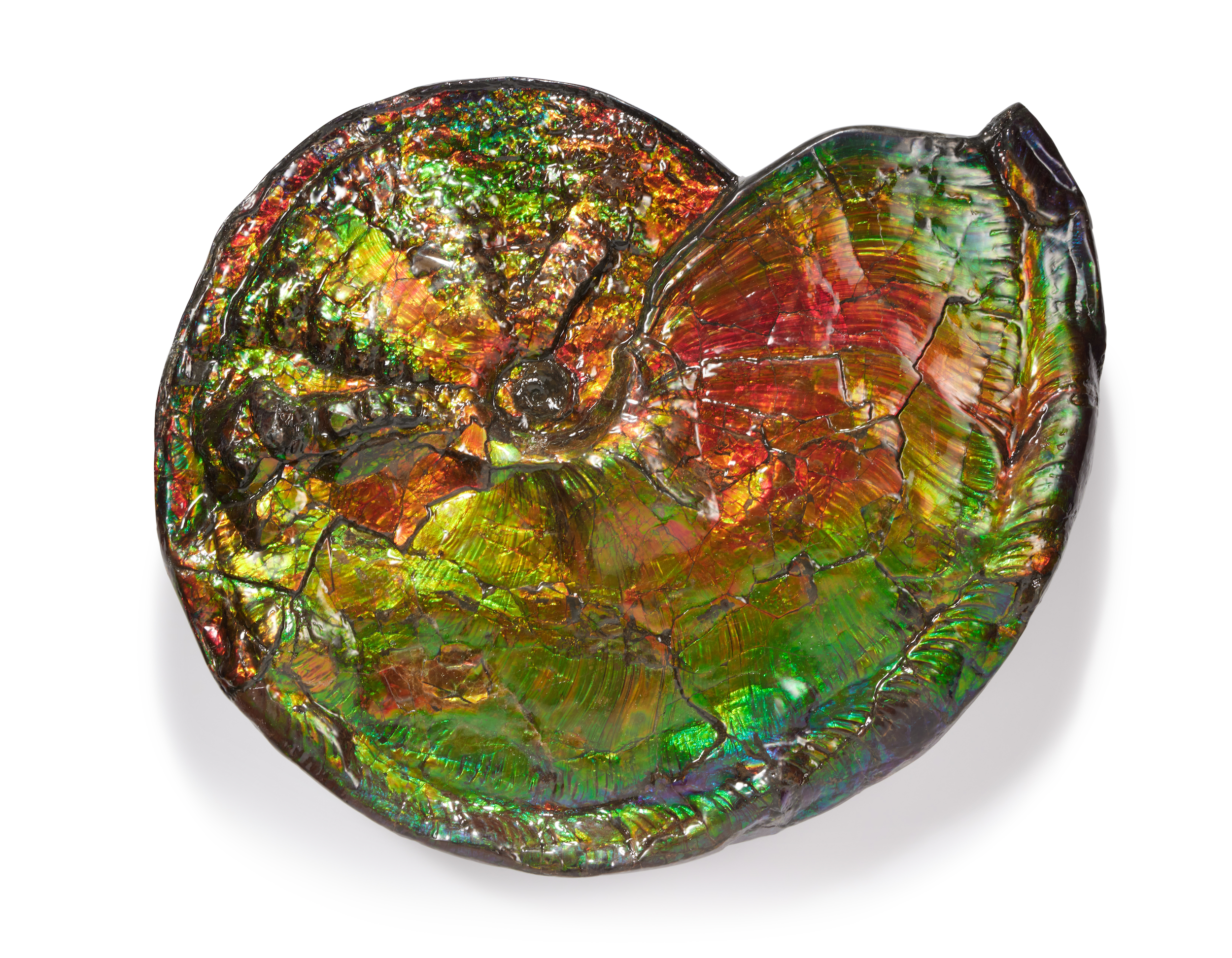 A very large iridescent ammonite. Photograph: Courtesy of Sotheby’s
These, alongside other natural phenomena such as ammonites—visually stunning aquatic cephalopod fossils—wouldn’t look out of place in contemporary galleries. The fact these objects aren’t man-made but occur naturally only adds to their exclusivity and appeal. We don’t have the opportunity to experience Earth as it was millions of years ago and most of us will never visit space; fossils and meteorites are a tactile portal into these worlds.
While natural history pieces can make for stunning standalone sculpture, Hatton has also seen them “integrated into the architecture” or interiors of collectors’ homes. “There are huge murals of flat-plate fossils—big schools of fish—that you can have as a whole wall or back splash in your kitchen,” she says of one design trend she has observed.
 A monumental sea lily (crinoid) colony. Photograph: Courtesy of Sotheby’s
Hatton is excited for the headline lot of Geek Week 2025: an exceptional exhibition-ready, mounted Ceratosaurus skeleton, one of four known in the world—and the only juvenile. “To find a juvenile dinosaur of any kind is almost impossible,” she says. “Their bones were so fragile and so thin, usually they were eaten. They were delicious!”
But if a dinosaur is too much of a commitment, Sotheby’s will also be offering something for the space geeks: “the largest piece of Mars on Earth” as Hatton describes it. “Most Martian meteorites are small, this is a 55-pound, huge rock, broken off of Mars by asteroid impact.”
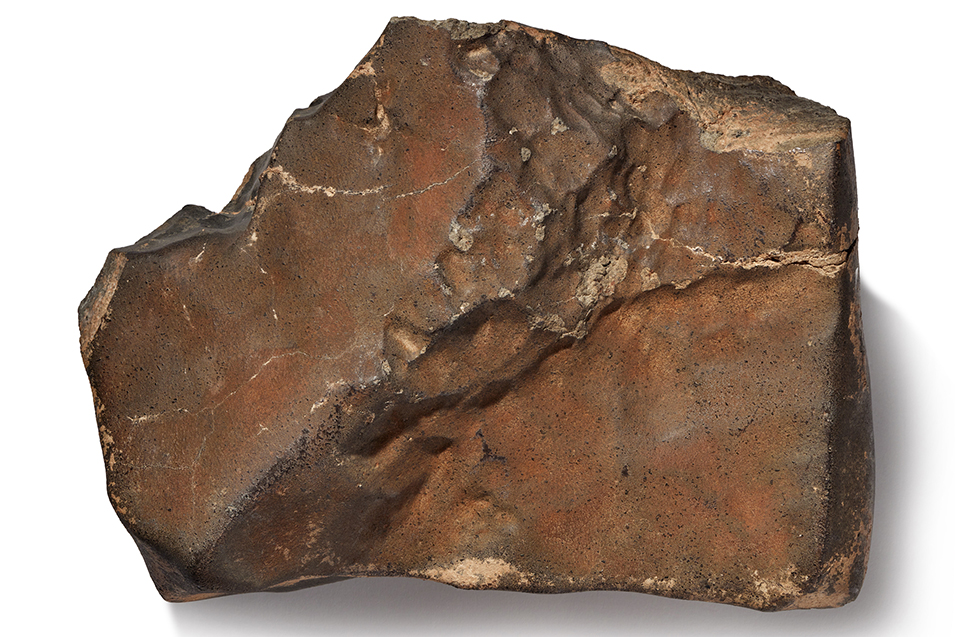 Martian Meteorite—NWA 16788, to be offered in Geek Week 2025. Photograph: Sotheby’s
One more delight of natural history bought at auction? Often, it isn’t the last time these items are seen. “Many collectors choose to donate or lend their acquisitions to museums,” says Hatton. “Part of the joy of acquiring specimens like this is sharing them with the public.”
Our Collecting Focus series also features expert advice on jewelry, watches, wine, historic books, modern and contemporary prints, fashion history and Americana.