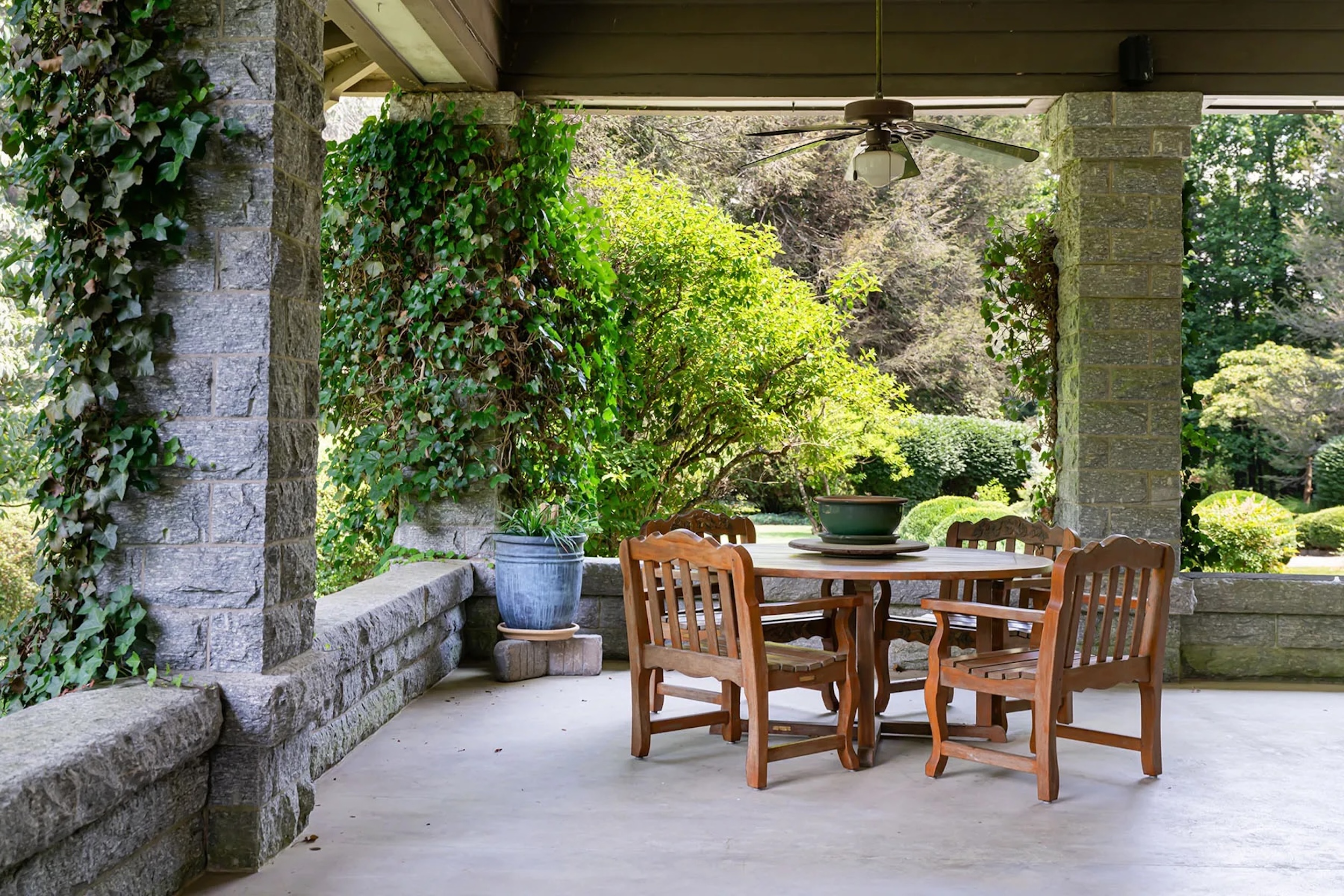
Bridging the gap between indoor and outdoor living, the veranda’s versatility is part of its enduring allure, writes Elizabeth Fazzare
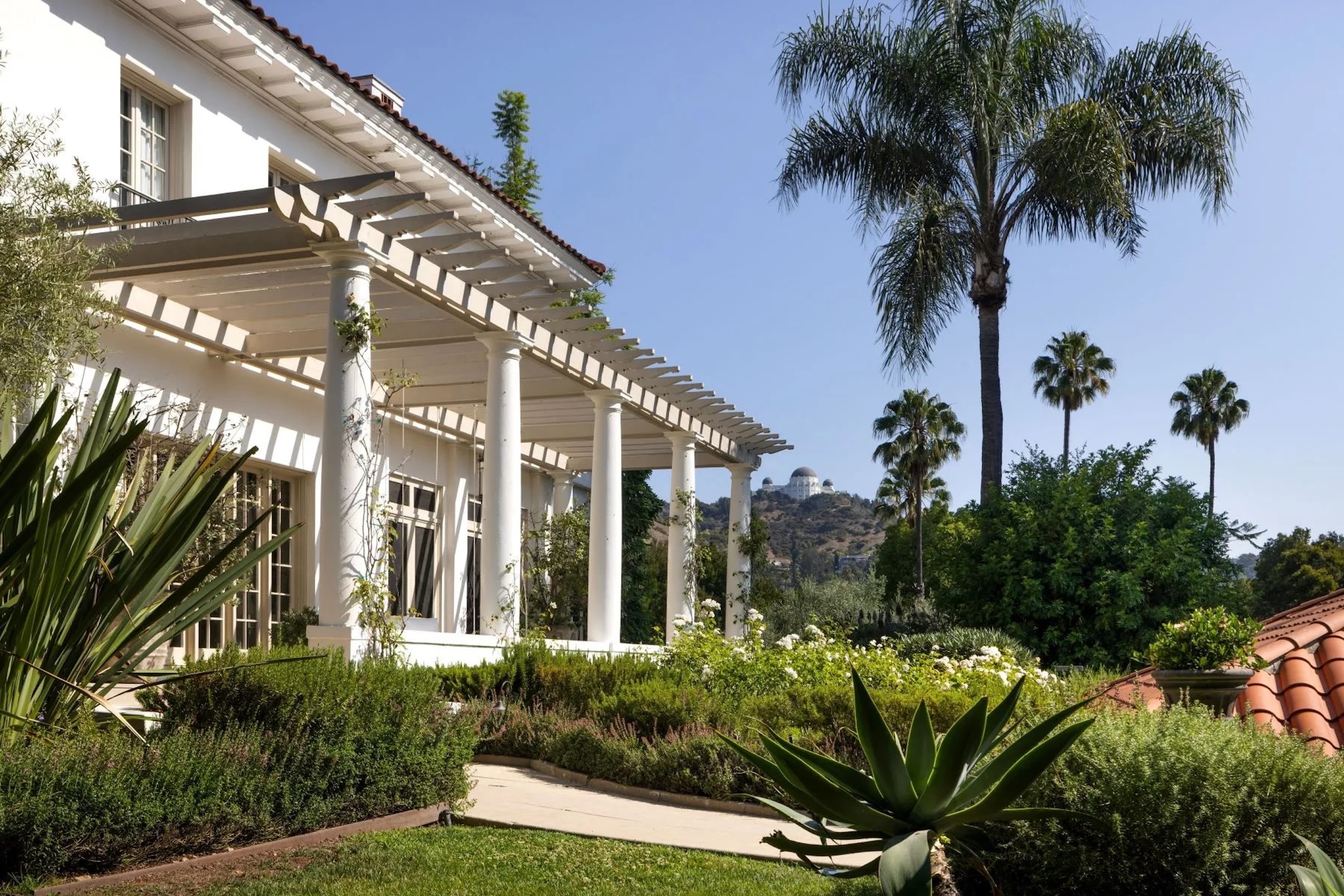
Los Feliz, California | Sotheby’s International Realty – Beverly Hills Brokerage
Outdoor living is one of summer’s greatest pleasures, but at the season’s height, strong daytime sun makes shade an absolute necessity. As early as the 1700s, homes in the American South counteracted the weather with a custom-built veranda: an open-air porch covered by an extension of the roof to provide quick relief from the heat and protection from rain and wind when required.
This architectural element finds its roots across oceans in ancient dwellings from the Indian subcontinent. Its popularity later spread to British and subsequently American building design via colonial development. Today, in luxury residences across the United States, a veranda is still revered as the original manifestation of indoor-outdoor living, providing the flexibility to enjoy al fresco downtime and company, whatever the forecast.
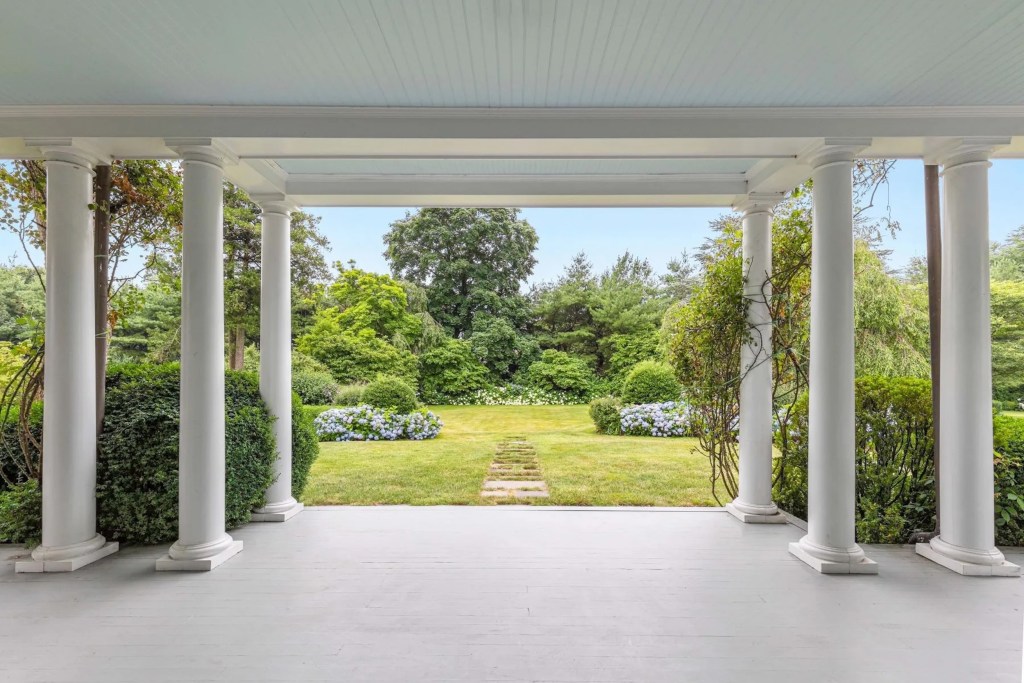
Purchase, New York | Julia B. Fee Sotheby’s International Realty
“I think porches today have the same appeal as they did hundreds of years ago,” says architect Jeffrey Dungan, whose eponymous architecture and design studio is based in Mountain Brook, Alabama. “Verandas lend you the connection to the outdoors without the inconveniences that come with being truly outside.”
Traditionally, a veranda wraps the front and sides of a house as “the de facto front door,” explains Dungan. It’s not only an inviting spot to cool off, but also “where you would entertain guests, like the Southern equivalent to a parlor in British homes.” To allow ample space under those eaves for entertaining, relaxing and even dining, the best examples are 14- to 15-feet deep, he advises.
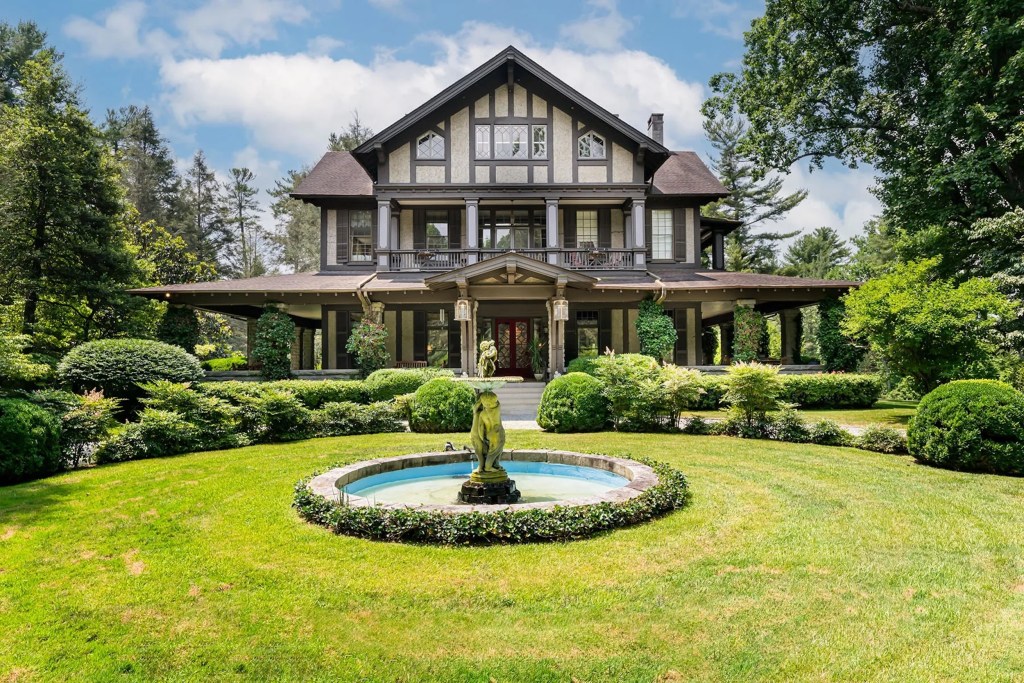
Hendersonville, North Carolina | Premier Sotheby’s International Realty
The sweeping veranda of this nine-bedroom home in Hendersonville, North Carolina, has plenty of weatherproof square footage from which to admire the surrounding landscape. Originally built in 1855, the house was redesigned half a century later by Richard Sharp Smith, a supervisor on North Carolina’s landmark Biltmore Estate, while the gardens had input from Frederick Law Olmsted, the influential designer behind New York’s Central and Prospect Parks. Acknowledging both their contributions, the property is listed on the National Register of Historic Places.
Equally storied is a 1912-built estate in Purchase, New York, which was a key location for the 1969 film “Goodbye, Columbus,” based on the Philip Roth novella of the same name. It offers views of its more than 11 acres of park-like grounds from a veranda adjacent to its main living room. Although both these homes were constructed more than a century ago, their indoor-outdoor design schemes are still in high demand today.
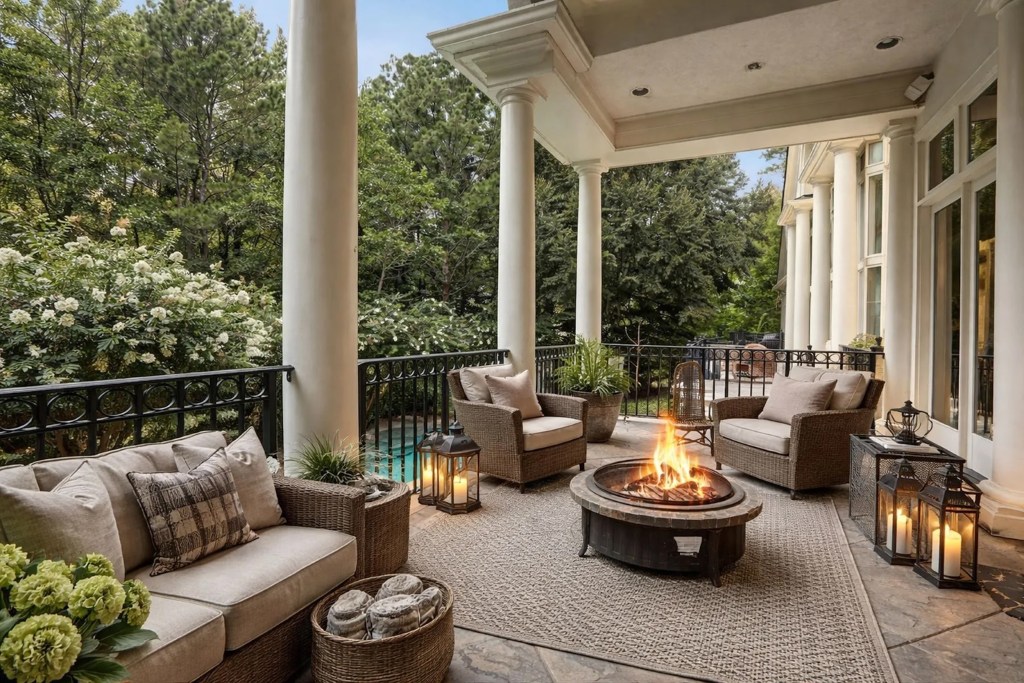
Johns Creek, Georgia | Atlanta Fine Homes Sotheby’s International Realty
“Buyers aren’t looking for another room as much as they’re looking for another way to enjoy the home,” says Paul Wegener, global real estate advisor at Atlanta Fine Homes Sotheby’s International Realty. “A great veranda becomes part of everyday life. First cup of coffee, first glass of wine in the evening, the place to watch the kids play in the yard, or to sit and enjoy the beautiful view.”
One of Wegener’s listings, a 1998-built six-bedroom home in Johns Creek, Georgia, has second-story verandas framing the entire rear facade that, in his words, “become another living room, just with fresh air.” The space is comfortably furnished with an abundance of cozy seating and carpets, oversized lanterns, and even a firepit.
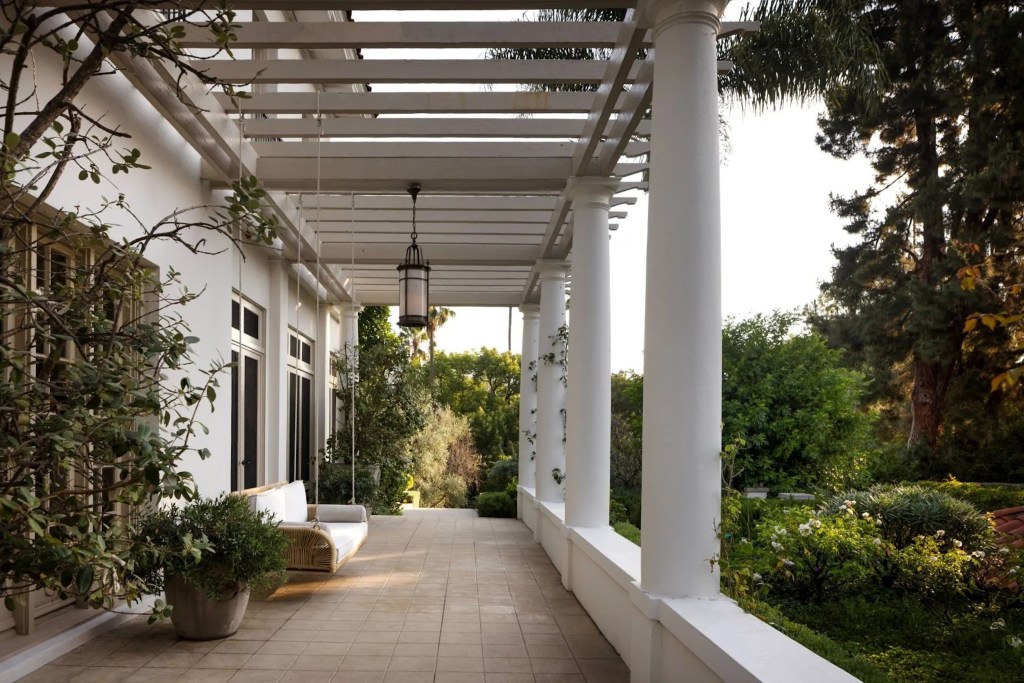
Los Feliz, California | Sotheby’s International Realty – Beverly Hills Brokerage
In regions where rain is infrequent, an effective veranda might not need full coverage. Once owned by filmmaker Cecil B. DeMille, this 1913-built Hollywood estate fashions its rear-facing veranda like a pergola, allowing sunlight to pass through its slatted roof toward the six-bedroom house’s large windows. In our climate-conscious era, minimizing direct sun exposure avoids raising the interior temperature.
“The veranda is the synaptic gap, or the connective tissue, between the interiors, the conditioned space of the house, and the outdoors,” says Dungan. For homebuyers, its enduring allure is both romantic and functional. “Spaces that allow you to connect to nature and your surroundings are so special,” he adds.
Dream of waterside living? Enjoy the view from the world’s most beautiful boathouses