More than a century on, the Bloomsbury group’s exuberant creativity continues to inspire interiors, writes Elizabeth Metcalfe
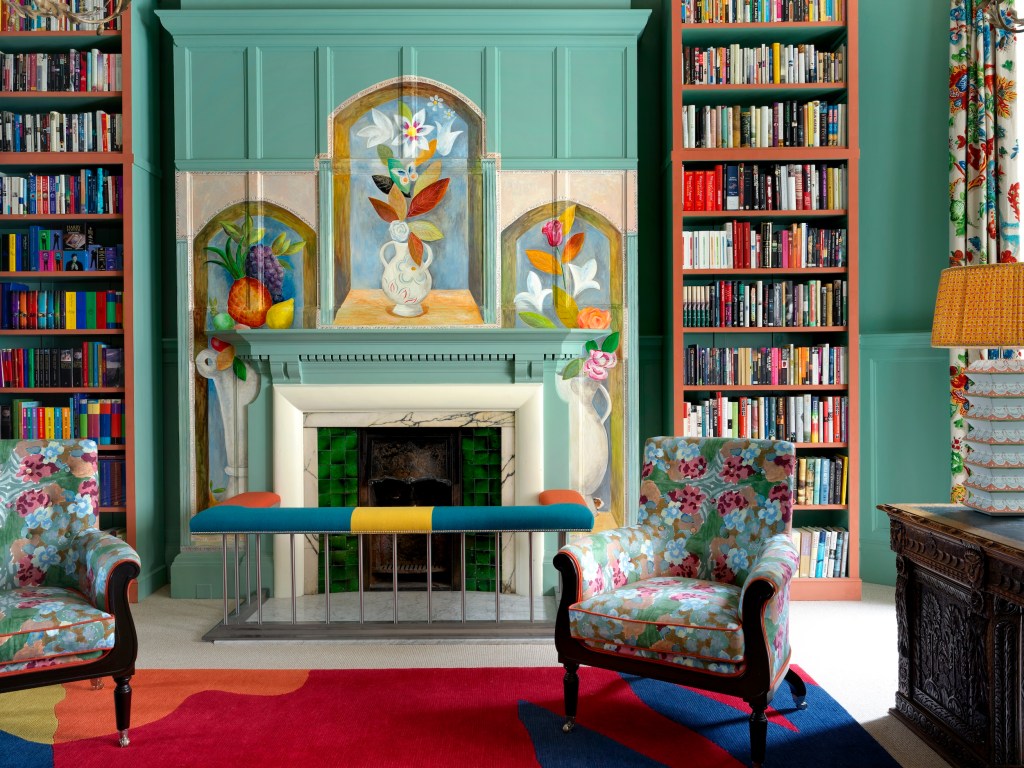
The Bloomsbury group of early 20th-century artists, writers and intellectuals has long captured the imagination. From their freewheeling relationships to their free-spirited approach to art, decoration and homemaking, this influential collective of liberal-minded creatives—including Vanessa Bell, Duncan Grant, Virginia Woolf, Lytton Strachey and Roger Fry—embraced experimentation across many fields.
As American poet and critic Dorothy Parker quipped: They “lived in squares, painted in circles and loved in triangles.”
While the squares in question were in London’s Bloomsbury, nowhere was the group’s creative vision more vividly expressed than at their countryside retreat of Charleston, in the foothills of the South Downs in Sussex, which was both home and studio to Bell, Grant and his partner David Garnett from 1916. Having whitewashed what Woolf described as the house’s “awful” Edwardian wallpapers, Charleston’s bohemian tenants, aided by family and guests, made almost every available surface a canvas for artistic expression, adorning fireplaces, fixtures and furniture with exuberant, painterly motifs.
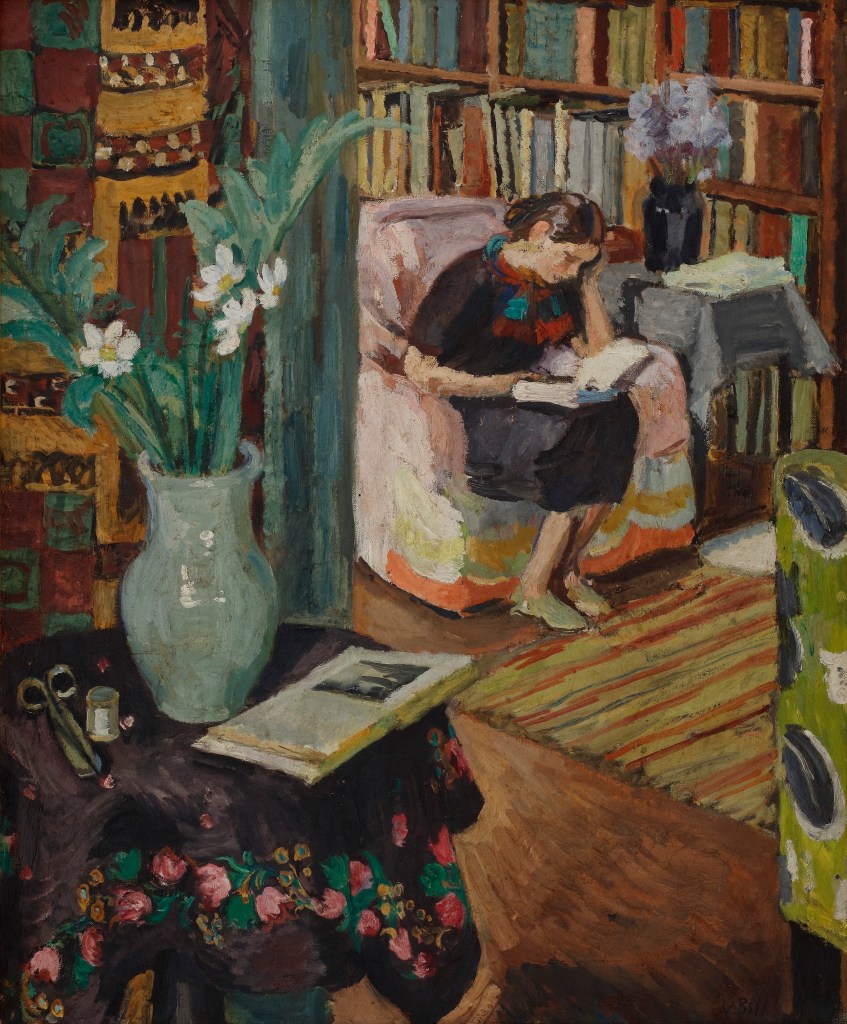
“Messy creativity was a way of life,” observed Bell’s granddaughter Virginia Nicholson; surfaces were painted and overpainted, and designs created for pleasure rather than posterity’s sake. Fabrics and ceramics from the Omega Workshops, an enterprise established by Fry in 1913 to bridge the divide between fine and decorative art, added to the atmosphere of creative informality. Bell’s son Quentin described the house’s “wonderfully uninhibited irreverent quality.”
More than a century later, this confident, fearless approach to decoration continues to captivate, as evidenced in a newly opened Tate Britain show “Vanessa Bell & Duncan Grant: Inside Bloomsbury” (until April 11, 2027), and the group’s obvious influence on the ongoing appetite for hand-painted elements in high-end interiors, both residential and in the hospitality space.

“The Bloomsbury group lived how many people wish they could live now, and today’s designers look to them for their layered approach and how they added character and stories to rooms,” observes British decorative artist Tess Newall, who is known for her Bloomsbury-inspired designs. Newall’s work ranges from hand-painted furniture to murals for designers including Stella Weatherall, Isabella Worsley and Rebecca Wakefield, for whom she recently created a Charleston-inspired children’s room.
At the heart of this enthusiasm for the Bloomsbury look is a desire for interiors to feel less prescribed, more personal. “There is a subtle irregularity in the brushstrokes, a variation in the color, a sense that someone spent time creating something specifically for that space,” says Henriette von Stockhausen, founder of VSP Interiors, a specialist in historic homes. “You can feel that, even if you cannot immediately identify why.”
For one project in Berkshire, England, she commissioned a bespoke mural to wrap around the walls of a drawing room. Unlike a printed wallcovering, such a site-specific work can respond directly to the architecture of a space, becoming part of its character.

Kit Kemp, founder and creative director of Firmdale Hotels, has long embraced this philosophy. Inspired by Charlotte Street Hotel’s proximity to Bloomsbury, she collected original works by Bell and Grant, now displayed alongside a hand-painted Omega Workshops desk. More recently, she invited artist Eliza Downes, who has a background in theatre, to paint a ceiling mural in the hotel’s Dora Carrington dining room. It has transformed the space, says Kemp, into “a living work of art.”
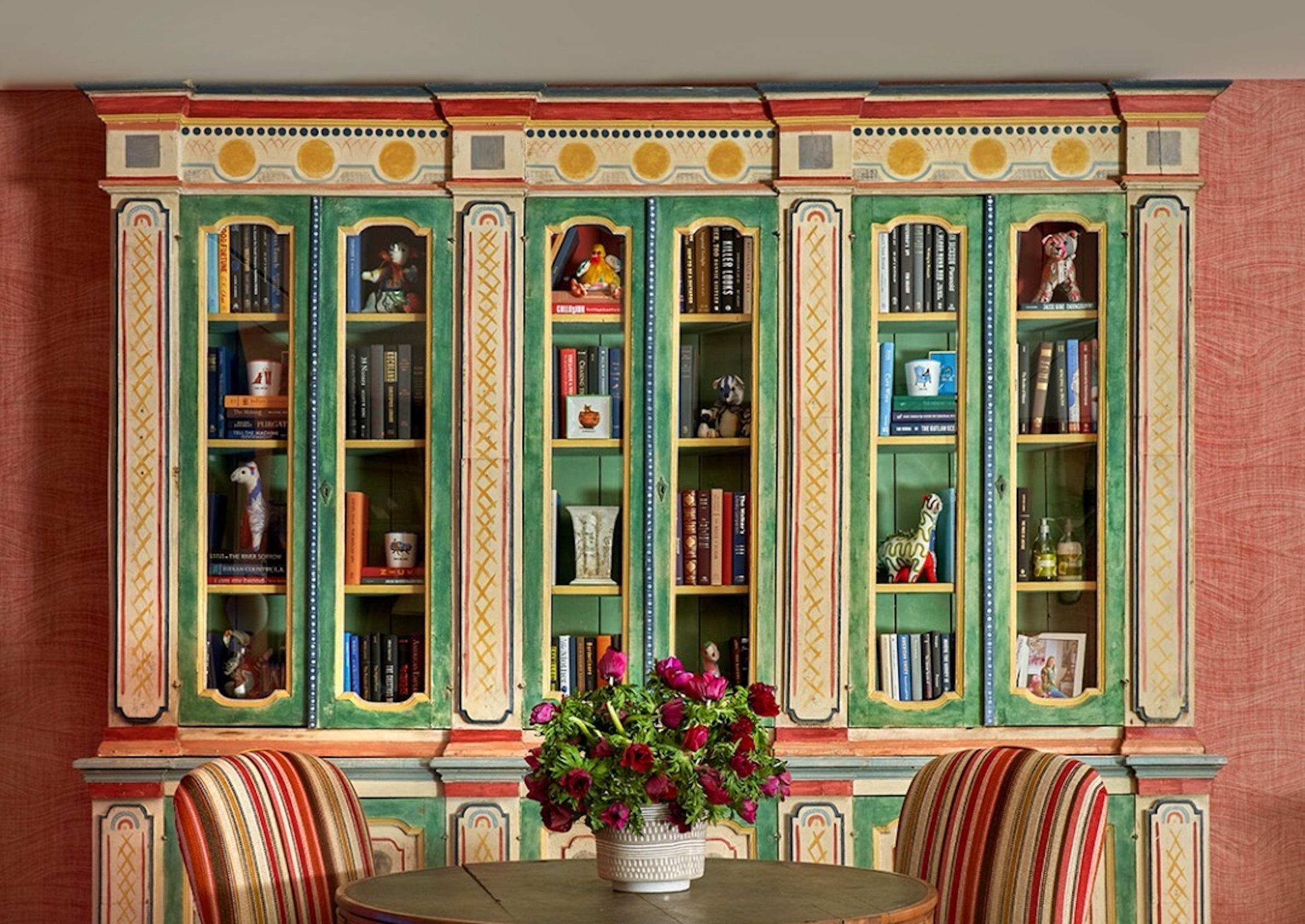
Across the Atlantic, at Warren Street Hotel in New York, Kemp commissioned Newall to paint an imposing dresser with painterly motifs and a riotous color palette inspired by the collective. “Often, a large piece of furniture can feel domineering in a room, but by painting it, it becomes a pattern and an element of craft,” she explains. Both projects echo the Bloomsbury group’s belief that art belongs in everyday life.

Beyond its decorative impact, hand painting can lend a room a sense of natural evolution. London-based interior designer Isabella Worsley, who commissioned Newall to paint a floral ceiling, prizes “the sense of timelessness it can create—a mark on a project that feels like it could have been made at any point over the life of the room.”
There is, of course, a certain irony in the fact that an aesthetic associated with a bohemian disregard for convention has become so coveted in luxury interiors. At Charleston, Bell and Grant painted furniture they already owned, often working with limited resources. Today, Newall is commissioned to decorate exceptional antiques and bespoke pieces, sometimes incorporating modern technology.

For Studio Ashby, she painted a folkloric chest from which a widescreen television rises. “This felt like the definition of folk luxe,” she says. “We’re living in an age where we want the modern conveniences of life, but for our surroundings to have character and humanity.”
Perhaps the contradiction is less pronounced than it first appears. In an age of mass production, the time, skill and imagination required to make something entirely bespoke have become luxuries in their own right. Indeed, Bloomsbury’s most enduring legacy may not be a particular palette or pattern, but the confidence to create interiors that are individual to the people who inhabit them. In a world of increasingly uniform design, that freedom—and the unmistakable presence of the human hand—could be the ultimate luxury.
“Vanessa Bell & Duncan Grant: Inside Bloomsbury” is at Tate Britain, London, November 12, 2026 – April 11, 2027.
Find out why the Bayeux Tapestry is another major design inspiration this fall