Heritage skills and craftsmanship turn the humble clay block into a true mark of luxury, writes Riya Patel
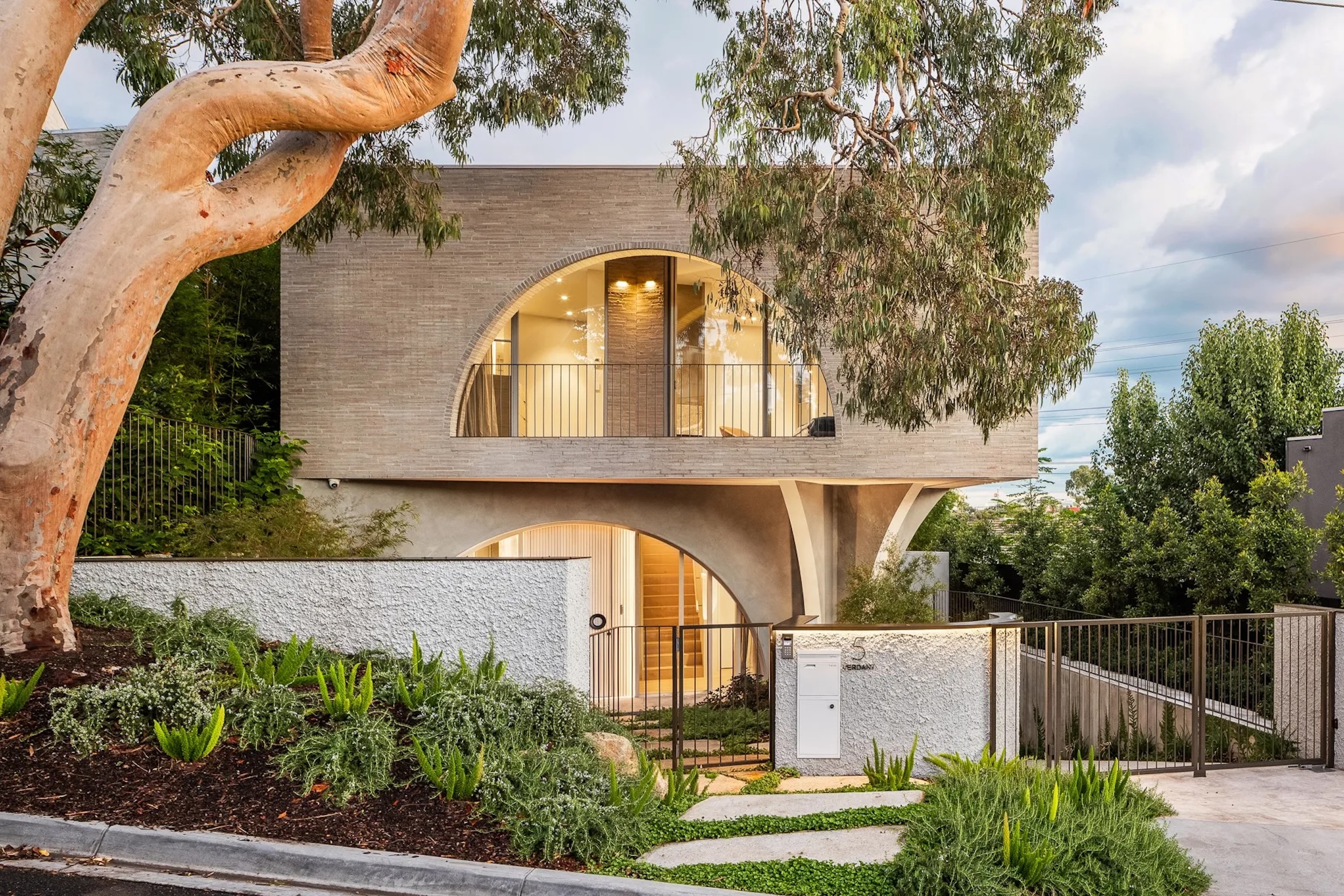
Melbourne, Australia | Melbourne Sotheby’s International Realty
As Lanza Atelier debuts its playfully sinuous Serpentine Pavilion this summer in London’s Hyde Park, the Mexican studio continues a longstanding architectural love affair with brick. Blocks of fired clay are among architects’ most versatile materials. They can be used humbly as part of a local vernacular, familiar and grounding, or they can be made monumental, as in the famously heroic forms of Louis Kahn’s Indian Institute of Management in Ahmedabad.
These dual qualities mean brick is an oft-returned-to choice for luxury homes. Its modular nature lends itself to a variety of form-making, while endless options in shape, size, material and pattern make it ripe for architectural reinvention. “Textured bricks have an amazing play of light across them throughout the day and over the seasons,” says architect Matthew Sanders, co-founder of House of EM.
They are also long-lasting and sustainable, he adds. “A brick building is going to look the same over a long time, whereas a rendered exterior will need painting and maintenance every eight years.”
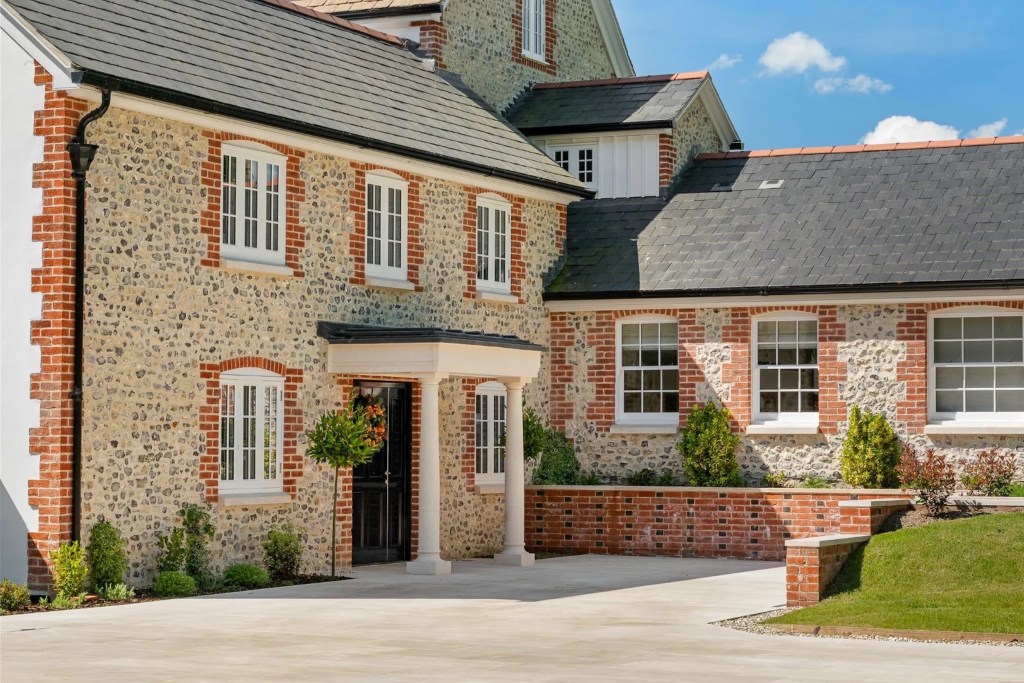
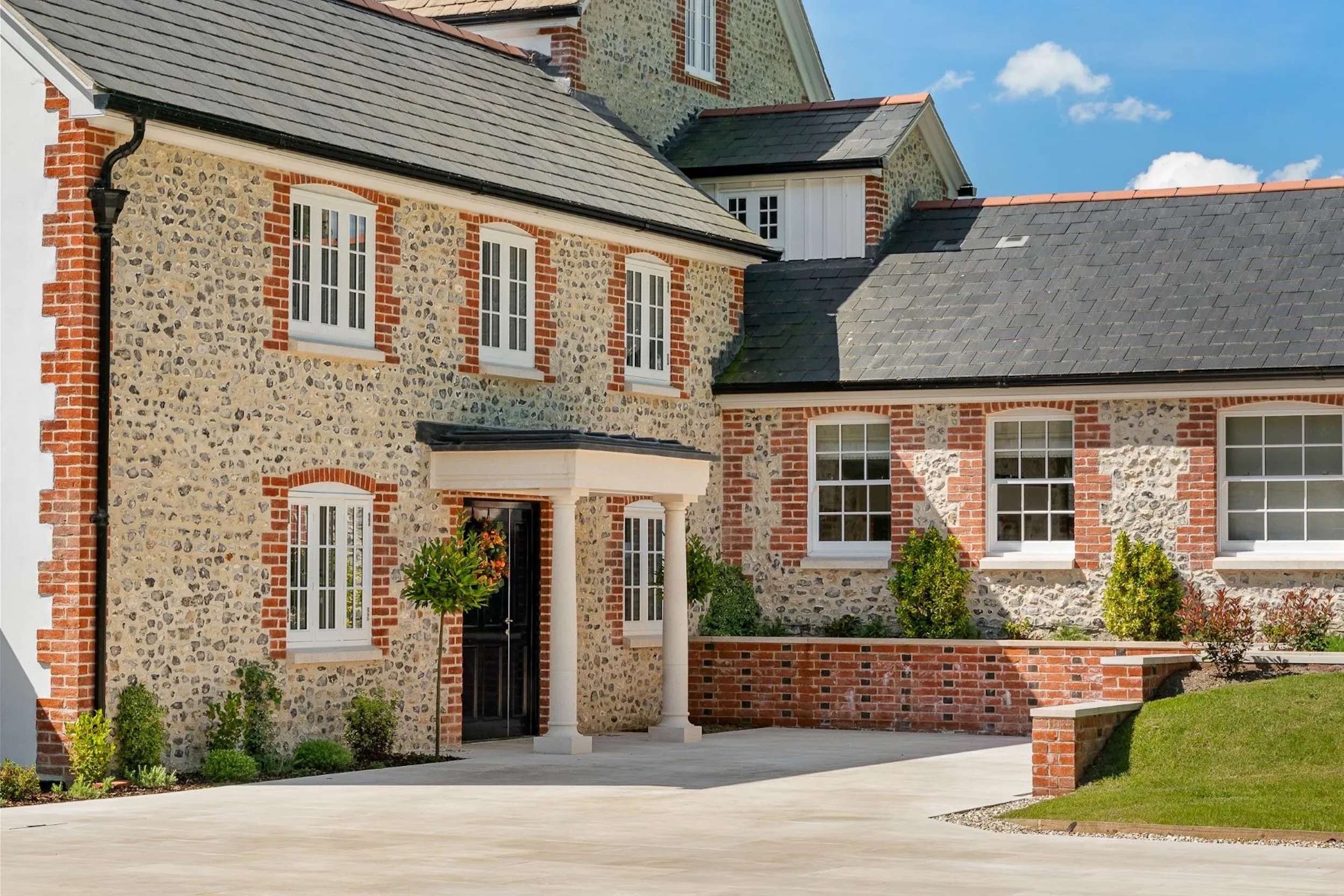
Dorset, England | United Kingdom Sotheby’s International Realty
A recently renovated net-zero home in Dorset, England, is a case in point. Its distinctive masonry dates back to its origins in the 18th century, when brick production was starting to move from local and handmade towards industrial, with fashionable detailing and skilled new ways of laying. On the main facade, a rich red clay brick is used in combination with lighter-colored stone that speaks to the landscape of the nearby Jurassic Coast.
In the 20th century, the architects of Battersea Power Station in London—now a landmark leisure and residential development that includes this luxurious penthouse apartment, complete with 360-degree views—turned to brick as a way of making a huge industrial building more palatable. Sir Giles Gilbert Scott disguised the vast plant’s steel skeleton, appeasing the public with his “brick cathedral” and birthing a new architectural language for the typology. Bankside Power Station, now the Tate Modern gallery, would follow in 1947.
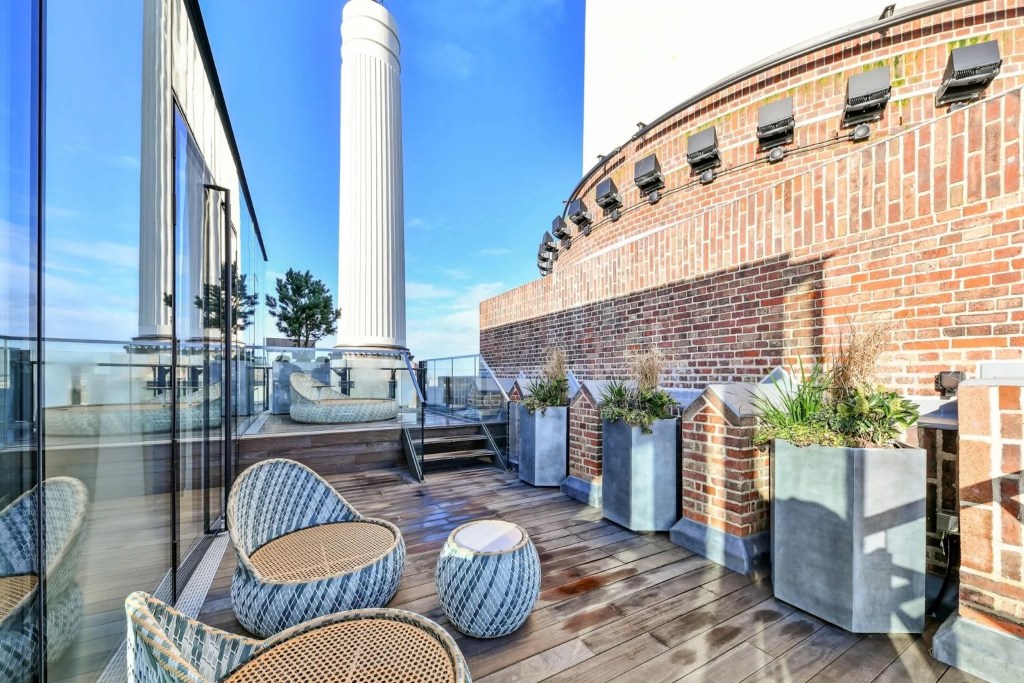
Battersea, London | United Kingdom Sotheby’s International Realty
Brick is also finding favor in contemporary luxury homes, appearing as a vernacular material with a twist. Architecture practice Inarc has used the material to create a calming new-build house outside Melbourne.
“The handmade, slimline brick exterior adds remarkable depth and texture to the residence,” says Max Ruttner, real estate professional at Melbourne Sotheby’s International Realty. “I’ve had a number of families comment on how much they love the design and overall feel of the home.”
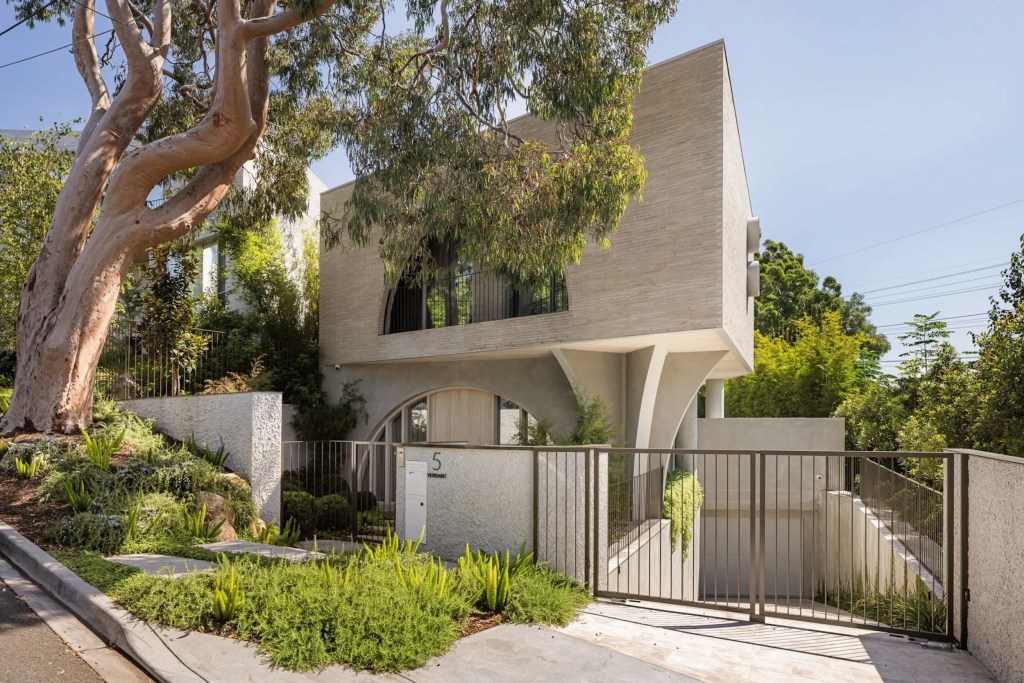
Melbourne, Australia | Melbourne Sotheby’s International Realty
The main feature is a pair of generous semi-circular arches. It’s a form that references classical architecture and the traditional use of brick to make perfect curved openings with inherent stability and strength.
Meanwhile, another modern high-end home, set in 120 acres in rural Byron Bay, has a more rugged expression. Llewela Griffiths Architects has used brick in combination with concrete, marble, granite paving and stacked stonework to help fuse the contemporary homestead to the ancient basalt rock beneath.
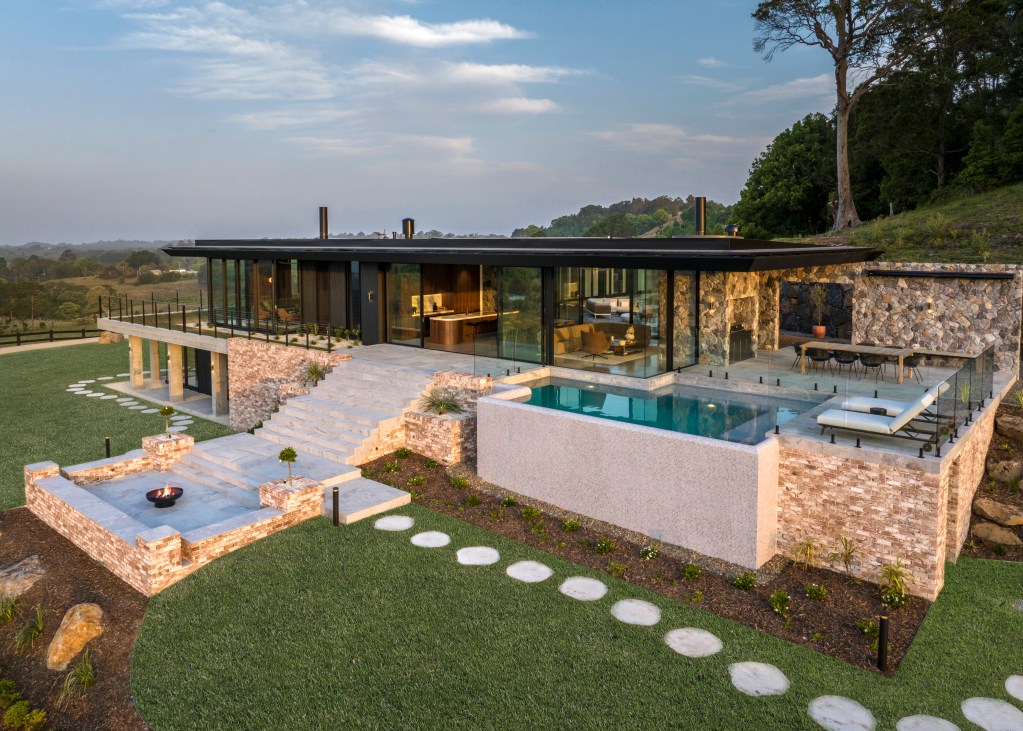
Byron Bay, Australia | Byron Bay Sotheby’s International Realty
As incredible as these homes are, none would exist without the expert skill of the bricklayer. The true craftsmanship involved in outstanding brickwork is the ultimate mark of luxury and one that gives these homes their human touch.
Timeless pieces are finding their place in the home as the trend for unfitted kitchens gathers pace