The duo behind this summer’s celebrated Serpentine Pavilion in London discuss the sensuality of bricks with Harriet Thorpe
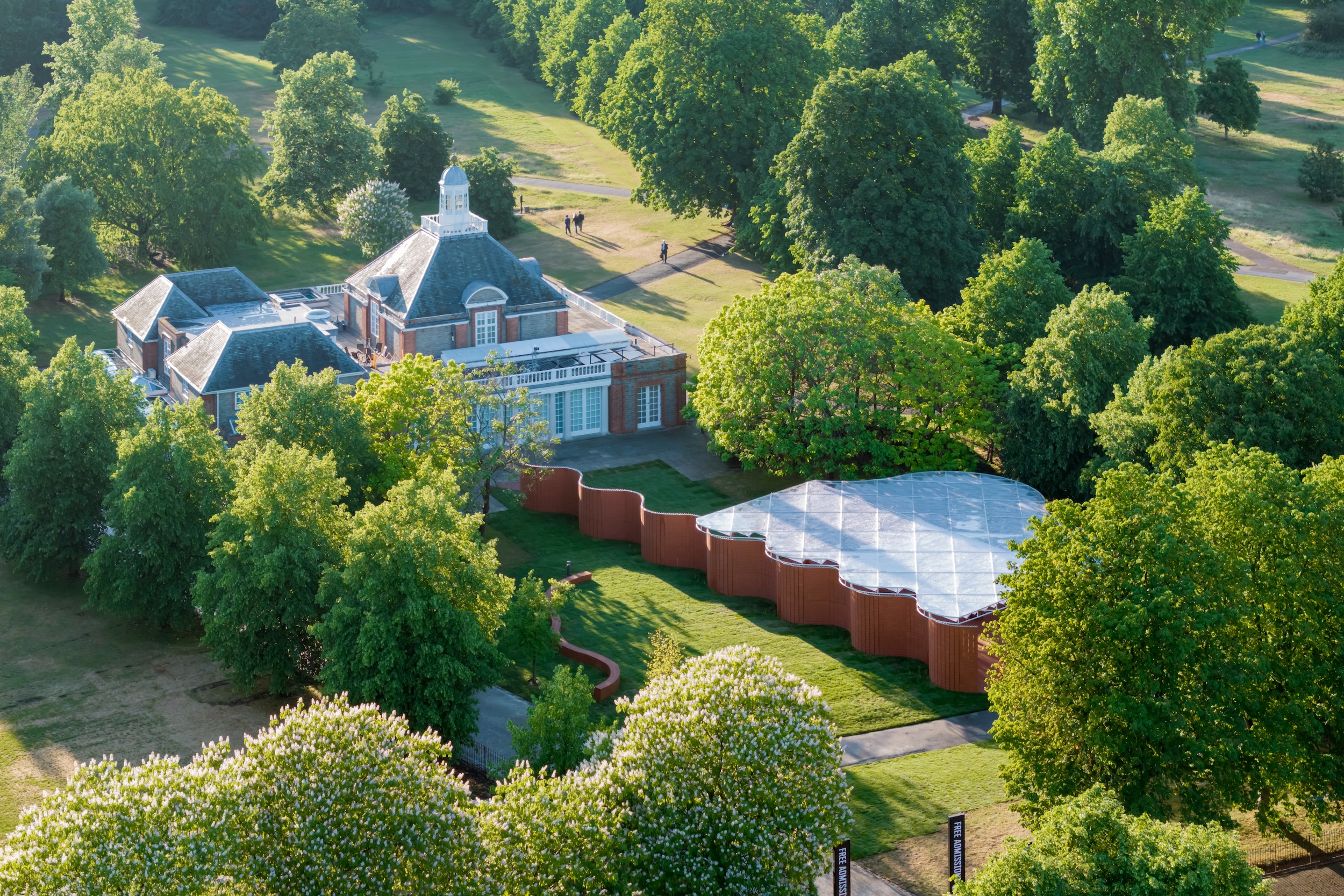
The Serpentine Pavilion 2026, designed by Lanza Atelier, in London’s Hyde Park. Photo: Iwan Baan. Courtesy Serpentine.
A “crinkle-crankle” wall has popped up in London’s Hyde Park, its snaking line softly organic, despite being built from rational, rectangular bricks. Referencing an 18th-century British style with ancient Egyptian origins, it forms part of the 25th annual Serpentine Pavilion, one of architecture’s most prestigious commissions, which this year showcases the vision of Mexico City-based team Lanza Atelier.
“Our work finds beauty in how things are used, constructed and experienced,” says Isabel Abascal, who founded the studio in 2015 with her partner, Alessandro Arienzo. “The Serpentine wall carries a lot of sensuality, but it uses less material than a straight wall. So, in this case, beauty lies in the refined cleverness of the structure.”

Isabel Abascal and her partner Alessandro Arienzo founded Lanza Atelier in 2015. Photograph: © Pia Riverola
Brick walls are rarely considered sensual. Conceptually, they’re symbolic of border divisions, abrupt endings and creative blocks. Yet Lanza Atelier’s pavilion design is consciously permeable: soon to be animated by the colors of nature, the movement of people, and the dappled light that will stream through vertical strips of space between each stacked column. “It reveals the power of walls not to divide, but to bring us together,” says Arienzo.
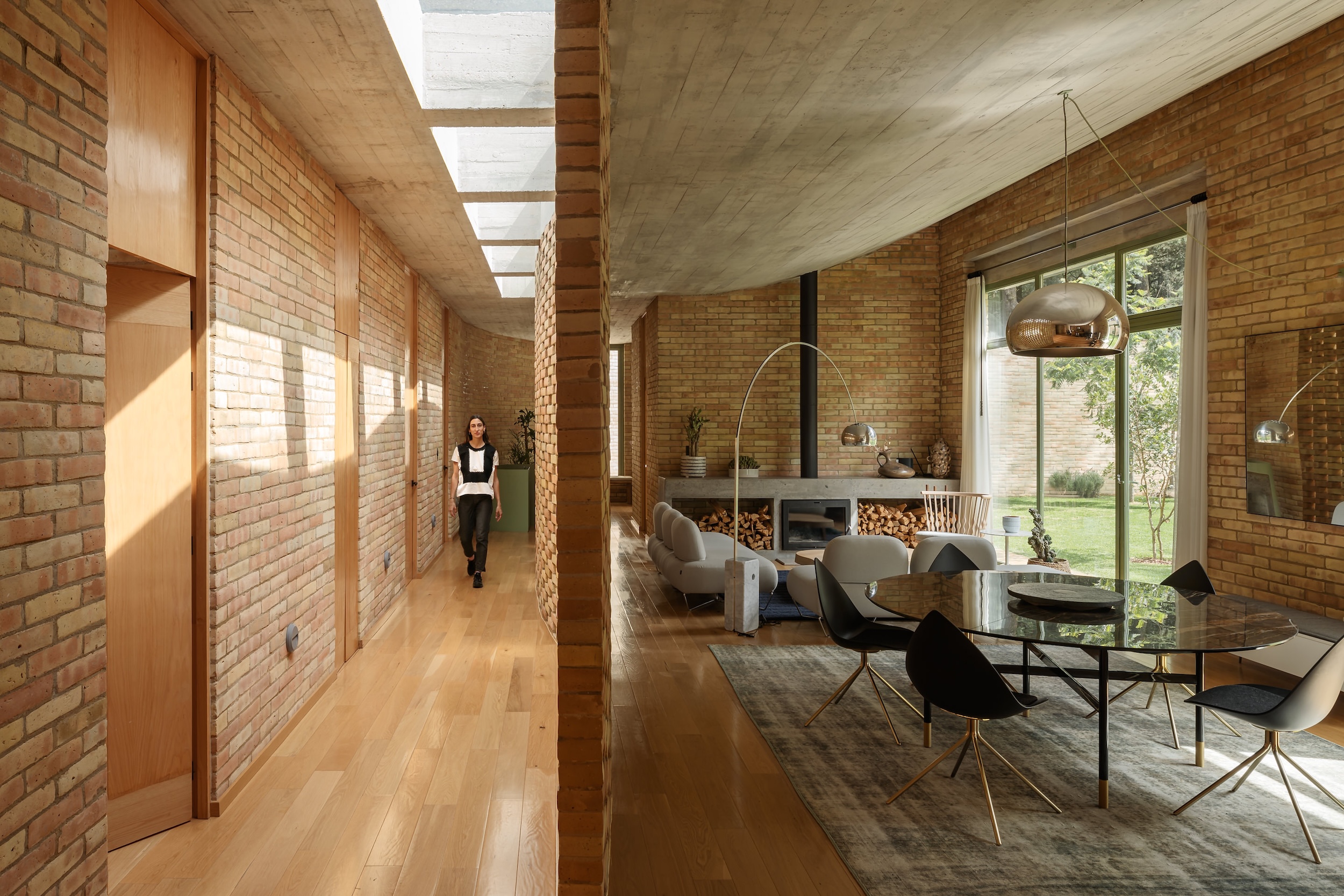
This same vitality is evident in the studio’s Casa Jajalpa (2019), a family home in a pine forest near Mexico City, constructed from tactile bricks that change color with the seasons.
Rather than being monolithic, the micro-modularity of this material adapts to nature through curved and lattice forms—a contemporary house, yet embedded in its environment like the millennia-old brick structures of Mesopotamian civilizations.
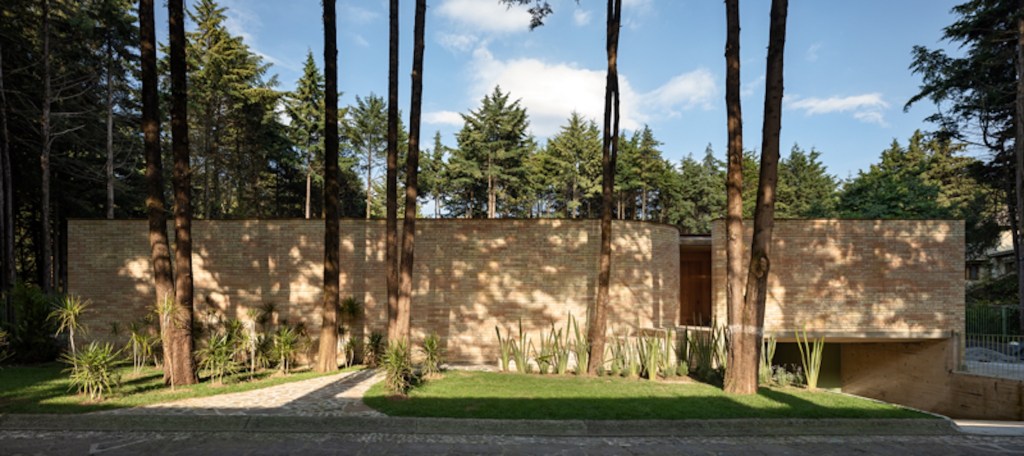
Lanza Atelier’s Casa Jajalpa, a sustainable family home near Mexico City. Photograph: Dane Alonso. Courtesy Lanza Atelier
Brick is enjoying a resurgence in residential architecture, thanks to its green credentials as much as its historical reference points. Certainly, Lanza Atelier’s adaptive designs and context-responsive materials bring a sense of timelessness, drawing lines between past, present and future.
For their pavilion, the studio chose a familiar red brick—sourced from Wienerberger’s 100-year-old factory in the Surrey village of Ewhurst—echoing both the English garden tradition and the nearby Grade II-listed Serpentine South Gallery, originally a 1930s tea house.
Their Casa Caracol (2024) in Cancun, meanwhile, was built from a concrete aggregate, with spiraling sea-snail shells from the local beach folded into the surfaces of the house.
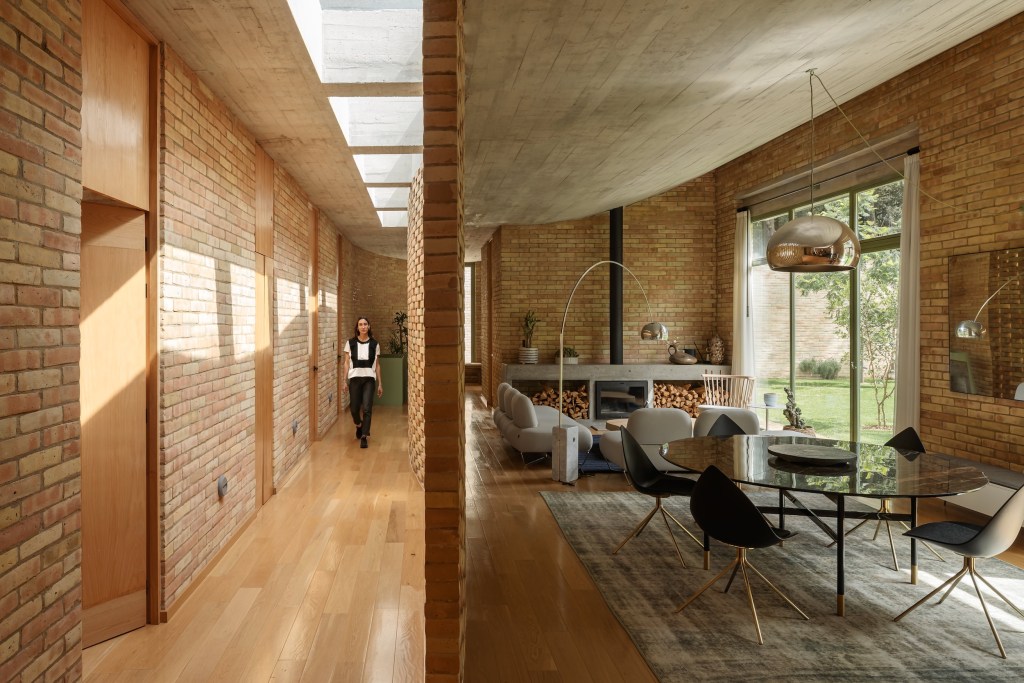
Inside Casa Jajalpa: the entire house was built from locally-produced tabique blanco bricks. Photograph: Dane Alonso. Courtesy Lanza Atelier
This functional poetry aims to blend craft and innovation in the face of rapid, homogenizing urbanization. “In the midst of a planetary climate crisis, we trust raw local materials to create a more sustainable balance with the high-tech,” says Abascal, before adding: “Both are important.”
For the duo, this is a lived understanding: the couple reside in a renovated adobe ruin in Mexico City with thick earth walls that are thermally insulating and acoustically softening, but they actively participate in the beautiful friction of the metropolis.
Similarly, their Serpentine Pavilion offers visitors the chance to rediscover a sense of balance: a space to readjust perceptions, meditate on time and absorb the sculptural energy of place. As Arienzo says: “The ability to perceive—and marvel at—beauty is, for us, even more relevant than beauty itself.”
Brick is back: read more about the luxury design material that never dates
Serpentine Pavilion 2026 by Lanza Atelier is open until October 25, 2026 at the Serpentine Galleries, London.