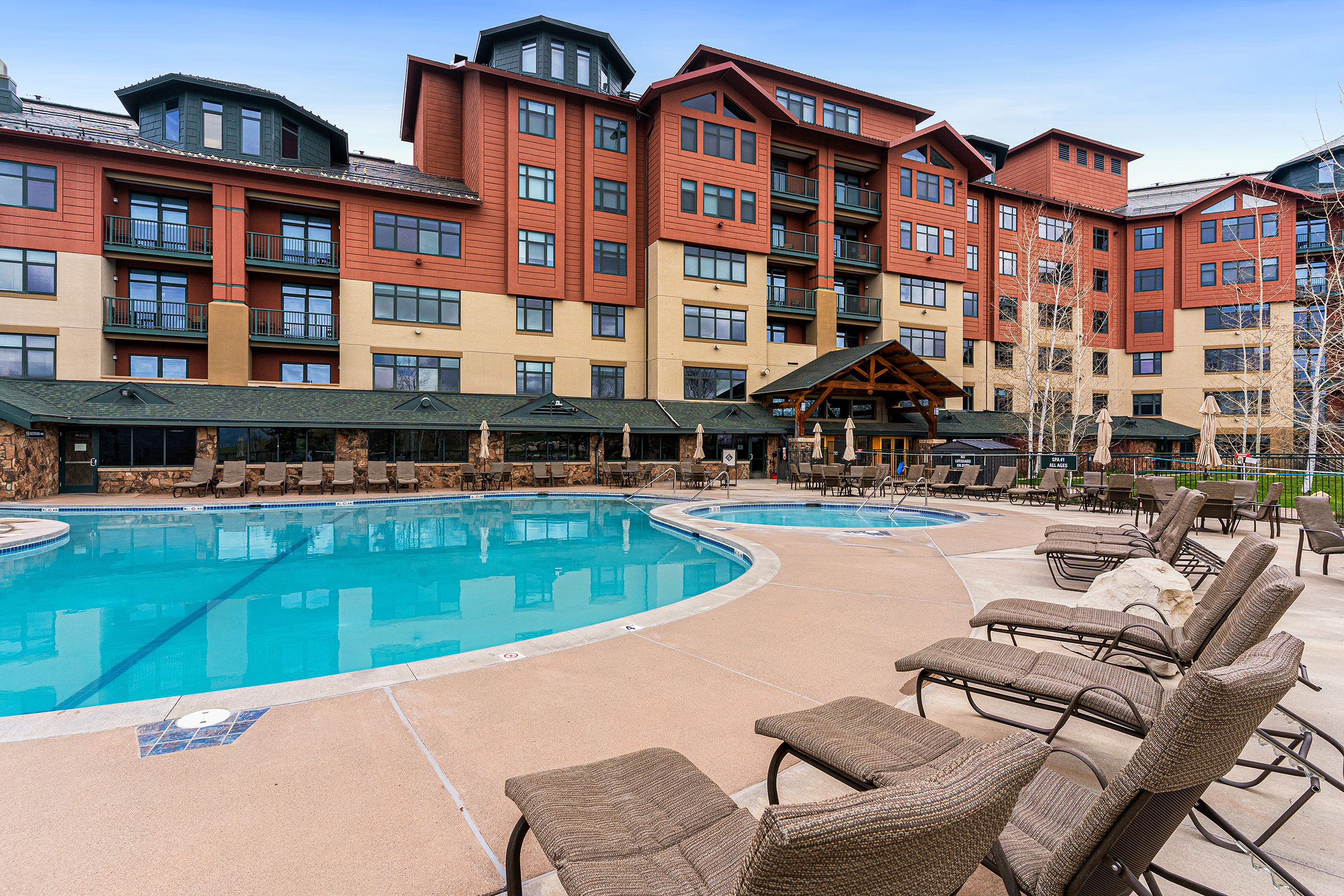
Steamboat has always been bike-obsessed. From the extensive network of single-track trails that make it a world-class mountain bike destination to the fitness-obsessed road biking community, Steamboat is known as much for its biking as for its skiing. Those are only a few of the reasons Steamboat snagged the honors of being referred to as Bike Town USA®.
It’s really no surprise that gravel biking caught on in one of the world’s most bike-friendly cities and spread like wildfire, creating a whole new sport seemingly overnight. “Some hardcore road cyclists who would ride on virtually any surface imaginable might argue that gravel biking has always been around, but it’s really only become super popular in the last five years,” says Amy Charity, a former pro cyclist and US National Team member who lives in Steamboat. The coach, author, motivational speaker is also a Partner of SBT GRVL, an annual gravel event that was founded in 2019 and hosted over 1,500 riders in its inaugural event.
Gravel biking is, in fact, the fastest growing category in cycling according to OutsideOnline.com who reported that in 2017, shipments of gravel bikes added $26.9 million in new business, more than any other category with manufacturers expanding their gravel bike and gear offerings, while mixed-terrain events continued to crop up around the country. Two of those events, including SBT GRVL and Gravel Fest, are hosted in Steamboat Springs.

So what exactly is gravel biking? We caught up with Amy Charity (by phone, since that probably wouldn’t be possible on a bike) to find out.
What it is:
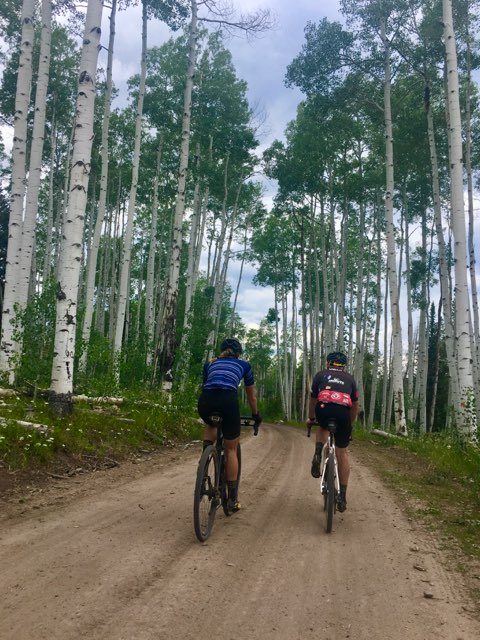
“Gravel biking encompasses riding anything that’s not pavement, so it’s pretty broad,” she says. “But for the most part, it’s about riding the kind of dirt roads that you’re likely to find in and around Steamboat, rural backcountry roads that are commonly found in ranch country.”
Why it’s awesome:
Gravel biking allows riders to explore rural roads that don’t have the kind of traffic you’ll find on the road, but aren’t typically as grueling as a mountain bike trail. “The terrain is variable, so you can choose to ride a flat road, rolling hills, or a climb. Mountain biking, at least in Steamboat, typically starts with a climb to get where you’re going.” It’s also a lot safer. “Crashing is never fun, but dirt is just softer and more forgiving than pavement,” Charity says. “And it’s nice that there’s a lot less car traffic on these roads than on the few road routes we do have.” It’s a little more comfortable than road cycling, thanks to frame geometry with a longer wheel base, wider tires, and a frame designed to absorb the vibration. Finally, it’s easy to learn. “Anyone can jump on a gravel bike and start riding,” Charity says. “It’s not technical like mountain biking; there’s really no learning curve. You just hop on the bike and go. It allows us to discover and explore new areas around Routt County that we may have never visited before gravel rides.”
Why it’s so popular in Steamboat:
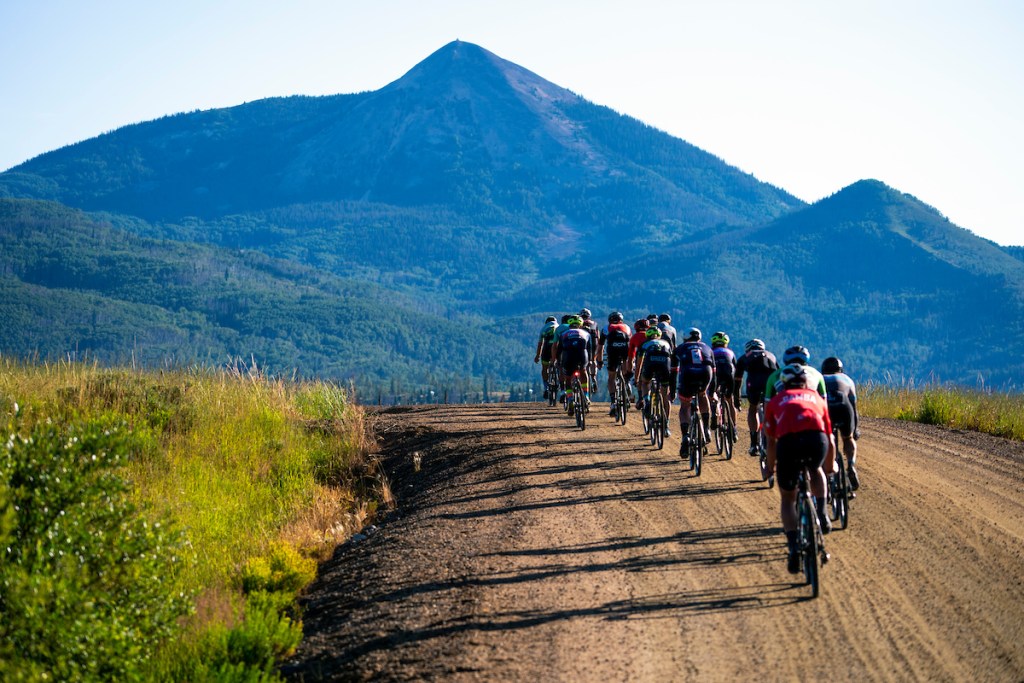
“Steamboat has over 600 miles of gravel roads to explore,” Charity says. “If you’re riding only paved roads, it’s pretty limited in terms of the routes we have, so you end up doing the same rides over and over.” Better yet, the terrain in the wide-open expanses of the surrounding ranchland is perfect for more gentle routes. Believe it or not, it’s also fast. “The top riders at SBT GRVL averaged speeds of over 21 miles per hour,” Charity says. “Keep in mind that was on a course that was 144 miles.”

What kind of bike do you need?
Let’s face it, cyclists in general are tech geeks, and gravel biking is no exception. A gravel bike is similar to a road bike but with a frame geometry that’s designed to accommodate a wider tire and also uses disc brakes, which are much safer and more responsive than traditional road bike brakes. Gravel bikes are designed to tackle a variety of surfaces and are sturdier and more robust than traditional road bikes, with an increased gear range to tackle a wider variety of terrain. They have a longer wheelbase for more stability and a frame geometry that puts the rider in a more upright position for greater comfort over longer distances.
At the end of the day though, it’s all about the tires. “There’s a variety of widths and treads you can use on any given day depending on the terrain and the conditions,” Charity says, admitting she indeed has a quiver of tires in her garage. A gravel bike tire is going to be around 38 mm wide, right in between a typical mountain bike tire (around 50 mm) and a road bike tire (around 25 mm). “Riders will use everything from a beefy tread to a slick tire depending on the route and desired speed,” Charity says.
Sounds great! Where do I start?
“Any bike shop in town will have gravel bikes to rent,” Charity says. The good news? You have a whole year to train for next year’s SBT GRVL event since it was canceled this year, even though the event sold out to 2,500 riders in only 22 minutes. With courses from 144 miles to 36.6 miles, there’s something for everyone. Time to hit the (not paved) road. //sbtgrvl.com
Photos complimentary of SBT GRVL