Whether used to saturate or merely accent, this spectacularly versatile—and surprisingly ancient—finish is always polished, discovers Kate Youde
With its high-gloss sheen, lacquer is an eye-catching finish. And it has caught the attention of contemporary designers, who appreciate the freedom it allows them with color. “The finish is rather spectacular if it’s done correctly, and it could end up being the star of the show,” says Peter Mikic, a UK-based interior designer, adding that lacquer comes in “any color” and offers “a different accent for any interior.”
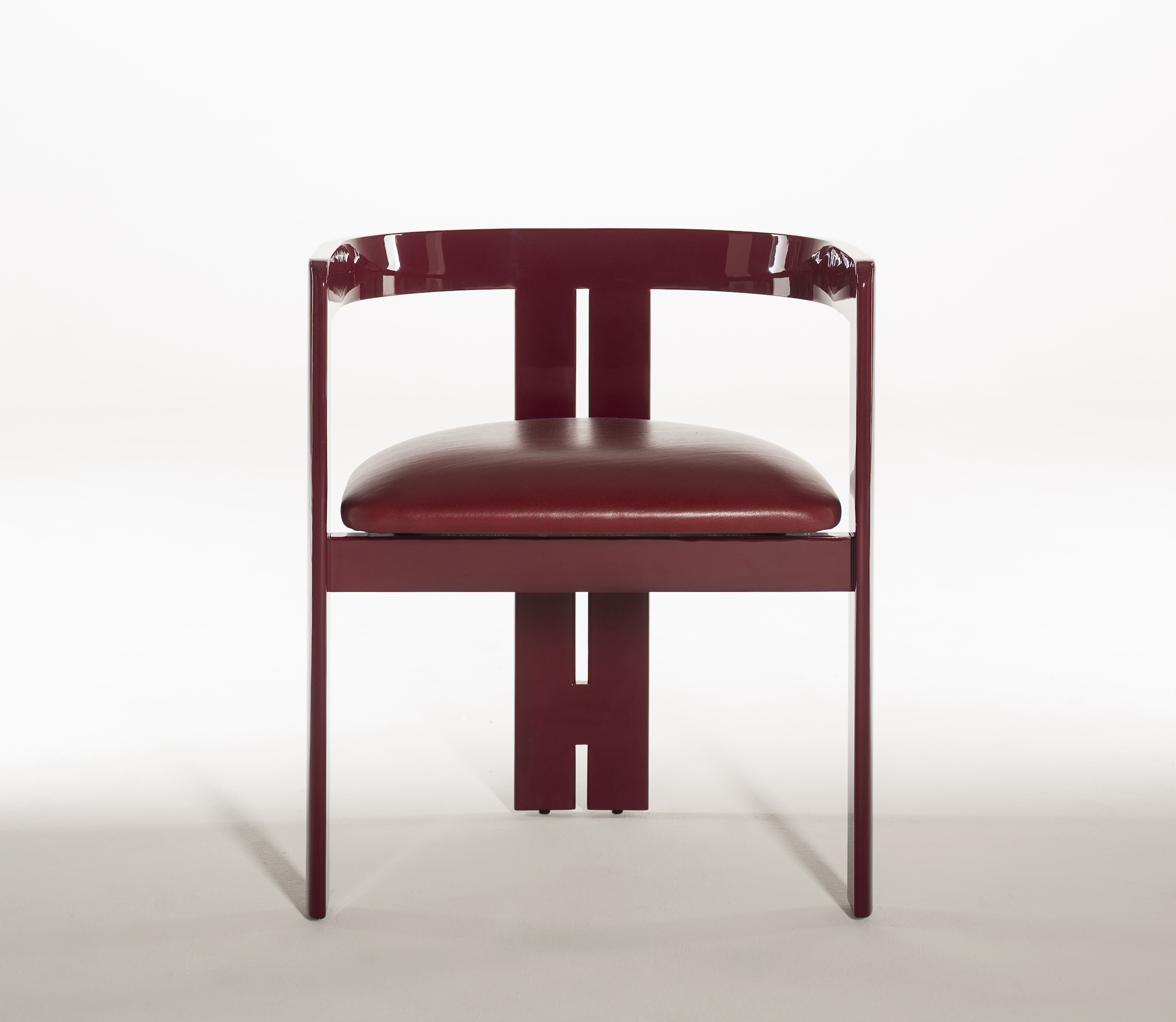
Its versatility was on show during Milan Design Week 2026 in April, when luxury interiors brands launched a spectrum of lacquered objects, from sideboards to bathroom vanities, coffee tables to cupboards. Most strikingly it even appeared on seating. Tacchini, for example, introduced 11 matt and gloss lacquer finishes to padded chairs, including a reedition of Italian designer Tobia Scarpa’s celebrated Pigreco design from 1959.
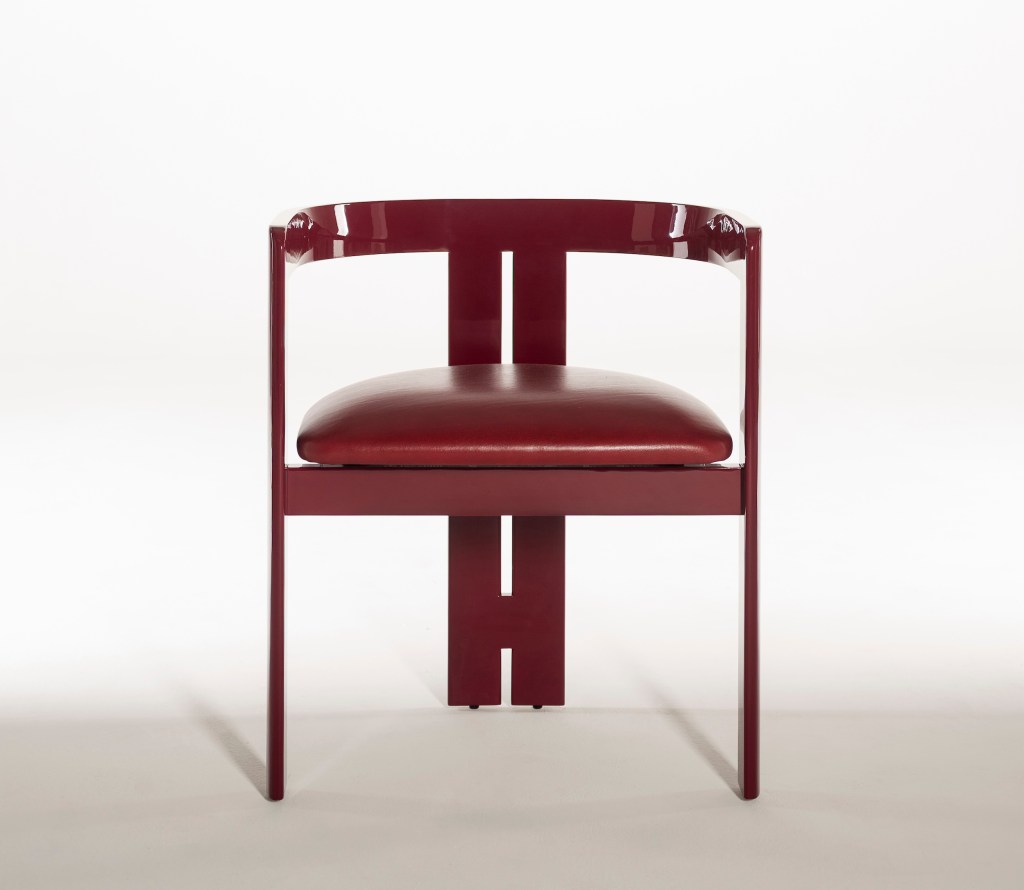
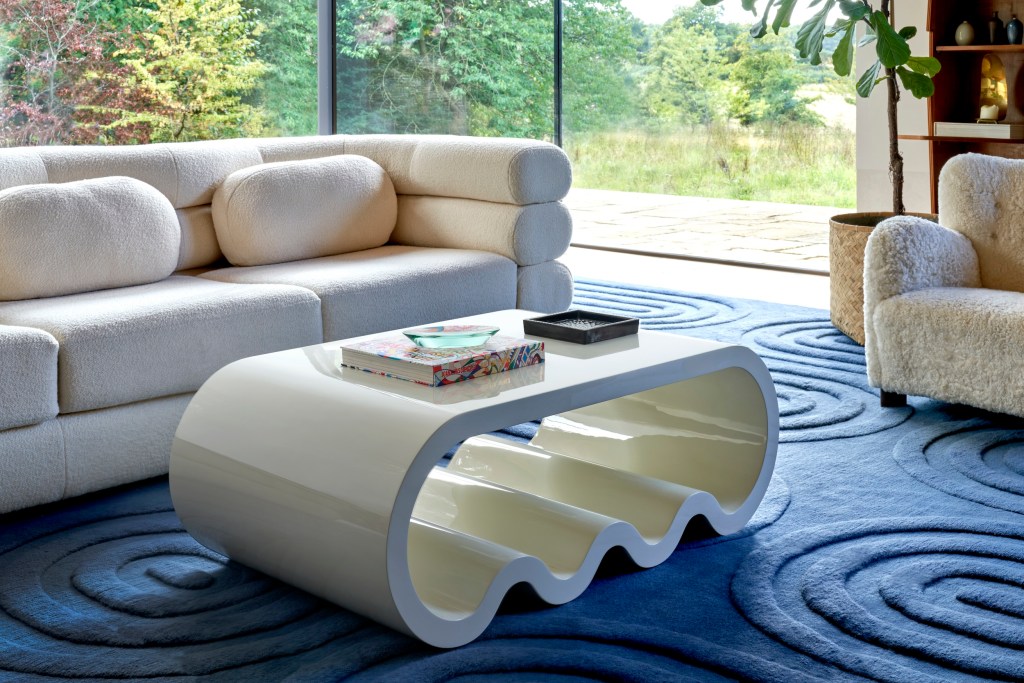
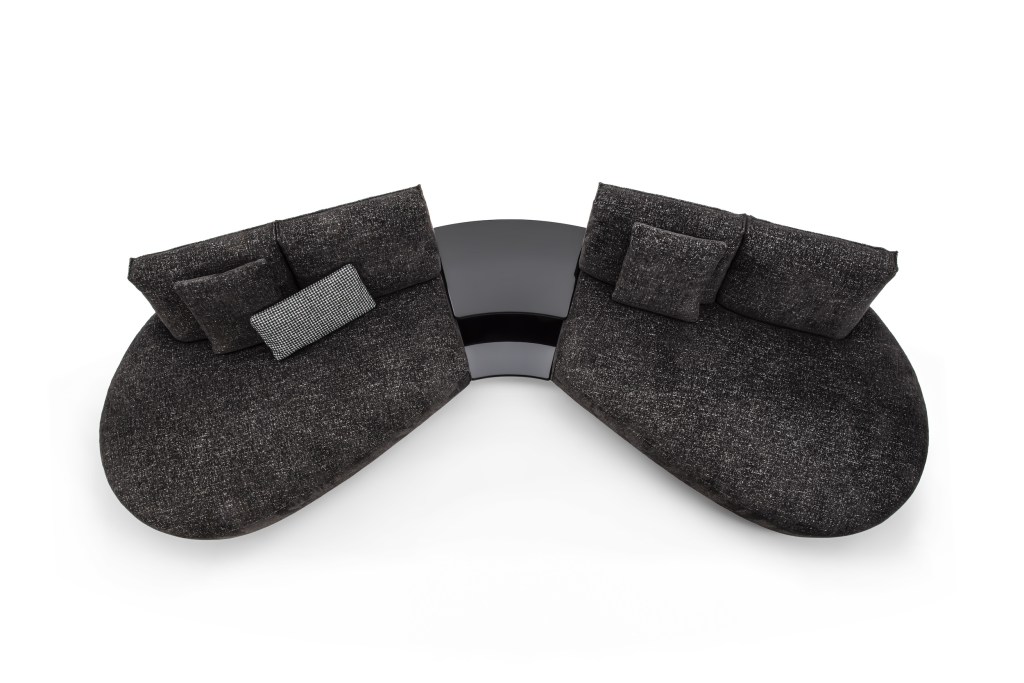
Lacquer “gives a very interesting edge to form [and] to shape, especially when it is combined with upholstery and fabric and padding,” says Gordon Guillaumier. The Milan-based designer is behind the new three-legged Fosca beechwood dining armchair launched by Frigerio at Milan in 10 glossy lacquered colors. He also designed the Italian brand’s Dao Soft sectional sofa, which can be broken up by small, curved lacquered tables.
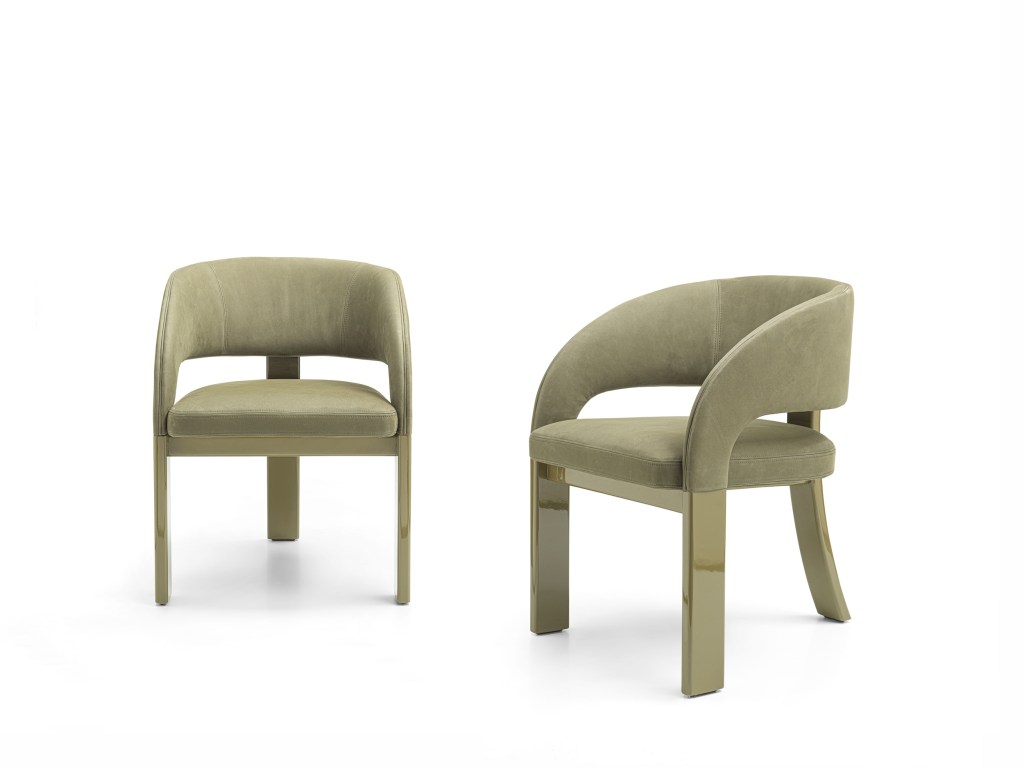
The tactile finish of lacquer can “neutralise a shape” in a white, neutral or beige hue, he says, but “create a very strong character” when applied in a “more decisive color” such as red or black. “It is a kind of vintage approach, dare I say, which gives a very special richness and contrast, because you’ve got a shiny, smooth lacquer on one [hand] and the [matte] upholstery on the other. It creates a very nice balance in design,” adds Guillaumier, whose inspiration includes the use of lacquer in Italian design of the 1960s and 1970s.
The current popularity of lacquer—also bringing high shine to home accessories, surfaces, walls and ceilings—is only its most recent revival. While today the term can also refer to a specially applied synthetic spray or paint finish, the use of traditional Asian lacquer, a resin made from tree sap, dates back a couple of thousand years. Its association with glamorous Western interiors was cemented in the early 20th-century art deco period, when designers were inspired by motifs, materials and craftsmanship from countries including Japan and China.
The Lacquer Company, which has showrooms in London and New York, works with skilled craftspeople in Saigon on its furniture and home accessories. They use son mai, a traditional Vietnamese lacquer technique that involves applying by hand multiple layers of substances, which are sanded and polished to a glossy finish.
Peter Mikic, who collaborated with the company on a collection that includes trays and tables, says using lacquer on furniture conceals the makings of the piece. Instead it “looks like it’s one piece of color”—resulting in a “quite sculptural” effect.
This seamlessness makes lacquer excellently suited to luxury interiors, according to Charu Gandhi, founder of London-based studio Elicyon. “Especially when you use it in a color drench or [on a] larger scale, it’s quite immersive,” she says. “It feels like something that’s been poured into a space. It feels very tailored… and that glossiness does speak to a feeling of luxury. It’s that piano key feel, isn’t it? It’s very smart, very clean, very complete.”
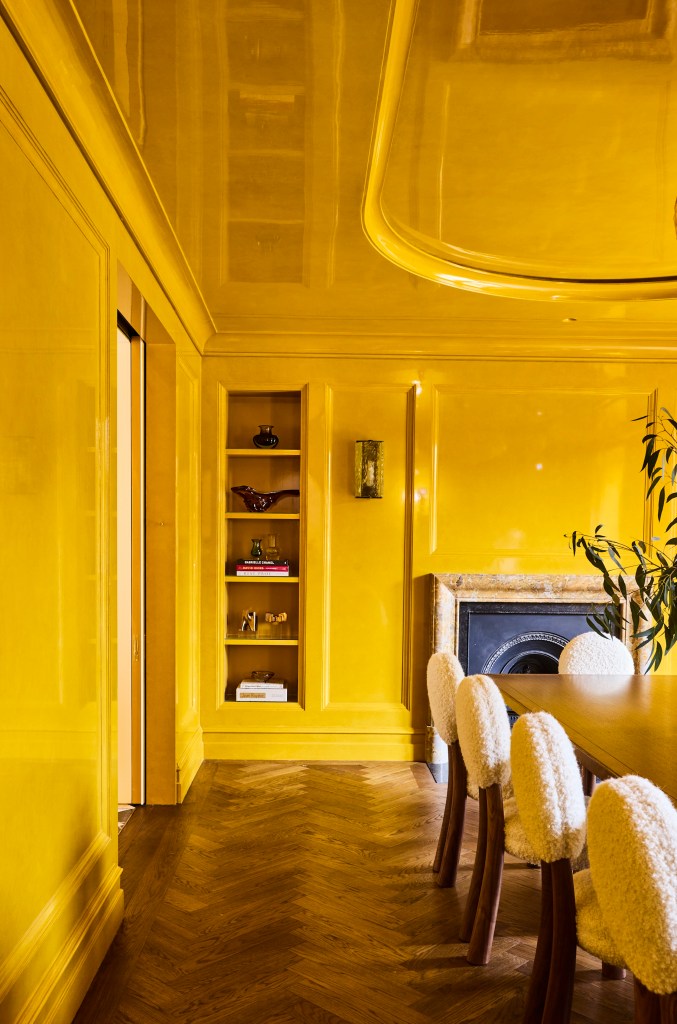
Mikic’s self-titled studio used a red spray lacquer on a staircase in a Gstaad chalet to create a “glamorous impact.” Meanwhile a special yellow lacquer paint—a contemporary take on traditional Japanning lacquer, which imitates traditional Asian techniques—on the walls and ceiling of a London dining room produces a “calming feeling” when the lights are dimmed.
He is currently using the same effect, in cream, on the kitchen and breakfast-room ceilings of another London home to give a sheen that contrasts with matt wood-paneled walls. Lacquer bounces light and allows, says Mikic, the “opportunity to play with reflection.”
This mirror-like quality appealed to Hugo Vince, co-founder of the Parisian architecture and design studio Atelier HA, when he and his wife, artist Caroline Derveaux, chose yellow and turquoise high-gloss lacquered fronts for the kitchen cabinets in their vibrant Saint-Ouen apartment. “It’s a bit poetic to have lacquer because you see in the doors the life of the room,” says Vince.
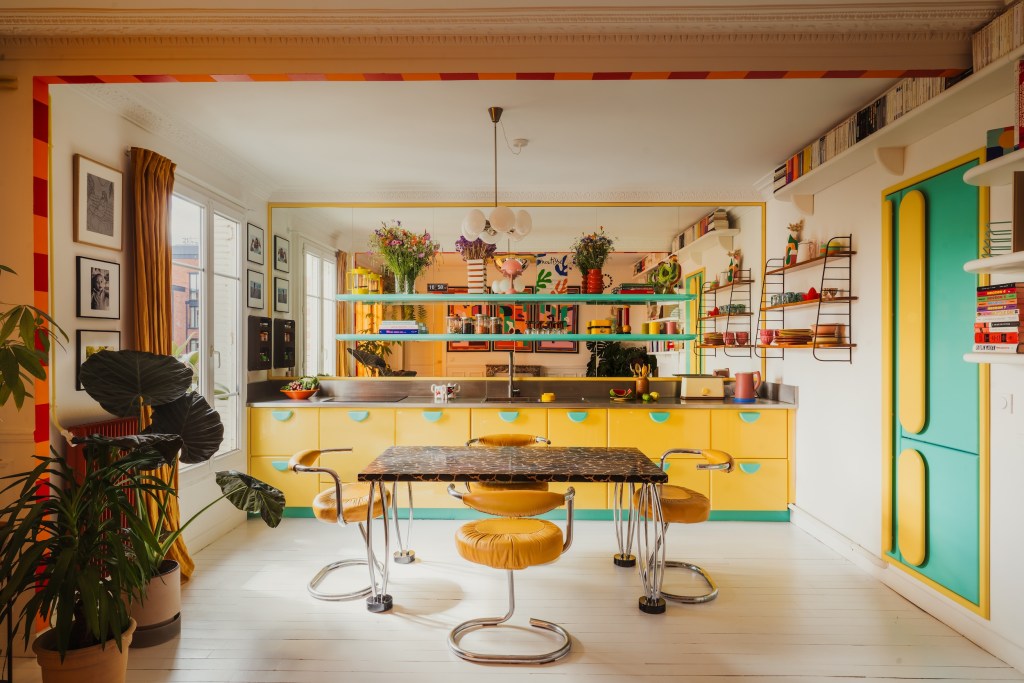
He finds lacquer “joyful” and liberating. A recent Parisian loft apartment project by Atelier HA features a bespoke red lacquer stepped platform for a bed, designed “to put the sleeping moment on the main stage,” and red-and-white bookshelves with a coordinating library ladder.
Lacquer does, though, require caution. Gandhi warns that applying it to a surface exaggerates any imperfections. Since it reflects everything, the finish can be “quite unforgiving,” not to mention challenging to light.
It can also chip. But Vince has found his kitchen robust, despite his three children climbing on the cabinetry and creating a mess with chocolate. “You just have to clean a little bit,” he says. “Don’t be afraid, go for the lacquer!”
Seeking further inspiration? Consider setting your fitted kitchen free